October 15, 2026
Short run book printing takes the production time confirmed for your specific order, plus time for file preparation, proof approval, and delivery. A production turnaround is not an arrival date: confirm when the production clock starts and whether shipping is included before setting your 2026 book launch or event deadline.
Your usable timeline starts before printing and ends after delivery. To establish it, get the following milestones confirmed for the actual quantity, binding, paper, and destination on your order.
Publishing Xpress provides short-run digital printing with perfect bound, saddle stitch, Wire-O, and plastic coil binding. Ask for a schedule tied to your selected specifications rather than treating a general turnaround statement as a delivery commitment.
The key question is not simply when the books will print. It is when finished, approved books will reach the place where you need them.
A book signing needs books at the venue. A training course needs manuals ready for participants. Neither deadline is met by an order that has finished printing but remains in transit.
For a 2026 project, put your required arrival date on the schedule first. Then work backward through shipping, production, proof approval, and file preparation, leaving room to inspect the shipment before distribution.
That approach also separates responsibilities. You control editing and approval; the printer confirms production; the carrier handles transportation. Keep those stages visible instead of combining them into an unexplained turnaround figure.
Use a backward plan before you announce a launch date or promise copies to readers. Each stage needs an owner and a clear completion condition.
Record the date and location where books must physically arrive. If you will sign, package, label, or transport copies yourself, place those tasks between delivery and distribution.
Do not substitute your event date for your receiving deadline. You need enough time to open cartons, check the order, and prepare the books for their next destination.
Ask for the expected completion date for your chosen specifications. Make clear whether you are asking about finished books, packed cartons, or carrier pickup, because those are different milestones.
For a 2026 event order, request written confirmation of the milestone that matters. A ship date answers a different question from an arrival date.
Ask when the printer needs your final approval to meet the proposed schedule. Then make that deadline visible to everyone reviewing the book.
Assign 1 person to send the final approval. Other reviewers can contribute corrections, but a single approval contact keeps conflicting instructions out of the production conversation.
Complete editing, layout, and cover preparation before treating the project as ready to print. An unfinished manuscript does not become production-ready just because the event date is close.
Give the printer the same specifications shown in your files. If the page count or binding changes, ask whether the cover file and schedule need to change too.
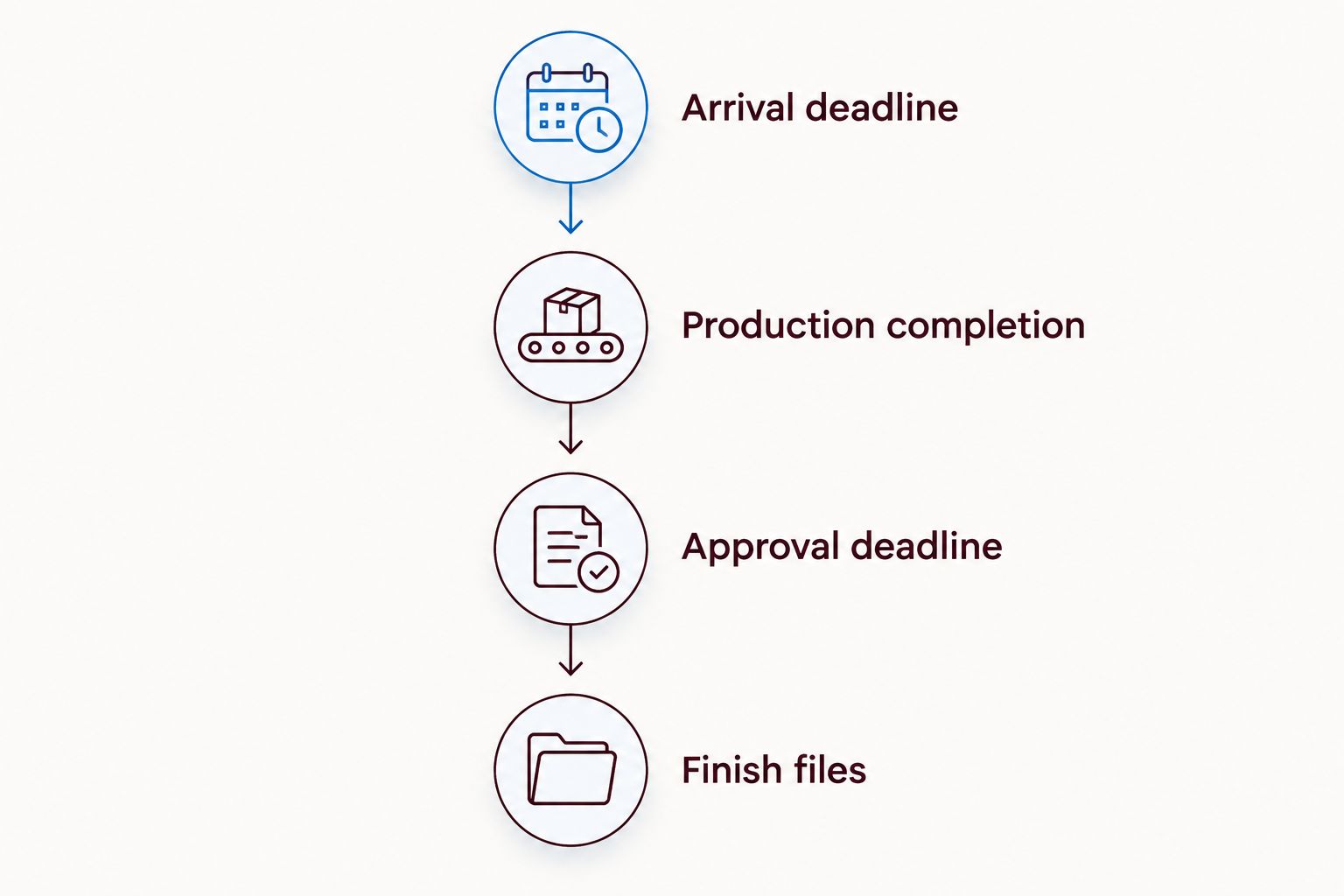
Keep the confirmed dates together with the order specifications. That gives you a clear reference if you revise the quantity, replace a file, or change the delivery address.
A short run describes the size of an order, not a guaranteed production schedule. Discuss these factors when you request timing for your project:
Do not assume every factor adds the same amount of time. Ask which details affect your particular order, and keep the specifications unchanged once you approve them.
Binding changes how a book is finished, so it belongs in the scheduling conversation. It does not establish a reliable speed ranking on its own.
Publishing Xpress offers 4 binding options for short-run printing. Choose the format around the reader's needs, then request the production timing for that exact format.
| Binding | Best for | Practical advantage | Limitation to consider | Scheduling question |
|---|---|---|---|---|
| Perfect bound | Novels, memoirs, and other reading books | Creates a glued spine and a paperback format | Does not open flat like a punched binding | When will binding and trimming be complete? |
| Saddle stitch | Slim booklets and event programs | Fastens folded pages through the fold | Not suited to every book thickness | Does the final page count fit this format? |
| Wire-O | Reference books and workbooks used open | Allows pages to lie flat | Requires space for punched binding holes | Are the files prepared for the binding edge? |
| Plastic coil | Manuals, planners, and hands-on guides | Allows pages to turn around the binding | Requires a punched edge rather than a printable spine | Does the layout leave adequate binding clearance? |
Choose the binding that works for the book, not an unconfirmed speed advantage. Switching from a glued spine to a punched binding can require layout changes, so ask what the switch means before rebuilding files.
For a 2026 deadline, settle the binding before finalizing the cover. A cover prepared for one construction is not automatically ready for another.
Review the exported print file, not just the editable manuscript. Exporting can reveal font, image, or page-layout problems that were not obvious while you were writing.
Start with these checks:
If the printer requests separate interior and cover files, prepare 2 PDFs and identify each clearly. Follow the printer's submission instructions rather than assuming that every book uses the same file arrangement.
Open the exact PDFs you intend to submit. Check the first page, last page, chapter openings, image-heavy spreads, and any pages with unusual formatting, then review the remaining pages for consistency.
Use filenames that distinguish the approved version from drafts. Keep the submitted files together so that a later correction does not accidentally replace the wrong document.
Proof approval belongs in your total project schedule. Ask the printer whether the quoted production period begins at order placement, file acceptance, proof approval, or another stated milestone.
A digital proof lets you inspect the supplied representation of the book on screen. A physical proof lets you inspect a printed sample, but it also introduces printing, transportation, and review steps before approval.
Neither proof method replaces a careful review. Confirm which proof process applies to your order and what your approval authorizes before you sign off.
If several people must review the book, collect their comments together. Resolve contradictory edits before sending instructions, and review the corrected file rather than assuming every requested change appears exactly as intended.
Production time is not shipping time. Printing and finishing create the books; shipping moves them to your destination.
Ask whether the production estimate uses business days or calendar days. Then ask how the shipping estimate is expressed, including how nonworking days affect the proposed schedule.
For your 2026 planning calendar, keep the expected ship date and expected arrival date in separate fields. That simple distinction prevents a manufacturing milestone from becoming an accidental promise to readers.
Check the receiving details as carefully as the book files. A venue name without the correct receiving address, recipient, or delivery instructions creates an avoidable problem after production is finished.
Send a complete project description rather than asking how quickly a printer can make a book. Specific instructions let the conversation focus on your order instead of a hypothetical job.
Include:
Publishing Xpress short-run book printing fits self-publishers and organizations that need books without a large minimum order. Its binding choices support different uses, but a general service description is not a production commitment for your particular order.
Ask for the current schedule before promising a launch date. If you change the specifications afterward, request confirmation that the earlier timing still applies.
Plan your short-run book order
Bring your quantity, binding, finished files, and required arrival date to the scheduling conversation.
How long does short run book printing take from upload to delivery?
The upload-to-delivery timeline includes file review, proof approval, production, and shipping. Confirm each stage for your specifications and destination rather than treating production turnaround as the total elapsed time.
When does the book printing turnaround clock start?
The production clock starts at the milestone specified by your printer. Ask whether that milestone is order placement, accepted files, or final proof approval before calculating your deadline.
Does ordering fewer books guarantee faster printing?
A smaller order does not guarantee a shorter overall schedule. File preparation, approval, binding, and delivery still need to be confirmed for the job.
Is saddle stitch always faster than perfect binding?
Saddle stitch is not automatically the faster choice for your order. Ask for a schedule based on your page count and specifications, and choose a binding that suits the finished book.
Can I change my files after approving a book proof?
Ask the printer before replacing an approved file. A revision needs review, and you should confirm whether it changes the production schedule before proceeding.
How do I plan printing for a 2026 book launch?
Plan backward from the date finished books must reach you for your 2026 launch. Include receiving and inspection, shipping, production, approval, and final file preparation.
Does Publishing Xpress offer short-run book printing?
Publishing Xpress offers short-run digital book printing without large minimum order requirements. Binding options include perfect bound, saddle stitch, Wire-O, and plastic coil; confirm timing for your selected specifications.
Put your receiving deadline on the order conversation, not just your event date. The books are not ready for distribution until you have opened the shipment, checked the copies, and completed any signing or packing.
Before giving final approval, compare the approved files, order specifications, and confirmed schedule together. Keep that record with the order so every decision refers to the same version of the project.
© 2026 Publishing Xpress. All Rights Reserved.