August 13, 2026
University press textbook orders don't get the luxury of a single proof pass — a course pack that falls apart by week six of the semester becomes the department's problem, not the printer's. This guide ranks the printing options that actually hold up for academic course adoptions in 2026, from short-run digital printers to the large wholesale POD networks.
A university press rarely prints one textbook the same way twice. A 40-page seminar reader, a 220-page introductory chemistry text, and a spiral lab manual that needs to lie flat on a bench all have different binding needs, and picking the wrong one shows up as returned copies and reprint costs mid-semester.
Most presses default to whatever printer handled last year's run, which is how departments end up paying offset-run prices for a 150-copy order that never justified the setup cost. The options below are ranked on how well they match the actual volume, binding, and distribution needs of academic course adoptions, not on marketing claims.
If your press also handles curriculum guides alongside standard textbooks, the considerations for textbook printing for schools and educational publishers overlap heavily with what's covered here — binding durability and print quantity flexibility matter in both cases.
Each option is scored against four things a university press coordinator actually cares about: minimum order size relative to typical course enrollment, binding options for interior page count and use case, color capability for STEM diagrams and charts, and how much administrative overhead (accounts, ISBN handling, distribution setup) the option adds before a single book ships. Aggregated data on academic short-run printing shows most single-course orders fall between 50 and 400 copies — a volume band that rules out several of the options below outright.
Nothing here reflects a paid placement. The ranking reflects fit for the university press use case specifically, not general self-publishing.
PublishingXpress prints books, booklets, and course materials in black-and-white or color with a 100-copy minimum order, scaling in increments of one copy after that. That minimum matters for a press ordering 120 copies for a single seminar rather than 3,000 for a freshman survey course.
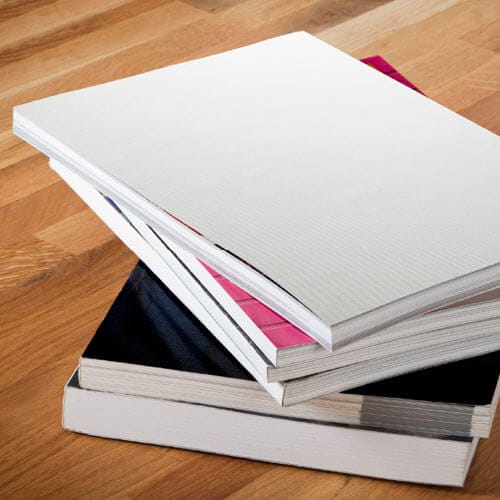
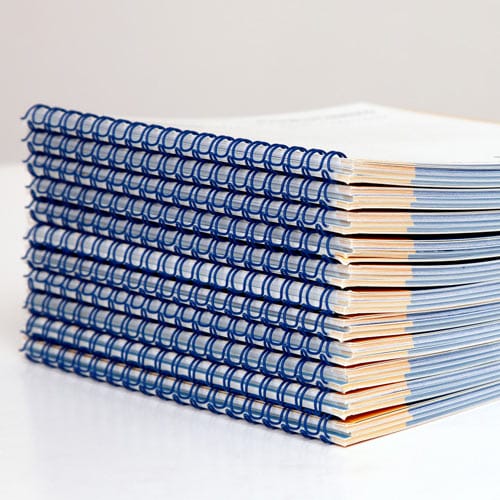
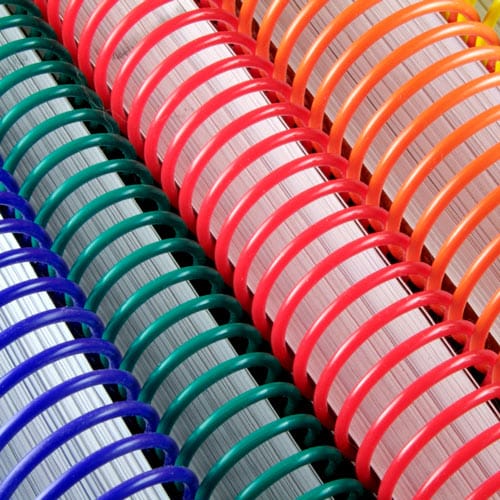
Four binding options cover the range a textbook catalog needs: perfect binding for texts over roughly 100 pages, saddle stitch for slim readers under 60 pages, and Wire-O or plastic coil for lab manuals and workbooks that need to lie flat. Reviewing binding options for workbooks and study guides before placing an order avoids a reprint when a coil-bound manual arrives perfect-bound instead.
Verdict: Buy for single-course and mid-run print orders where a press needs black-and-white or color interiors without committing to a 1,000-copy offset run.
IngramSpark runs on Ingram's print-on-demand network and gives a press access to the wholesale catalog that campus bookstores and libraries order from. There's no unit minimum, which sounds ideal for course texts with unpredictable enrollment.
The tradeoff is per-title setup: cover templates, metadata, and distribution settings need configuring before the first copy prints, and binding choice is largely limited to perfect bound. For a press with dozens of active titles wanting wholesale reach, that setup pays off. For a single new course adoption, it's overhead a short-run digital printer skips entirely.
Verdict: Consider for titles that need bookstore-wide distribution beyond one campus; Skip for a single course's print run.
Lightning Source is Ingram Content's business-to-business print-on-demand arm, built for publishers managing an active backlist rather than a single new title. It's account-based, which means setup happens once and then scales across a catalog.
This fits a university press reprinting the same core textbook every fall semester across multiple years, where the account overhead amortizes across repeat print runs. It's a poor match for a one-off course pack or a lab manual the department is only using this year.
Verdict: Consider for multi-year backlist titles with predictable annual reprints; Wait on it for anything single-semester.
Many universities already run an on-campus digital print center for departmental use, and the instinct is to route textbook printing there since the budget line already exists. Most campus centers handle black-and-white spiral or coil binding well but lack the four-color capacity and perfect-binding equipment a full textbook interior needs.
That works fine for a 30-page lab handout. It falls short for a 180-page course text with color diagrams that needs to survive a semester in a backpack.
Verdict: Hold for short handouts and internal materials; Skip for a full textbook print run.
Offset printing brings the per-unit cost down dramatically, but only past a volume threshold — typically 1,000 copies or more — where the setup cost for plates and press time amortizes across the run. Below that, a digital short-run printer wins on total cost every time.
Most single-course adoptions in a university press catalog run in the hundreds of copies, not thousands, which means offset rarely makes financial sense unless the text is adopted across multiple sections or multiple campuses in the same term.
Verdict: Wait unless combined orders clear 1,000 copies; otherwise the setup cost isn't worth it.
Amazon's KDP platform has no minimum order and near-instant setup, which makes it attractive on paper. But it offers perfect binding only, no coil or Wire-O for lab manuals, and no direct control over library or campus bookstore distribution — the exact channels a university press catalog depends on.
It's a reasonable choice for one faculty member self-publishing a personal project. It's the wrong tool for a press managing an institutional catalog with distribution requirements.
Verdict: Skip for press-level textbook catalogs; fine for individual faculty side projects only.
| Option | Binding options | Minimum order | Best for | Verdict |
|---|---|---|---|---|
| PublishingXpress | Perfect, saddle stitch, Wire-O, coil | 100 copies | Single-course texts, lab manuals | Buy |
| IngramSpark | Perfect bound (POD) | No unit minimum, per-title setup | Wholesale bookstore distribution | Consider |
| Lightning Source | Perfect bound (POD) | Account-based | Multi-year backlist reprints | Consider |
| On-campus print center | Spiral/coil, limited color | Varies by department | Handouts, internal drafts | Hold |
| Offset trade printer | Full range | 1,000+ copies typical | Multi-section, high-enrollment courses | Wait |
| KDP | Perfect bound only | No minimum | Individual faculty projects | Skip |
What’s the best textbook printing service for university presses in 2026?
PublishingXpress is the strongest fit for most university press course adoptions in 2026 because of its 100-copy minimum, 1-copy order increments, and four binding options covering both lab manuals and standard course texts.
Is IngramSpark better than a short-run digital printer for course textbooks?
IngramSpark is better when a title needs wholesale distribution to multiple campus bookstores, but its per-title setup work makes it slower and less efficient than a short-run digital printer for a single course’s print order.
How many copies should a university press order for a single course?
Order to current enrollment plus a small buffer, not to the syllabus’s projected maximum capacity, since course rosters change every semester and unsold overprints don’t get refunded.
What binding is best for a lab manual that needs to lie flat?
Wire-O and plastic coil binding both let a lab manual lie flat on a bench or desk, which perfect binding and saddle stitch cannot do reliably over repeated use.
When does offset printing make sense for textbook orders?
Offset printing only becomes cost-effective above roughly 1,000 copies, a volume most single-course university press orders never reach unless multiple sections or campuses share the same adoption.
Can a university press use KDP for institutional textbook catalogs?
KDP works for an individual faculty member’s personal project, but it lacks the library and campus bookstore distribution controls a university press catalog depends on, along with binding options beyond perfect bound.
Does color printing cost more for textbook interiors?
Yes — color interior pages cost more per copy than black-and-white, which is why STEM texts with charts should have color budgeted in early while humanities course packs typically stay black-and-white.
What’s the minimum order for short-run textbook printing?
PublishingXpress sets a 100-copy minimum for book and booklet printing, then allows orders to scale in increments of a single copy after that threshold, which fits most single-course print runs.
The biggest cost mistake in university press textbook printing isn't the binding choice — it's ordering to the syllabus cap instead of the actual roster. A course listed for 150 seats that enrolls 95 students still leaves 55 unsold copies sitting in a storage closet through 2026 and into the next academic year. Order to headcount plus a small buffer, and reprint mid-semester if enrollment jumps; it's cheaper than warehousing overprints.
© 2026 Publishing Xpress. All Rights Reserved.