August 7, 2026
Librarians and school administrators buying books in bulk run into the same wall every time: online print-on-demand sites tack on per-title fees, and offset printers want minimums that don't match a 40-book classroom order or a 15-copy library replacement run. Bulk book printing for libraries and schools in 2026 comes down to matching binding, paper stock, and order size to how the book actually gets used — checked out, handed back, and checked out again.
A school library replacing 30 worn paperbacks isn't shopping the same market as a publisher printing 5,000 retail copies. Retail printers price around large minimums and design services a district doesn't need. Library and school orders are small, recurring, and often tied to a semester deadline — which means the binding decision matters more than the cover art.
Publishing Xpress runs short-run digital printing with no large minimum order requirement and four binding options — perfect bound, saddle stitch, Wire-O, and plastic coil — which is the exact spread a school or library order needs to draw from.
This guide is for school librarians and media specialists reordering class sets, PTA fundraiser coordinators printing cookbooks or ad books, district curriculum directors producing workbooks for multiple classrooms, public library branch managers printing local-history or community anthology titles, and homeschool co-ops that need 10 to 25 identical copies of a course reader. None of these buyers need a print run in the thousands. All of them need the copies they order to survive more than one reading.
A library reordering a single damaged title needs 5 to 20 copies, not 500. Printers built around offset minimums force you to overorder just to hit a price break, which means unsold inventory sitting in a supply closet. Short-run digital printing prices per copy without punishing small quantities.
A book that gets checked out 40 times a year needs a spine that survives repeated opening and closing. Saddle stitch — stapled through the fold — is fine for a 24-page single-use program but starts to separate on a title kids reread all year. Perfect binding, the glued-spine format used on most retail paperbacks, holds up far better under circulation stress.
Thin, uncoated text stock shows wear fast under classroom and library handling — smudges, dog-eared corners, torn edges. Heavier text weight and a coated cover stock cost a little more per copy but cut replacement orders over the life of the title.
School and library orders cluster around fixed dates: start of semester, book fair, fundraiser deadline, curriculum rollout. A printer that can't commit to a date before the order is placed is a scheduling risk a district can't absorb twice.
Books get lost and damaged year-round, not just at reorder season. The ability to reprint five copies of last year's title without resetting up the whole job matters more for schools and libraries than it does for a publisher doing a single print run.
Many school and library budgets run through a nonprofit or municipal purchasing structure. A printer that acknowledges that distinction — rather than pricing every order like a retail author vanity project — is easier to work a purchase order through.
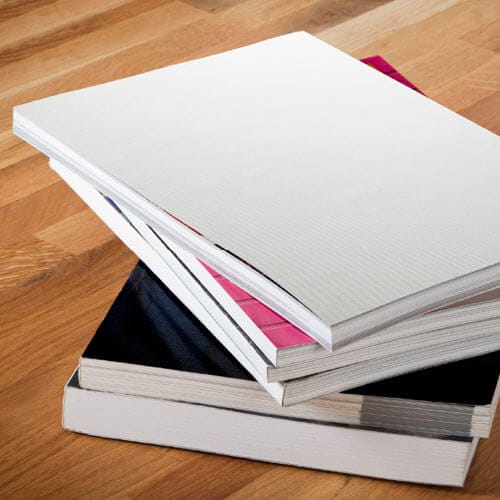
Perfect binding — the safe pick for full-length titles. Glued, square spine, printed title on the spine face. Works well for anything over roughly 80 pages: class-set novels, anthology collections, reference titles that stay on a shelf between checkouts. It's the format most retail paperbacks use, and it's the one that survives a full school year of circulation. See the full perfect binding vs saddle stitch comparison before you commit page count to a format. Buy for anything a library expects to circulate more than a dozen times.
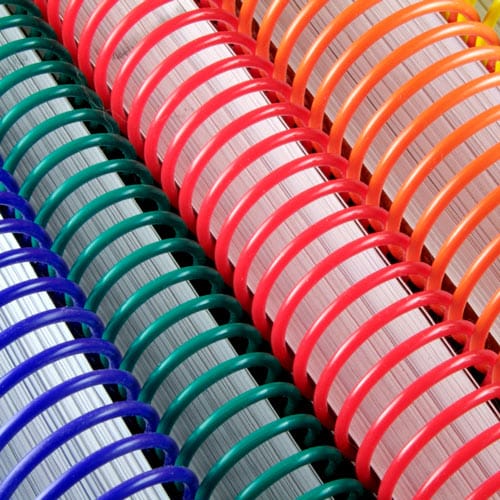
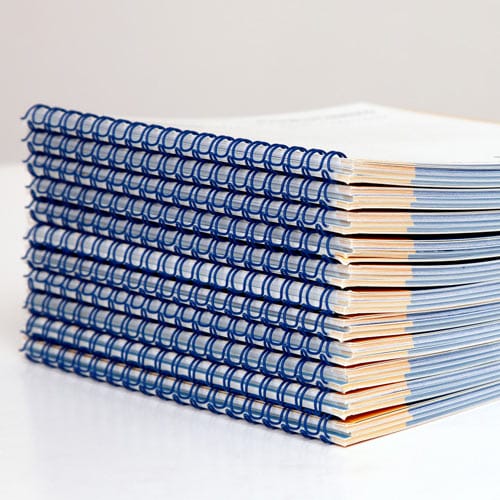
Plastic coil — the pick for workbooks that need to lie flat. A plastic spiral runs through punched holes, letting the book open flat and stay open on a desk. Works up to around 200 pages before the coil gets unwieldy. Curriculum workbooks, teacher's editions, and student activity books that need to sit open while a student writes in them belong here. Buy for anything a student writes in during use.
Wire-O — the wildcard for directories and reference manuals. Similar flat-lay function to coil but with a metal double-loop wire, which holds up better under repeated heavy use than plastic coil does. Good for library reference directories, training manuals, and anything that gets flipped open and shut dozens of times a week. Consider it when the workbook criterion above applies but the book needs to survive rougher handling than a student desk.
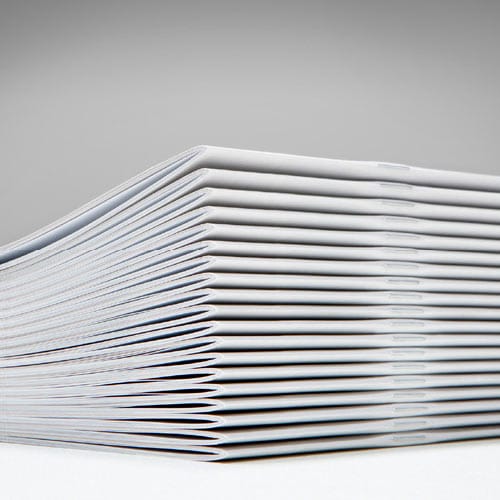
Saddle stitch — the budget pick for single-use booklets. Folded and stapled through the spine, cheapest per-copy cost of the four options, but limited to roughly 60 pages before the fold starts to bulge. Right for a one-semester program booklet, a fundraiser ad book, or a single event handout. Buy for anything with a shelf life under a school year; Skip it for a title meant to circulate for multiple years.
A saddle-stitched booklet lasts one semester; a perfect-bound book lasts a decade of checkouts.
“A saddle-stitched booklet lasts one semester; a perfect-bound book lasts a decade of checkouts.”
| Binding | Page range | Lies flat? | Best for | Verdict |
|---|---|---|---|---|
| Perfect bound | 80+ pages | No | Class-set novels, reference titles | Buy |
| Plastic coil | Up to ~200 pages | Yes | Student workbooks, activity books | Buy |
| Wire-O | Up to ~250 pages | Yes | Reference directories, training manuals | Consider |
| Saddle stitch | Under 60 pages | No | One-semester booklets, fundraiser ad books | Buy (short-use only) |
What’s the best binding for library books that circulate repeatedly?
Perfect binding is the best binding for library books that circulate repeatedly in 2026. The glued square spine holds up to dozens of checkouts a year better than a stapled saddle-stitch spine does.
Is perfect binding better than saddle stitch for school workbooks?
For workbooks students write in, plastic coil or Wire-O beat both perfect binding and saddle stitch because they lie flat on a desk. Perfect binding is better than saddle stitch specifically for full-length class-set novels over 80 pages.
Is there a minimum order for bulk book printing for libraries?
Short-run digital printing avoids the large minimum orders that offset printers require, so a library can reorder 15 copies of a single title without overordering to hit a price break.
Can a school reorder a title in a small quantity later?
Yes. Digital short-run printing doesn’t require resetting up a full offset press job, so reordering 5 or 10 replacement copies of last year’s title is a normal request, not a special case.
Is spiral or coil binding better for curriculum guides?
Plastic coil and Wire-O both let a curriculum guide lie flat during classroom use. Wire-O holds up slightly better under heavy daily handling; plastic coil costs less per copy.
What paper stock works best for books that get handled a lot?
A heavier text weight paired with a coated cover stock resists smudging, dog-eared corners, and tearing far better than thin uncoated stock, which matters most for titles a library or classroom keeps on hand for more than one year.
How many binding options does a school or library need to choose from?
Four covers nearly every school and library use case in 2026: perfect bound for full-length titles, saddle stitch for short single-use booklets, plastic coil for workbooks, and Wire-O for reference manuals and directories.
Does bulk book printing for schools work for nonfiction curriculum content?
Yes — curriculum guides, teacher’s editions, and classroom anthologies all print through the same short-run process as fiction class sets, with the binding choice driven by page count and whether students write directly in the book.
The binding decision usually gets made backward — schools and libraries pick the cheapest option per copy, then discover in month three that the spine has already split. Page count and how many times a book gets opened in a year should decide the binding before price does; price is the same conversation either way once you know which of the four formats fits the job.
© 2026 Publishing Xpress. All Rights Reserved.