October 13, 2026
Custom cookbook printing in 2026 is priced for your specific book: its page count, finished size, interior color, paper, binding, and order quantity determine the quote. A printing quote is not your complete publishing budget; recipe editing, photography, design, and delivery also need separate consideration. Compare quotes for the same specifications, then check the total delivered cost—not just the printing cost per copy.
Your cookbook's printing cost is the amount quoted for the finished specifications and quantity you order. There is no single figure that describes both a compact family recipe booklet and a photo-led cookbook. They are different print jobs.
For short-run cookbook printing, Publishing Xpress offers black-and-white or color printing and 4 binding options: perfect bound, saddle stitch, Wire-O, and plastic coil. Choose the format your readers need before comparing quotes.
Use this breakdown to separate manufacturing from the rest of your project. Ask what each quote includes rather than assuming every printer bundles the same work.
| Budget component | What to check | Why it belongs in your comparison |
|---|---|---|
| Interior printing | Final page count, color choice, paper, and finished size | Defines the recipe pages being produced |
| Cover production | Cover file, stock, and finish | Keeps cover specifications consistent between quotes |
| Binding | Exact binding method | Changes construction and how readers use the book |
| File preparation | Who handles layout, corrections, and print-ready files | Separates design work from manufacturing |
| Proofing | Proof format and approval process | Establishes how you check the book before production |
| Delivery and applicable tax | Destination and amounts included at checkout | Establishes the total you actually pay |
A useful quote describes the book, not just the amount due. Save its specifications with your files so a later revision does not leave you comparing different versions.
A cookbook needs to work beside a mixing bowl, not just look good on a shelf. Small type, cramped ingredient lists, and a binding that resists staying open create problems that a cheaper quote does not solve.
Your 2026 budget should reflect the intended reader. A family keepsake, a community fundraiser, and a cooking-class reference need different layouts and handling features. Start with that use case, then decide which production choices are essential.
Avoid judging a printer by a headline per-copy figure alone. An attractive unit quote still needs an order quantity, a clear specification, and a delivery total before it becomes a usable budget.
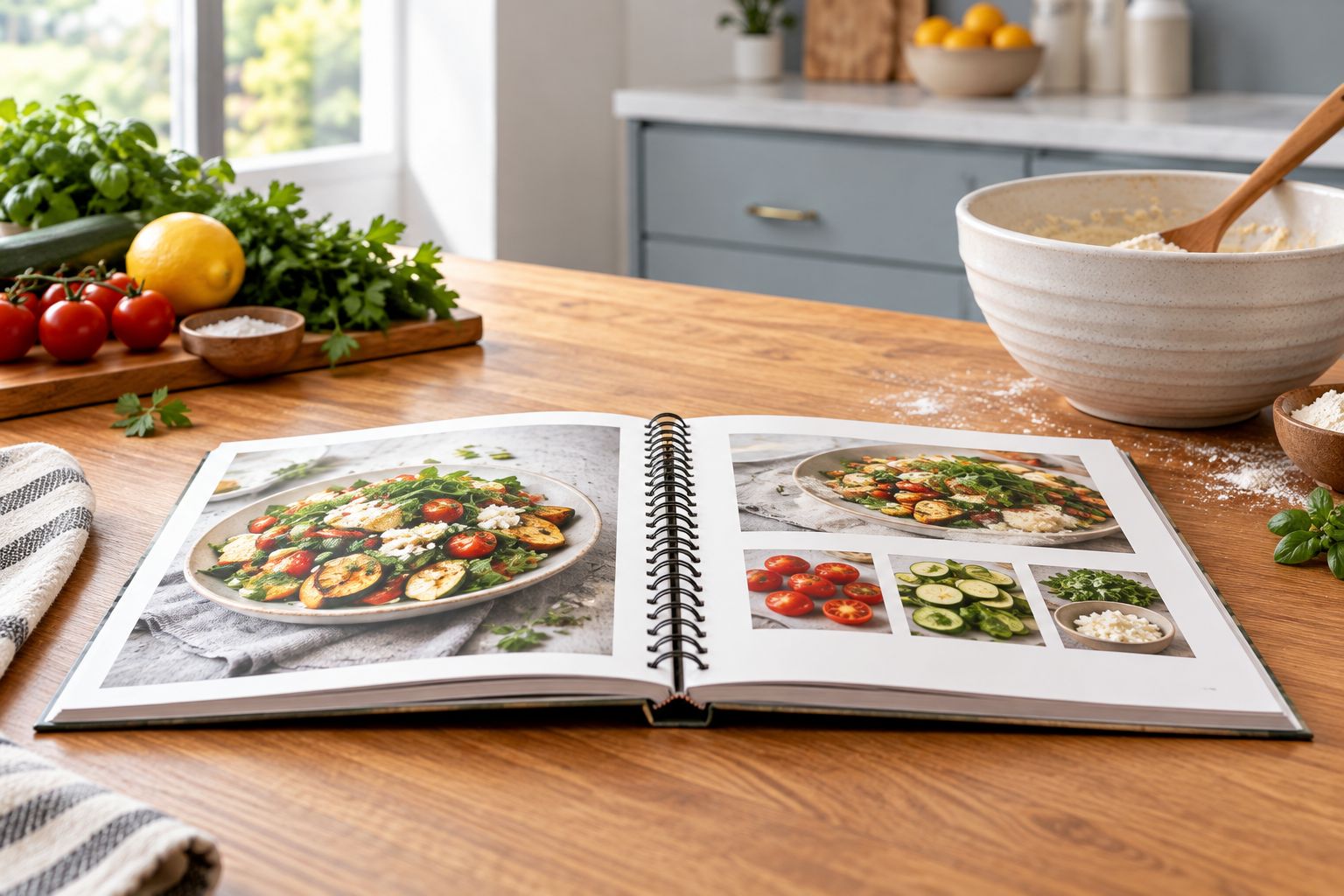
Plastic coil threads through holes along the binding edge. Pages turn around the coil, allowing the book to lie flat or fold back while you follow a recipe.
Best for: recipe collections readers will use repeatedly at a counter. The benefit is practical page handling; the trade-off is an exposed coil rather than a conventional paperback spine.
Keep ingredients, instructions, and photographs clear of the punched edge. Coil binding does not rescue a layout with text placed too close to the holes, so settle the binding before finishing your page design.
Ask for a quote using the same interior and cover specifications you would use for any alternative binding. Do not assume plastic coil has a fixed cost advantage without comparing the actual project.
Wire-O uses paired metal loops through holes along the book's edge. It allows pages to lie flat and turn back, making it a practical choice when readers need both hands for cooking.
Best for: cookbooks where keeping the recipe visible matters more than having a printed spine. The limitation is the exposed wire; metal loops can bend when crushed, so handling deserves attention.
Give the binding edge enough space for the punching area. Check long ingredient names and side notes as carefully as the main recipe text.
Wire-O and plastic coil both address open-page use, but they are different constructions. Compare their quoted specifications instead of treating the words spiral and wire as interchangeable.
Perfect binding joins the pages with adhesive inside a wraparound cover. It creates the familiar paperback format, with a spine whose dimensions depend on the interior's thickness.
Best for: cookbooks intended to read and display like paperback books. The advantage is the conventional book shape; the limitation is that standard perfect binding is not a lay-flat construction.
Keep recipe text out of the inner gutter. A reader should not have to press the book hard to see the end of an ingredient line.
Do not design the final cover spine before confirming the paper and page count. Those choices determine the interior thickness and therefore the cover dimensions your printer needs.
Saddle stitching holds folded sheets together with staples along the fold. It fits compact booklets rather than thick recipe collections.
Best for: a short event handout, introductory recipe collection, or small community booklet. Its construction is simple, but booklet thickness limits how much content you can include.
Folded-sheet saddle-stitched interiors use 4-page increments. Include any blank pages required by the layout in the page count you submit for quoting; blank does not mean absent from the physical booklet.
Do not compress a substantial cookbook into tiny type just to keep the booklet thin. If the recipes need more space, reconsider the format instead of sacrificing readability.
The right binding is the one that supports how someone cooks from your book. This table compares construction and handling, not unverified cost rankings.
| Binding | Best for | Main advantage | Main limitation |
|---|---|---|---|
| Plastic coil | Everyday kitchen use | Lies flat and folds back | Exposed coil; requires punching clearance |
| Wire-O | Open-page recipe reference | Lies flat and turns back | Exposed metal loops can bend |
| Perfect bound | Conventional paperback cookbook | Familiar paperback format | Not a lay-flat construction |
| Saddle stitch | Compact recipe booklet | Folded booklet construction | Unsuitable for thick collections |
For a hands-on recipe collection, choose the required page behavior before comparing binding quotes. The guide to binding a cookbook that lies flat while cooking explains that decision in more detail.
These production choices define the print job. Keep them fixed when comparing printers, and change them deliberately when comparing versions of your own book.
Do not assume changing a single feature produces a predictable saving. Ask for a revised quote and check whether another specification changed with it.
For example, reducing the trim size can push the same recipes onto more pages. That is a layout change, not simply a smaller version of the same printing job.
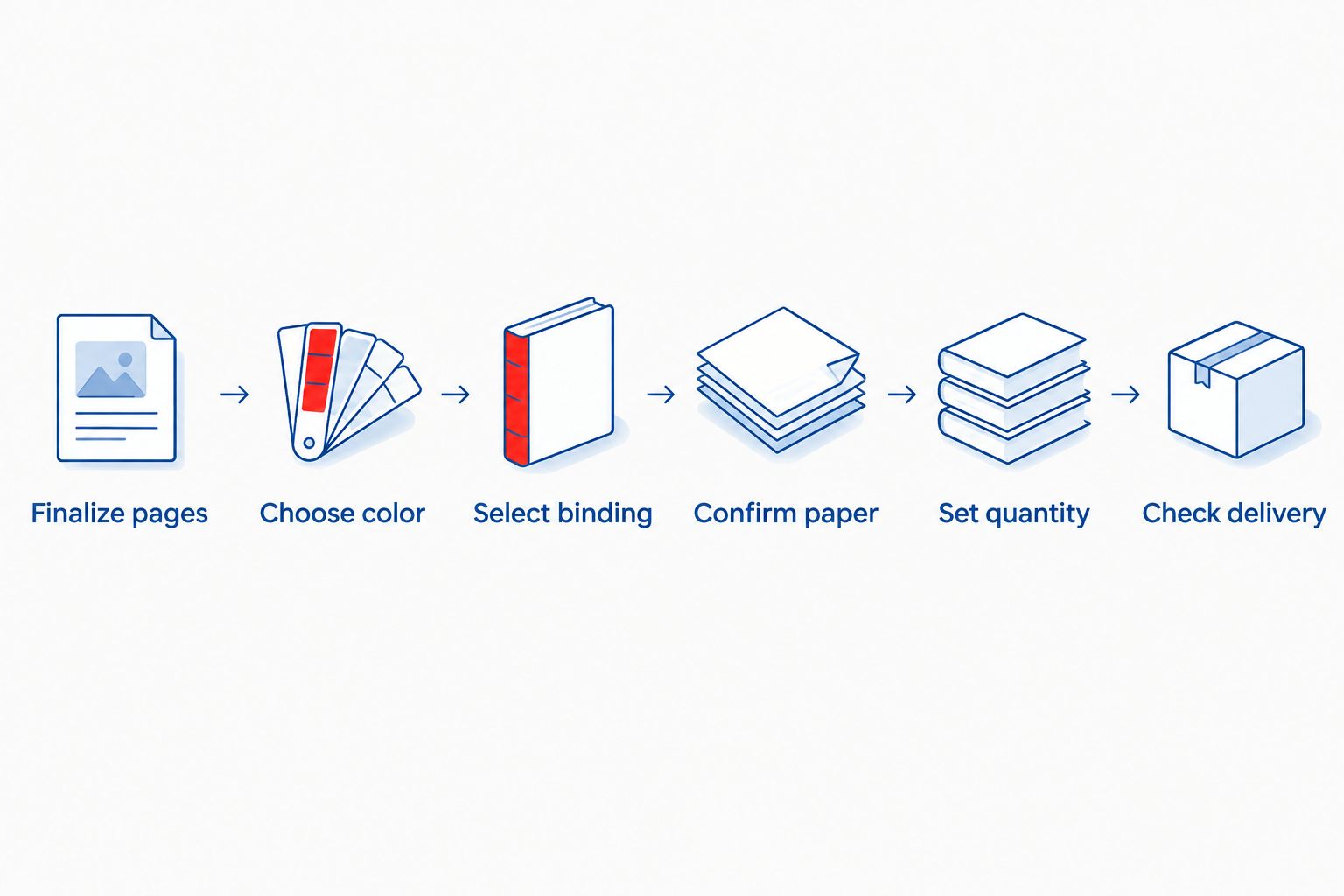
For a reliable 2026 quote, finalize the book's basic production choices before requesting comparisons. You do not need every decorative detail settled, but you do need a consistent specification.
Write these choices in a brief you can reuse. If a printer proposes a substitute, label it as an alternative rather than treating it as an identical quote.
Publishing Xpress provides short-run cookbook printing with black-and-white or color interiors and the four listed binding methods. That makes it relevant for self-publishers and organizations planning a limited run; you still need to match the binding to kitchen use and check the current project total.
Plan your cookbook print run
Choose your page count, interior color, binding, and quantity before checking current printing options.
Keep the features readers use; question the features they do not. Start with clear ingredient lists, readable instructions, and suitable binding, then evaluate photography and decorative pages against your purpose.
A text-led family collection does not need the same visual treatment as a cookbook built around plated-food photography. Neither format is automatically the right choice. What matters is whether the design helps the intended reader.
Edit before final pagination. Removing duplicate recipes or unnecessary filler is different from squeezing useful instructions into less space; protect readability when making cuts.
Request alternative quotes by changing one specification at a time. Compare color against black-and-white, or one suitable binding against another, while holding the remaining choices steady.
Ordering more cookbooks is not automatically better value. Even when a larger quantity produces a lower quoted cost per copy, your total commitment and number of undistributed books still matter.
For a 2026 fundraiser, use confirmed distribution plans rather than optimistic demand. Include copies intended for contributors, organizers, or demonstrations in your planning, but do not confuse those copies with sales.
Ask how a repeat order would be handled. Do not assume future quotes, specifications, or delivery terms will match the first order.
A printing quote covers only the work it explicitly lists. Recipe testing, editing, photography, permissions, cover design, and interior layout need their own budget when they are not included.
Keep manufacturing and content preparation separate in your project records. That distinction lets you compare printers without mixing in a photographer's work or a designer's fee.
Before approving a 2026 order, also check delivery and proofing details. Confirm who approves the final files and what happens if you request changes afterward.
How much does custom cookbook printing cost in 2026?
Custom cookbook printing in 2026 requires a quote for your page count, finished size, color, paper, binding, and quantity. Compare the total delivered cost for identical specifications rather than relying on a generic average.
What’s the best binding for a cookbook used while cooking?
Plastic coil and Wire-O are practical choices for cookbooks used while cooking because they lie flat and allow pages to turn back. Their exposed bindings and punching clearance are trade-offs to consider during layout.
Is black-and-white printing suitable for a family cookbook?
Black-and-white printing suits a family cookbook whose recipes do not depend on color photographs. Check any converted images and keep ingredient lists and instructions easy to read.
Does Publishing Xpress print short-run cookbooks?
Publishing Xpress offers short-run cookbook printing without large minimum order requirements. Its printing options include black-and-white or color interiors and perfect bound, saddle stitch, Wire-O, and plastic coil binding.
How do I count pages for a cookbook printing quote?
Count every interior PDF page, including front matter, recipe pages, indexes, and intentional blanks. A leaf has 2 page faces, so do not use the number of loose sheets as your page count.
Can I use saddle stitch for a small recipe booklet?
Saddle stitch suits compact recipe booklets rather than thick cookbooks. Folded-sheet interiors use 4-page increments, so confirm pagination and the printer’s construction requirements before finishing the layout.
Do cookbook printing quotes include design and shipping?
Cookbook printing quotes include only the items they explicitly list. Check design, file preparation, proofing, delivery, and applicable tax separately before treating a quote as your complete budget.
Test a recipe spread with your hands occupied before approving the layout. Print it at the intended finished size, place it on a counter, and check whether you can read the ingredients and follow the method without repeatedly moving the page.
This simple check exposes cramped text and awkward page breaks before they become part of the finished book. A cookbook succeeds when you can cook from it—not merely when the files look good on screen.
© 2026 Publishing Xpress. All Rights Reserved.