August 5, 2026
Cookbook pages get wet, greasy, and flipped through hundreds of times — the paper stock you pick decides whether the book survives a Sunday of sauce-making or falls apart by month three.
A cookbook isn't read once and shelved — it's propped open near a stove, splattered with olive oil, and handled with wet hands. Paper stock decisions that work fine for a novel (60 lb. uncoated, standard perfect binding) fall apart under kitchen conditions.
Get the stock wrong and you'll see two failure modes in 2026 print runs: pages that curl and yellow from grease absorption, or a spine that cracks because the interior paper was too heavy for the binding method. Both are avoidable if you match paper weight, coating, and finish to how the book actually gets used.
Publishing Xpress prints cookbooks in both black-and-white and color, and paper stock is one of the first questions that comes up on every cookbook printing order — get it right before you submit files, not after the first proof arrives.
Text weight is the single biggest lever on durability and cost. Standard book paper runs 50-60 lb.; cookbook interiors do better at 70-80 lb. because the heavier sheet resists show-through from grease and moisture.
A 60 lb. sheet is fine for a text-only recipe collection with no photos. A photo-heavy cookbook needs 80 lb. minimum or the images look thin and the paper feels cheap in hand. Expected outcome: pages that don't curl after a single splatter.
Common mistake: picking 60 lb. gloss for a full-color cookbook to save money, then getting a proof where photos look washed out because the sheet is too light to hold ink density.
Coated stock (gloss or silk/satin) makes food photography pop — color saturation and contrast are noticeably better than uncoated paper. Uncoated stock reads better under kitchen lighting with less glare, but colors look flatter.
If more than 30% of your pages carry a photo, go coated. If the book is mostly text with the occasional black-and-white illustration, uncoated saves money and reads fine.
Common mistake: choosing matte for a color cookbook because it looks classier, then finding the photos of finished dishes look muddy compared to a gloss sample.
Covers take the most abuse — coffee rings, oil fingerprints, being propped against a stand mixer. A 10 pt. or 12 pt. cover stock with a gloss or matte laminate holds up far better than an uncoated cover that absorbs everything it touches.
Gloss laminate wipes clean with a damp cloth. Matte laminate resists fingerprints but shows grease spots more visibly. Expected outcome: a cover that still looks presentable after a dozen cooking sessions.
This step gets skipped constantly and causes the most reprints. Plastic coil and Wire-O binding both punch holes through every sheet — stock over 100 lb. text weight punches inconsistently and can tear at the hole line over time.
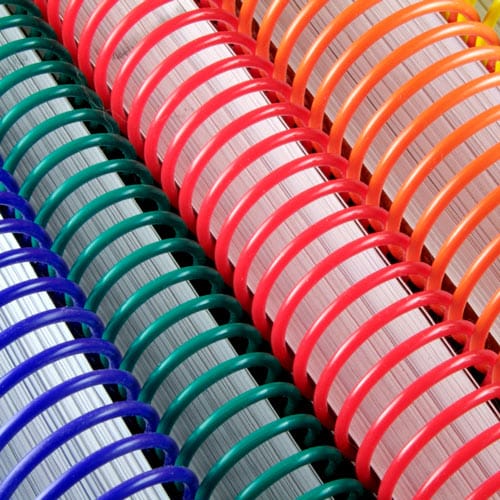
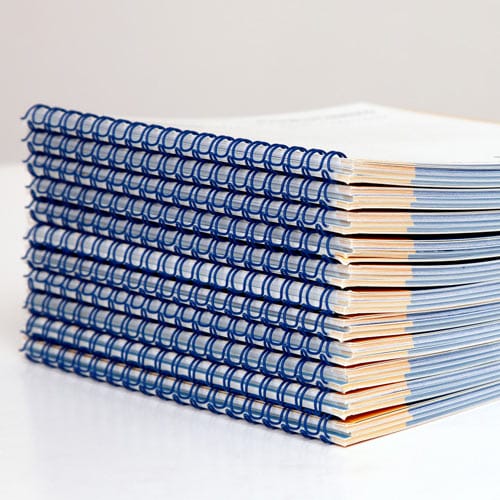
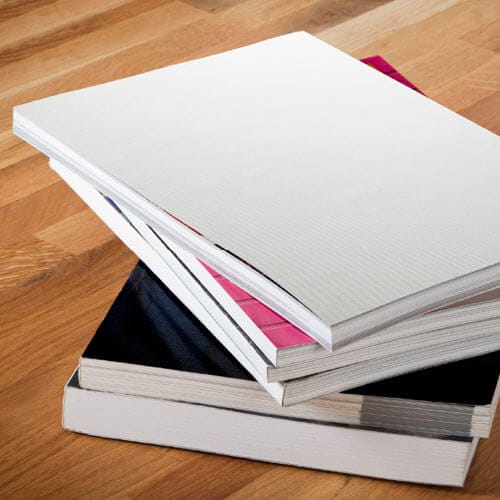
Perfect binding has no punching issue but caps out on how heavy a text stock you can use before spine glue can't hold the block together at higher page counts. Plastic coil binding is the standard pick for cookbooks specifically because it lets the book lie flat on a counter — check that your chosen stock weight is compatible before finalizing files.
Common mistake: locking in 100 lb. gloss text for a coil-bound book, then getting proofs back with ragged, uneven hole punches.
Full-bleed photos (images that run to the edge of the page) need extra trim tolerance and print best on coated stock, since uncoated paper can show fiber fuzzing right at the bleed edge. Set bleed margins correctly in your file before you ever get to paper stock decisions — a great stock choice can't fix a file that wasn't built for bleed.
Expected outcome: clean edges on every full-page food photo, no white sliver at the trim line.
Screen previews lie about paper — gloss looks different on a monitor than in hand, and color saturation shifts depending on coating. A physical proof on the exact stock and binding you're ordering catches problems a PDF preview never will.
Common mistake: approving a digital proof only, then discovering the actual gloss stock makes recipe text harder to read under kitchen lighting due to glare.
Pages feel flimsy or see-through. Bump text weight from 60 lb. to 70 or 80 lb. — this is the most common fix and it's rarely a design problem.
Photos look dull or undersaturated. Switch from uncoated to gloss or silk-coated stock; the same file prints noticeably richer on coated paper.
Coil or Wire-O holes look ragged. Text stock is too heavy for the binding method — drop to 70-80 lb. or switch binding to perfect bound.
Cover shows fingerprints and stains fast. Add gloss laminate to a 10 pt. or 12 pt. cover stock instead of leaving it uncoated.
Book won't lie flat while cooking. This is a binding issue, not paper — coil or Wire-O solves it; perfect binding won't.
Spine feels too thick or too thin at the printer's estimate. Recalculate using actual page count and confirmed text weight — heavier stock adds real bulk that changes spine width on perfect-bound jobs.
| Stock | Best for | Watch out for |
|---|---|---|
| 60-70 lb. uncoated text | Text-only recipes, budget runs | Grease show-through, dull color |
| 80 lb. gloss text | Photo-heavy cookbooks | Higher cost per copy |
| 80 lb. silk/satin text | Color photos without glare | Slightly less pop than full gloss |
| 10-12 pt. gloss cover | Covers that get handled daily | Fingerprints show more than matte |
| 10-12 pt. matte cover | Cleaner look, less glare | Grease spots more visible |
Once your paper stock is locked, the next decision is which binding format actually fits how the book gets used in a kitchen. Compare durability and cost across formats in best cookbook printing services for home cooks and bloggers before you place a full print run in 2026.
What is the best paper stock for cookbook printing in 2026?
80 lb. gloss or silk text stock is the best paper stock for cookbook printing in 2026 when the book includes color food photography. Text-only recipe collections can use 60-70 lb. uncoated stock to lower cost per copy.
Should a cookbook cover be gloss or matte?
Gloss cover stock at 10-12 pt. wipes clean easier and is the better pick for cookbooks handled daily in the kitchen. Matte looks more premium but shows grease spots more visibly over time.
Does paper weight affect cookbook binding options?
Yes. Plastic coil and Wire-O binding punch through every sheet, so text stock over 100 lb. can punch unevenly or tear at the hole line. Perfect binding avoids the punching issue but has its own limits at very heavy stock and high page counts.
Is coated paper better than uncoated for cookbook photos?
Coated stock, especially gloss, produces noticeably richer color and contrast for food photography than uncoated paper. Uncoated stock reads better under bright kitchen lighting with less glare but flattens photo color.
What binding lets a cookbook lie flat while cooking?
Plastic coil and Wire-O binding both let a cookbook open fully flat on a counter, which perfect binding cannot reliably do. This is why coil is the most common binding choice for working kitchen cookbooks in 2026.
How much does paper stock affect cookbook printing cost?
Moving from 60 lb. uncoated to 80 lb. gloss text raises cost per copy noticeably since heavier, coated stock costs more per sheet. The jump is usually worth it for any cookbook with more than a handful of color photos.
Can I test paper stock before ordering a full cookbook print run?
Yes. Ordering a small proof batch on your chosen stock and binding before committing to the full run catches color, weight, and hole-punch issues that a screen preview won’t show. This matters more for photo-heavy cookbooks than text-only ones.
The stock decision most first-time cookbook printers skip isn't weight or coating — it's testing the actual binding punch on your chosen paper before the full run ships. A 90 lb. gloss sheet can look perfect on a swatch card and still punch unevenly through 150 pages of coil holes; a physical proof catches that in 2026 before it becomes a reprint.
© 2026 Publishing Xpress. All Rights Reserved.