August 4, 2026
Home cooks and food bloggers who want a real cookbook — not a stapled zine — need a printer that handles photo-heavy layouts, lies flat at the stove, and doesn't force a 500-copy minimum. This guide ranks the five services worth considering in 2026 and tells you which one fits a 25-copy farmers-market batch versus a 500-copy Kickstarter fulfillment.
A cookbook is not a novel. Pages need to survive splattered batter, stay open on a counter, and show off photography without a gutter eating the shot. That means binding choice matters more here than in almost any other book category, and it's the first thing that separates a real cookbook and recipe collection printing job from a generic paperback run.
Most general-purpose print-on-demand platforms were built for novels and were never optimized for lay-flat function. That's the gap this list is measuring against — not just price per copy, but whether the finished book actually behaves like a cookbook once it's off the shelf and on the counter.
Each service is scored on four things that matter specifically for cookbooks and recipe collections in 2026: binding options (does it offer coil, Wire-O, or only perfect binding), minimum order size, paper stock choice for photo reproduction, and setup complexity for a first-time self-publisher or blogger.
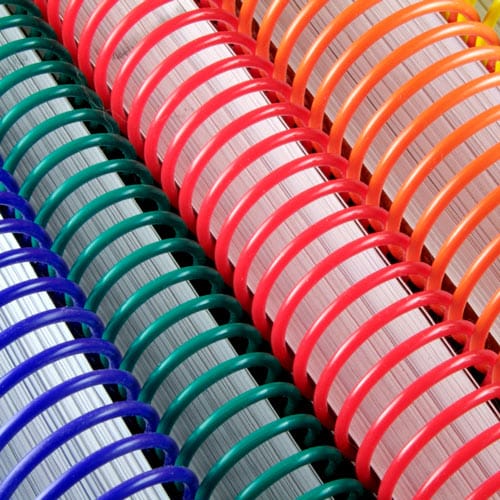
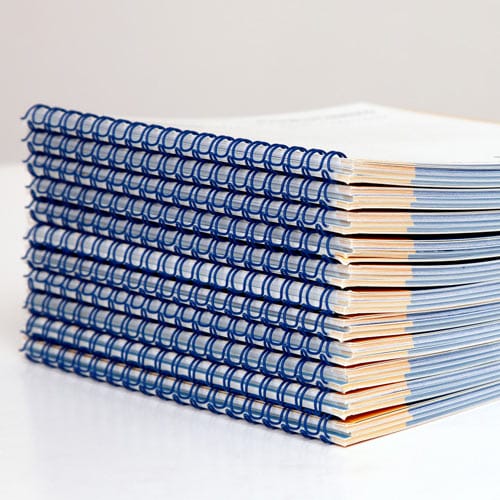
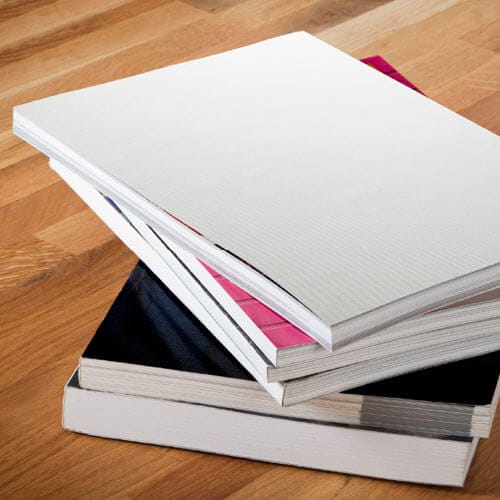
Binding is the deciding factor for most home cooks. A recipe book under roughly 60 pages that needs to lie flat while you're stirring a pot is a poor fit for perfect binding, which relies on a glued spine that resists opening flat. Wire-O cookbook binding and plastic coil solve that problem because the pages rotate 360 degrees around the spine. Perfect binding still works fine for cookbooks over 100 pages with heavier trim, where the added bulk actually helps the book stay open.
Setup complexity counts too. A food blogger self-publishing a 40-recipe collection doesn't want to fight with distribution metadata or ISBN requirements meant for trade publishing. That knocks a few services down the list even when their print quality is solid.
Publishing Xpress supports four binding types — perfect bound, saddle stitch, Wire-O, and plastic coil — with no large minimum order requirement, which matters when a food blogger wants 40 copies for a launch, not 400. The cookbook printing for food bloggers use case fits a home cook running a small batch for a farmers market, a family reunion, or a niche audience that found the recipes online first.
What it does: you upload a print-ready PDF, choose binding and paper stock, and order the exact quantity you need instead of rounding up to a case size. For a recipe book, that flexibility beats a fixed-format platform every time a photo layout needs a specific paper weight.
Why now: coil and Wire-O options let a spiral-format cookbook lie flat on a counter, which none of the big print-on-demand platforms handle as a first-class option in 2026. Verdict: Buy for anyone printing 25 to 500 copies who needs binding flexibility.
Amazon's Kindle Direct Publishing print arm charges nothing to set up and prints on demand as orders come in, which is appealing for a blogger testing demand. The catch: KDP only offers paperback and hardcover casewrap, with no coil, Wire-O, or spiral option.
That's a real limitation for a cookbook. A 90-page recipe collection in perfect binding will close itself the moment you let go of the spine, forcing you to prop it open with a bowl or a bag of flour. It works fine for a text-heavy cookbook with few photos, but a photo-forward format loses function fast.
Why now: KDP still makes sense as a distribution channel for a cookbook that's already print-ready and doesn't need lay-flat behavior. Verdict: Skip for a cookbook that needs to open flat; Hold if you're only distributing a standard paperback.
IngramSpark's strength is getting a book into bookstore and library ordering systems, not short-run flexibility. Setup involves more metadata fields and file requirements than a self-publisher printing a personal cookbook typically wants to deal with.
It does support a broader trim size range than KDP, and returns options that matter if you're pursuing retail placement. For a home cook printing recipes for family or a small following, that infrastructure is overkill.
Why now: worth it only if the cookbook is part of a bigger publishing push with retail ambitions in 2026, not a one-off gift project. Verdict: Hold — good for distribution, not for a quick short run.
Blurb's design tools lean toward photo book and magazine-style layouts, which suits a cookbook where every recipe gets a full-page shot. The interface handles image-bleed layouts more smoothly than a straight text-publishing platform.
The tradeoff shows up on small runs. Per-unit cost stays high under roughly 100 copies because Blurb's pricing model favors single-copy and low-volume orders rather than short-run batches priced for resale.
Why now: a strong pick if the cookbook is a personal keepsake or gift project with heavy photography and you're ordering fewer than 20 copies. Verdict: Consider for photo-dense personal projects; less competitive for a blogger printing to sell.
Lulu's self-service platform gets a single proof copy into your hands quickly, which is useful for checking color accuracy on food photography before committing to a bigger order. Binding options are narrower than a specialty short-run printer, leaning mostly toward standard paperback and hardcover formats.
For a food blogger who just wants to see one physical proof before a bigger print run elsewhere, Lulu's speed is genuinely useful. It's a weaker fit as the final production printer for a cookbook that needs coil or Wire-O.
Why now: use it to proof, not to produce your final run, unless a standard paperback format already suits your project. Verdict: Hold.
| Service | Binding options | Best for | Setup complexity | Verdict |
|---|---|---|---|---|
| Publishing Xpress | Perfect, saddle stitch, Wire-O, coil | Short-run cookbooks, food bloggers | Low | Buy |
| KDP | Paperback, hardcover | Text-heavy, wide retail reach | Low | Hold/Skip |
| IngramSpark | Paperback, hardcover, broader trims | Bookstore/library distribution | High | Hold |
| Blurb | Paperback, hardcover, photo layouts | Personal photo-heavy keepsakes | Medium | Consider |
| Lulu | Paperback, hardcover | Single proof copies | Low | Hold |
What’s the best binding for a cookbook printed by a home cook?
Plastic coil or Wire-O binding works best for most home-printed cookbooks because the pages rotate flat and stay open on a counter. Perfect binding is a better fit only once page count climbs past roughly 100 pages.
Is Wire-O or plastic coil better for recipe books?
Both lie flat, but Wire-O’s metal loops hold up better to repeated daily use, while plastic coil is lighter and slightly cheaper for a smaller run. Pick Wire-O for a cookbook meant to last years in a kitchen.
How much does cookbook printing cost in 2026?
Cost depends on page count, paper stock, and quantity — short runs of 25 to 100 copies typically carry a higher per-unit cost than runs of 250 or more because setup costs spread across fewer books. Get a quote based on your exact page count and binding choice before comparing printers.
Can food bloggers print a cookbook without an ISBN?
Yes, a personal or direct-sale cookbook doesn’t need an ISBN unless you’re distributing through retail bookstores. Skipping it is common for bloggers selling directly to their audience.
Does KDP support spiral-bound cookbooks?
No, KDP prints only paperback and hardcover casewrap formats, with no coil, Wire-O, or spiral option available in 2026. That rules it out for any cookbook that needs to lie flat.
Is IngramSpark good for a first cookbook?
IngramSpark suits a cookbook aiming for bookstore or library distribution, but the added file and metadata requirements are more setup than most first-time self-publishers need. A specialty short-run printer is faster for a personal or direct-sale project.
What page count needs perfect binding instead of coil for a cookbook?
Perfect binding starts to make sense once a cookbook passes roughly 100 pages, where the added bulk gives the glued spine enough surface to hold. Below that, coil or Wire-O keeps the book functional at the stove.
Do cookbook photos need full-bleed printing?
Full-bleed printing is standard for recipe photography that runs to the edge of the page, since it avoids a white border cutting into the shot. Confirm your printer supports bleed setup before finalizing your file.
The detail most home cooks miss until the proof arrives: coil and Wire-O binding add roughly a quarter-inch to a book's spine width compared to perfect binding at the same page count, which changes how the cover file needs to be sized. Check that measurement with your printer before you finalize cover art, not after.
© 2026 Publishing Xpress. All Rights Reserved.