August 30, 2026
Book printing for pet groomers and boarding facilities means short-run printing of client intake booklets, boarding care guides, staff training manuals, and service menus sized for a front desk or kennel office — not a bookstore shelf. A grooming salon or boarding kennel doesn't need a 300-page tome; it needs a 16- to 40-page document that survives being handled with wet hands, clipped to a kennel door, or flipped one-handed while someone holds a leash.
A grooming salon and a boarding kennel both run on repeat questions: what vaccinations does my dog need, when is pickup, what does the de-shed add-on cost. A printed guide answers those before the phone rings, and it does the job better than a laminated sheet taped to the counter that nobody replaces when prices change. The custom book printing for veterinary and pet clinics segment faces the same pressure — staff turnover, seasonal volume swings, documents that get handled dozens of times a day.
Groomers and boarding operators also print for internal use more than most small businesses do. A staff training manual for bathing protocols, a boarding intake checklist, an emergency procedure card — these get used daily by people whose hands aren't always dry, which changes what binding and paper stock actually hold up. That's the piece a generic "how to print a book" guide skips.
Before picking a binding or paper stock, separate what you're printing by who reads it and how often.
Each of these has a different lifespan and handling pattern, and that's what should drive the binding decision in the next step, not what looks nicest.
The binding decision matters more for groomers and boarding facilities than for most small businesses because the documents get handled wet, one-handed, or under a wall-mounted holder. The perfect binding vs saddle stitch comparison covers the general tradeoffs; here's how it maps to this segment specifically.
The manual route — hole-punching sheets into a binder — works for a single location with one staff member. It falls apart fast once you have three groomers on rotating shifts each with their own copy that goes missing.
Standard 20 lb. office paper absorbs water spots and curls within a week on a grooming floor. A few adjustments fix that without adding real cost.
An 8.5 x 11 in. document doesn't fit a kennel door holder or a small counter rack. Match trim size to where the document actually lives.
The fastest way to waste a print run is finalizing the file before the content is locked. Draft first, print second.
Groomers and boarding facilities reorder more often than a typical business booklet — service menus change with seasonal pricing, and boarding agreements get updated whenever a policy shifts. Short-run printing without a large minimum order requirement matters here more than it does for a one-time print job. The how to price a bulk book printing order breakdown covers how per-copy cost shifts with quantity, which matters when you're ordering 50 copies today and another 50 in six months.
Start your order directly through Publishing Xpress when you're ready to spec the run — quote the exact page count, binding, and stock before committing to a full batch.
| Option | Best for | Key limitation |
|---|---|---|
| Saddle stitch | Service menus, intake booklets under 60 pages | Won't lay fully flat, pages can pull loose under 16 pages |
| Perfect binding | Care guides and manuals past 50-60 pages | Spine cracks fast if the page count is too thin |
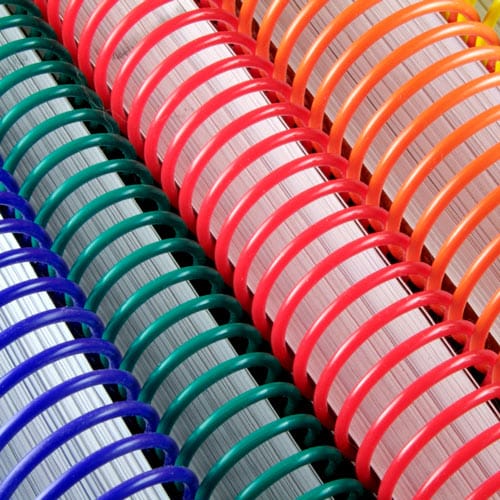
| Plastic coil | Training manuals, boarding checklists needing 360-degree opening | Coil can deform if crushed in a bag or drawer |
| Wire-o | Daily-use SOPs and training manuals on the grooming floor | Slightly higher per-unit cost than saddle stitch |
Wire-o wins for anything a technician flips through one-handed while holding an animal; saddle stitch wins for anything that just sits on a counter.
What’s the best binding for a pet grooming staff training manual?
Wire-o or plastic coil binding works best for a staff training manual because both lay flat and open a full 360 degrees, which matters when a technician is flipping pages with one hand. Saddle stitch or perfect binding restrict how far the pages open, which slows down reference use on a busy grooming floor.
How many pages should a boarding facility client care guide be?
Most boarding care guides run 16 to 32 pages, enough to cover vaccination requirements, drop-off and pickup procedures, and an FAQ section without overwhelming a first-time client. Saddle stitch handles that page range well and keeps per-copy cost low.
Is saddle stitch or wire-o better for a service menu?
Saddle stitch is better for a service menu because it’s cheaper at low page counts and the menu doesn’t need to open flat on a table the way a training manual does. Switch to wire-o only if the menu runs past 60 pages or gets handled daily by staff rather than clients.
Can I reorder a small batch of boarding agreements without a big minimum order?
Yes — short-run book printing with no large minimum order requirement is built for exactly this, letting a boarding facility reorder 50 or 100 copies of an updated agreement without committing to a warehouse-sized batch. Confirm the current minimum and per-copy cost before placing a reorder.
What paper stock holds up best in a grooming shop?
Coated or laminated stock on the cover, paired with a matte finish on interior pages, holds up best against water spots and curling in a grooming environment. Heavier interior stock, in the 60-70 lb. range, resists tearing better than standard office paper on documents handled daily.
How much does short-run book printing cost for a grooming business in 2026?
Cost depends on page count, binding, paper stock, and quantity, so get a specific quote for your exact specs rather than relying on a flat rate. Per-copy cost drops as quantity increases, which is why bundling a year’s worth of reorders into fewer, larger runs often costs less per copy in 2026.
How long does short-run book printing take?
Turnaround varies by binding type, page count, and current order volume, so confirm the timeline when you request a quote rather than assuming a fixed number of days. Building in extra lead time before a known reorder date, like a seasonal price change, avoids a rush situation.
Should boarding facilities print separate manuals for each location?
Multi-location boarding operators generally need separate care guides per location because drop-off hours, emergency contacts, and local vaccination partner clinics differ by site. A shared staff SOP manual can stay consistent across locations since bathing and handling protocols usually don’t change by address.
Bind the staff-facing training manual and the client-facing care guide separately, even when the content overlaps heavily. The training version needs to survive being flipped one-handed while someone holds a leash, so wire-o or plastic coil is the right call there; the client version just needs to look presentable at pickup, so saddle stitch or perfect binding still make sense for that copy in 2026. Trying to make one document serve both jobs is the fastest way to end up with a manual that's too flimsy for the floor and a client guide that's needlessly expensive.
© 2026 Publishing Xpress. All Rights Reserved.