August 2, 2026
Vaccine schedules change every year, post-op instructions get updated after a bad outcome, and a waiting room brochure that looked fine in January is out of date by June. Custom book printing for veterinary clinics has to survive that pace — not just look good on day one. This guide breaks down which binding formats hold up for pet clinics, shelters, and mobile vet services in 2026, with concrete picks, verdicts, and the formats to skip.
A printed handout in a vet clinic gets handled by a nervous dog owner, a toddler in the waiting room, and a vet tech carrying it between exam rooms — often the same afternoon. Publishing Xpress prints short runs in black-and-white or color across four binding options, which matters because a single-location practice and a multi-clinic group both need the same durability without committing to a warehouse of leftover copies.
Most clinics aren't publishing a novel. They're printing post-surgery care sheets, vaccine schedule handouts, adoption paperwork for a shelter, or a staff training manual for new hires. The binding choice and paper stock decide whether that document survives one reading or a full year of daily handling in 2026.
This guide is for veterinary practice managers, hospital administrators, mobile vet services, and animal shelters or rescues ordering client-facing booklets, post-op instructions, staff manuals, or adoption guides in print runs that don't justify a commercial print broker's minimums.
A staple binding on a 12-page vaccine schedule is fine for a single reading, but a treatment protocol staff flip through daily needs something that won't loosen after 50 uses. Wire-O and plastic coil hold their shape through months of repeated opening; saddle stitch starts to sag past 64 pages or heavy daily use.
Dosage charts and vaccine schedules change on a near-annual basis, sometimes faster when a new product hits the market. Ordering without large minimum order requirements means a clinic can reprint 75 corrected copies instead of sitting on 500 outdated ones.
Anatomy diagrams, parasite lifecycle charts, and dosage-by-weight tables lose their point if the color separation is muddy. Color book printing matters more here than for a plain-text handbook — a blurry diagram in a client care booklet just creates more phone calls to the front desk.
Exam rooms get wiped down with disinfectant multiple times a day, and waiting rooms see spilled water bowls and muddy paws. A coated or heavier stock resists curling and staining better than a thin uncoated sheet, which matters for anything meant to last more than one visit.
A recall notice or a new medication guideline can't wait for a six-week print cycle. Short-run digital printing turns custom booklets around faster than offset runs built for thousands of copies, which is the whole point for a clinic that only needs a few hundred at a time.
Staple binding handles booklets up to roughly 64 pages before the spine starts to bulge and the staples strain. For a 12-16 page post-surgery care guide or a seasonal parasite prevention handout, saddle stitch keeps unit cost low and printing turnaround fast. Read the full breakdown in this saddle stitch vs perfect bound comparison before you commit to a format. Verdict: Buy for anything under 64 pages that clients read once or twice.
A glued spine holds together past the 40-page mark where staples start to fail, and it reads as more professional for a welcome packet covering clinic policies, payment plans, and boarding procedures. This format works the same way booklet printing for medical and dental offices approaches patient handbooks — the audience handling habits are nearly identical. Verdict: Consider for welcome packets over 40 pages; overkill for a single-topic handout.
Wire-O opens a full 360 degrees and sits flat on a stainless exam table, which matters when a tech needs both hands free to check a dosage chart mid-procedure. It also survives daily flipping better than any stapled format. Verdict: Buy for any reference document staff use more than once a week.
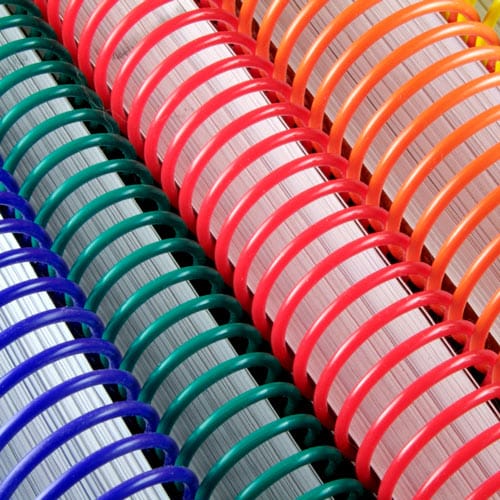
Coil binding flexes without cracking, which holds up better in a truck cab or a barn call than a rigid perfect bound spine. For mobile veterinary services and large-animal practices carrying reference guides between farm visits, that flexibility is the whole reason to pick coil over wire. Verdict: Consider for field use; skip it for anything staying on a front-desk shelf.
A tri-fold brochure works for a single-topic handout — flea season timing, a new service announcement, a boarding policy update. It falls apart as a format the moment content runs past one folded panel of real information. Verdict: Buy for single-topic takeaways; Skip for anything resembling a full care guide.
“Vaccine schedules change every year — a booklet held together with staples doesn’t survive a protocol update, it just gets thrown out early.”
| Binding | Best For | Durability Note | 2026 Verdict |
|---|---|---|---|
| Saddle Stitch | Single-read handouts, under 64 pages | Staples loosen under heavy daily use | Buy |
| Perfect Bound | Welcome handbooks over 40 pages | Glued spine holds shape long-term | Consider |
| Wire-O | Daily-reference dosage/treatment guides | Lies flat, 360-degree open | Buy |
| Plastic Coil | Mobile/field reference guides | Flexes without cracking | Consider |
| Tri-fold Brochure | Single-topic waiting room takeaways | Falls apart past one panel of content | Buy for short use only |
What’s the best binding for veterinary client care booklets?
Saddle stitch is the best binding for veterinary client care booklets under about 64 pages, since it’s fast to print and cheap per unit. For anything longer or handled daily, wire-o or perfect bound holds up better through 2026’s typical clinic traffic.
Is wire-o binding better than saddle stitch for vet clinics?
Wire-o is better than saddle stitch for any document a vet clinic staff references repeatedly, like dosage charts or treatment protocols, because it lies flat and doesn’t loosen. Saddle stitch is still the right call for single-read handouts clients take home once.
How much does custom book printing cost for a vet clinic?
Cost depends on page count, binding type, and color versus black-and-white printing, so get a current quote based on your specific booklet specs. Short-run digital printing keeps per-unit cost reasonable for clinics ordering under a few hundred copies at a time.
Can animal shelters and nonprofits get printing discounts?
Check directly with your printer about nonprofit pricing before placing an order, since terms vary by print run size and binding type. Shelters printing adoption guides or foster care handbooks should ask about small-run options rather than committing to a large minimum.
What paper stock holds up best in an exam room?
A coated stock resists moisture, disinfectant wipe-downs, and handling better than uncoated paper in an exam room environment. It also renders color diagrams and dosage charts more clearly, which matters for anything staff reference under exam lighting.
How fast can a vet clinic get a reprint after a protocol update?
Short-run digital printing turns custom booklets around faster than offset print runs built for thousands of copies, which matters when a dosage chart or recall notice needs correcting quickly. Ordering without large minimum requirements also means a clinic isn’t stuck reprinting a full year’s stock.
Do vet clinics need color printing for anatomy diagrams?
Color printing matters for anatomy diagrams, parasite lifecycle charts, and weight-based dosage tables, since black-and-white versions lose the visual distinctions that make them useful. Plain text handbooks and policy pages can stay black-and-white to save cost.
What’s the minimum order for custom booklet printing?
Publishing Xpress prints without large minimum order requirements, which lets a single-location clinic order a small custom run instead of a bulk batch built for a hospital chain. That flexibility matters most for documents tied to protocols that change yearly.
Most clinics reprint client handouts twice a year — once for spring parasite season, once for winter boarding and travel guidance. Print in two smaller custom runs instead of one large annual batch, and you'll never be handing a client a dosage chart that's already six months out of date.
© 2026 Publishing Xpress. All Rights Reserved.