August 7, 2026
Pricing a bulk book printing order comes down to three numbers: page count, binding type, and quantity. Lock those before you ask anyone for a quote, and you'll know a fair bulk book printing cost from an inflated one the moment it lands in your inbox.
Most first-time bulk orders get priced wrong because the buyer requests one quote at one quantity, for one binding, and stops there. That's how a 100-copy run ends up costing almost the same per unit as a 500-copy run — the buyer never saw the breakpoint where price per copy actually drops.
Publishing Xpress works with authors, nonprofits, and businesses ordering anywhere from a couple dozen booklets to a few thousand perfect bound books, and the pattern is consistent: page count and binding decide the price bracket before quantity does. Get those two settled and the bulk book printing cost conversation gets a lot shorter.
A quote without a final page count isn't a quote — it's a guess dressed up as one. Page count drives spine width, paper cost, and which binding options are even available to you. A 24-page booklet and a 240-page novel are priced on completely different scales, and asking for pricing before layout is locked just means you'll be re-quoting later.
Common mistake: requesting a quote off a Word doc page count instead of the final formatted PDF. Formatting changes page count by 10-20% almost every time.
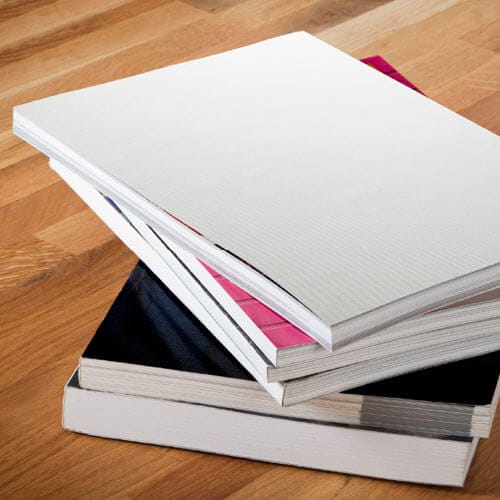
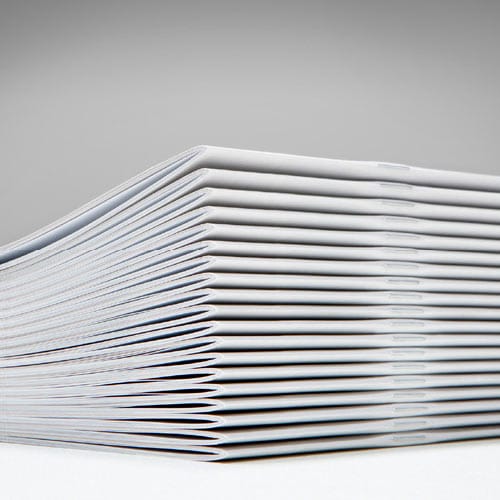
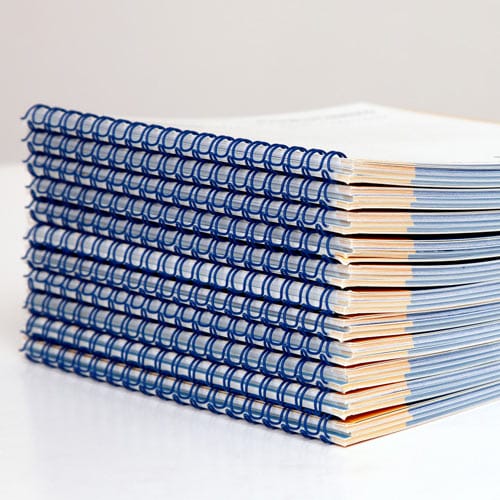
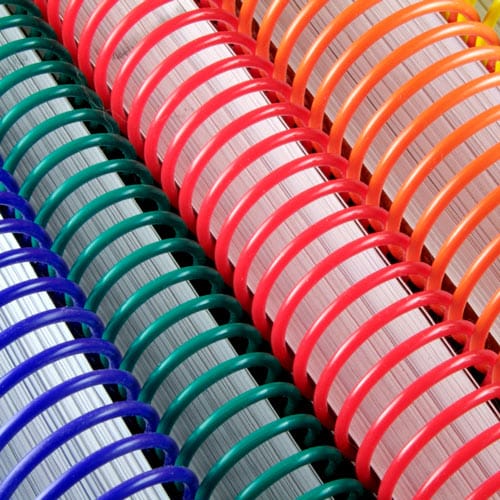
Binding is the single biggest lever in bulk book printing cost, and it's decided by physics more than taste. Saddle stitch — the stapled fold — works cleanly up to around 92 pages and gets expensive and sloppy past that. Perfect binding needs roughly 40 or more pages to hold a readable spine. Wire-O and plastic coil sit in between and open flat, which matters for workbooks and manuals more than novels.
Compare perfect binding vs. saddle stitch against your actual page count before you request pricing on either. Picking binding based on a magazine you liked, instead of your page count, is the fastest way to overpay.
Ask for pricing at three quantities in the same email: your minimum realistic order, your expected order, and roughly double that. A common spread is 100, 250, and 500 copies. The per-unit price usually drops the sharpest between the first two breakpoints — that's the number that tells you whether it's worth ordering 250 instead of 100.
Don't request one number and assume it scales linearly. Setup and press time get spread across more copies as volume rises, which is exactly why the per-unit bulk book printing cost falls as quantity climbs.
Copies get damaged in shipping, gifted early, or set aside as author copies faster than people plan for. Order 10% over your real distribution number. A reprint later — new setup, new shipping, rushed timeline — almost always costs more than those extra 10 copies would have cost on the original run.
Common mistake: ordering the exact number needed for a launch event, then paying a rush fee three weeks later for 15 more.
A quote assumes print-ready files: correct trim size, bleed set, fonts embedded, color mode set to CMYK for interiors that use color. Files that come back with problems trigger a re-quote, and re-quotes on bulk orders almost never come back lower. If your spine width is close to a binding threshold, run the numbers with a spine width calculator before you lock the page count — a few pages either way can shift which binding is even viable.
Nonprofit discounts and reorder pricing exist at Publishing Xpress and get missed constantly because buyers don't ask directly — they wait to be offered. If your organization qualifies as a nonprofit, say so in the first email, not after the quote arrives. The same goes for reorders: a second run of the same book, same specs, is a different conversation than a first-time quote.
The headline number on a bulk quote should include the binding, the paper stock, and the quantity — not just a per-copy figure with no context. Two quotes at $3.10 and $3.40 per copy aren't comparable if one is on 60 lb. text and the other is on 70 lb., or if one includes full bleed color and the other doesn't. Line up the specs before you line up the prices.
The quote came back higher than expected. Check whether your page count crossed a binding threshold — going from 88 pages to 96 pages can push a saddle stitch job into perfect binding territory, which changes the whole cost structure.
Reorder pricing looks the same as the first order. You have to ask for it. It isn't applied automatically just because the files are identical to a past job.
Files got flagged and the quote reset. Missing bleed or unembedded fonts are the two most common flags. Confirm both before submitting, not after the first rejection.
The shipment came up short of what was ordered. This usually means no overage was built into the original order. Add the 10% buffer next time, and treat it as part of the real cost, not an optional extra.
Color looks off from the proof. RGB files printed as CMYK shift color noticeably, especially in photos and cover art. Convert to CMYK before you submit, not after you see the proof.
The per-copy price barely dropped between 100 and 500 copies. That's a sign the binding or paper choice is capping how much volume pricing can help — worth asking the printer directly which lever would actually move the number.
Once the binding and quantity are settled, the next decision is print run size for the long term — one big order versus smaller repeat runs as you sell through. That decision changes the math on storage, cash flow, and per-unit bulk book printing cost differently than a single one-time print does.
What is a typical bulk book printing cost per copy in 2026?
Per-copy cost varies by page count, binding, and paper stock, and drops as quantity rises — the steepest drop usually happens between 100 and 500 copies. Get quotes at multiple quantities rather than assuming one flat rate.
How many copies count as a bulk order?
Most short-run printers treat anything from 100 copies up as bulk pricing territory in 2026. Below that, setup costs dominate the per-unit price regardless of binding.
Does binding type change bulk pricing significantly?
Yes — binding is one of the biggest levers in total cost. Saddle stitch is typically the cheapest option under 92 pages, while perfect binding becomes more cost-efficient at higher page counts and larger runs.
Should I order extra copies beyond what I need?
Add a 10% overage to any bulk order. Reprinting later for a shortfall costs more in setup and shipping than the extra copies would have cost upfront.
Is perfect binding or saddle stitch cheaper for a 500-copy order?
It depends on page count more than quantity. Saddle stitch stays cheaper under roughly 92 pages; past that, perfect binding usually wins on both cost and durability.
Do nonprofits get discounts on bulk book printing?
Nonprofit pricing breaks exist at some printers, including Publishing Xpress, but they’re rarely applied automatically. Mention nonprofit status in your first quote request.
How much does file preparation affect the final quote?
Missing bleed, unembedded fonts, or wrong color mode can trigger a re-quote that comes in higher than the original number. Confirm file specs before submitting for pricing.
What page count is too small for a bulk print run?
Anything under 24 pages is usually better suited to booklet pricing than book pricing, since binding options and paper minimums shift below that threshold.
The single biggest cost mistake on bulk orders isn't the printer's price — it's ordering at one quantity when the breakpoint one tier up would have dropped the per-copy cost enough to cover the difference. Always request that second number before you sign off.
© 2026 Publishing Xpress. All Rights Reserved.