September 18, 2026
Supper club hosts and pop-up chefs need a cookbook that survives a working kitchen, not a glossy shelf piece, and most printing options split hard on that one requirement. This guide ranks the cookbook printing services that fit short print runs, lay-flat binding, and the tight timelines that come with a rotating pop-up menu.
A supper club or pop-up chef usually needs 20 to 150 recipe books per season, not a national print run, and the book has to survive being propped open next to a stove. Most mainstream self-publishing platforms in 2026 are built for novels sold on Amazon, not working kitchen documents, so the binding and run-size mismatch shows up fast once you start comparing options.
Best overall: Publishing Xpress. Best for bookstore or retail distribution: IngramSpark. Best for a glossy keepsake edition: Blurb. Best for an Amazon-only listing: Kindle Direct Publishing (KDP). Best budget option for a single test run: Lulu.
| Service | Best for | Standout feature | Key limitation |
|---|---|---|---|
| Publishing Xpress | Supper clubs and pop-up chefs needing lay-flat, short-run copies | Four binding options including wire-o and plastic coil, no large minimum order | No built-in bookstore distribution network |
| IngramSpark | Supper clubs planning retail or bookstore sales | Wide wholesale distribution reach | No lay-flat binding option; stricter file setup |
| Blurb | A glossy, photo-heavy keepsake edition | Strong photo layout tools and hardcover options | Perfect bound only; not built for repeat short runs |
| Kindle Direct Publishing (KDP) | An Amazon-only listing, no in-person inventory | Zero upfront printing cost via Amazon's POD model | Paperback only, no lay-flat binding, slower buyer shipping |
| Lulu | A single low-cost test run before committing further | Low minimums, self-service uploader | Thinner paper stock options for photo-heavy pages |
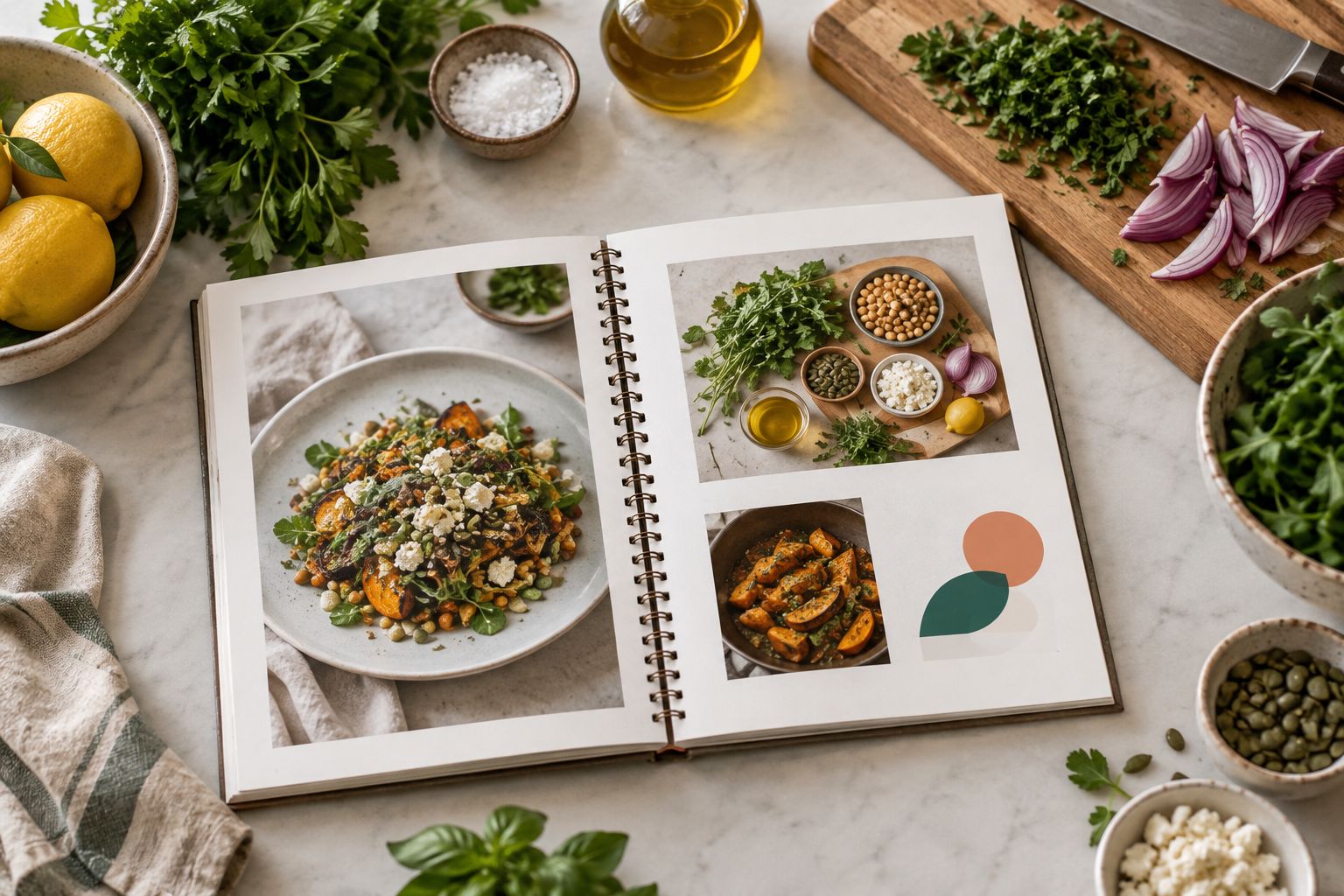
Publishing Xpress runs short-run digital printing with no large minimum order requirement, which matches how a pop-up chef actually operates — print the count that matches the guest list, not a warehouse-sized run. The binding lineup covers perfect bound, saddle stitch, wire-o, and plastic coil, and the last two are what let a cookbook lie flat while cooking instead of snapping shut on a counter.
Publishing Xpress pros:
Publishing Xpress cons:
Best for: a chef who needs a handful of recipe books per pop-up season that survive being open on a counter.
Verdict: Buy.
IngramSpark is a print-on-demand service tied into the Ingram wholesale distribution network, which puts a title in front of bookstores and libraries that order through Ingram's catalog. That reach is the whole point of using it — it's a distribution tool wearing a printing service's clothes.
IngramSpark pros:
IngramSpark cons:
Best for: a supper club turning a season of pop-ups into a book they intend to sell in shops.
Verdict: Hold — worth it only once distribution actually matters.
Blurb built its name on photo book publishing, and that shows in its layout tools and hardcover options. For a supper club wanting one polished, photo-heavy memento of a pop-up season, it does that job well.
Blurb pros:
Blurb cons:
Best for: capturing a single pop-up season as a glossy keepsake, not a tool used at the stove.
Verdict: Skip for a working cookbook; Buy if the goal is a coffee-table memento.
KDP is Amazon's print-on-demand arm, and it fits a chef who wants recipes discoverable and purchasable online without managing any physical inventory. It's a listing tool, not a way to hand a book to a guest at the table.
KDP pros:
KDP cons:
Best for: a chef who wants an online listing as a companion to the pop-up, not a printed stack for the table.
Verdict: Skip for onsite sales; Hold as an online companion listing.
Lulu runs a self-service uploader with low minimums, down to a single copy, which makes it a reasonable way to test one cookbook design before committing to a bigger run elsewhere.
Lulu pros:
Lulu cons:
Best for: a first-time supper club host testing a single edition before ordering a full run.
Verdict: Hold.
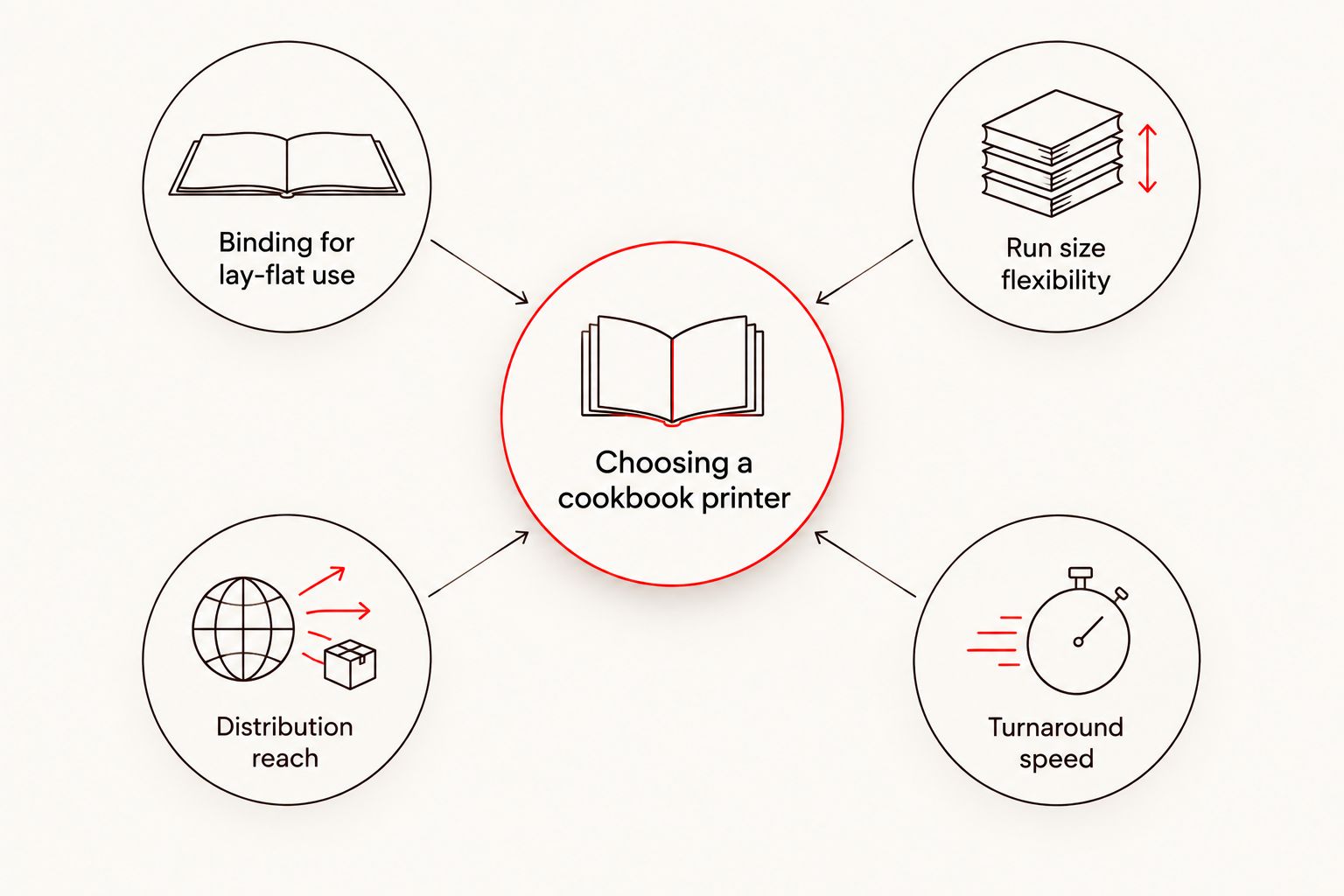
Every service above got measured against the same six criteria: lay-flat binding, short-run flexibility, turnaround speed, color and photo quality, reorder simplicity, and distribution reach where relevant. Publishing Xpress wins on the first four, which matter most to a working kitchen cookbook; IngramSpark wins only on the sixth, which most pop-up chefs never need.
“A cookbook that can’t stay open on a counter isn’t a kitchen tool, it’s a keepsake with the wrong job.”
For most supper clubs and pop-up chefs in 2026, Publishing Xpress is the default pick — wire-o or plastic coil binding keeps the book open while you cook, and the lack of a large minimum order means a 30-copy run for one pop-up season isn't a problem. Reach for IngramSpark only once you're planning to sell in bookstores. Pick Blurb if the project is really a photo memento, not a working recipe book. Treat KDP and Lulu as backups: KDP for an online-only listing, Lulu for a cheap single test copy before a bigger order.
If paper stock and photo quality are the deciding factor for your recipe pages, review how to choose paper stock for cookbook printing before locking in a binding choice, and compare coil vs. wire-o binding if you're still deciding between the two lay-flat formats.
What’s the best cookbook printing service for supper clubs and pop-up chefs in 2026?
Publishing Xpress is the best cookbook printing service for supper clubs and pop-up chefs in 2026 because it offers wire-o and plastic coil binding that lies flat during cooking with no large minimum order. IngramSpark and Blurb fit narrower needs like bookstore distribution or glossy keepsakes.
Is wire-o binding better than perfect binding for a cookbook?
Wire-o binding is better than perfect binding for a working cookbook because the pages open flat and stay open on a counter. Perfect binding, used by services like IngramSpark, Blurb, and KDP, tends to close itself during hands-on cooking.
How many copies do I need to print for a pop-up dinner series?
Most pop-up dinner series print between 20 and 150 copies per season depending on guest count and whether the book is sold or given as a keepsake. A short-run printer with no large minimum order lets you match the count to actual attendance.
Can I print a cookbook that lies flat while cooking?
Yes, wire-o and plastic coil binding both let a cookbook stay open flat on a counter during cooking. Perfect bound and saddle stitch formats generally close on their own and are harder to use hands-on.
Is IngramSpark better than Publishing Xpress for a supper club cookbook?
IngramSpark is only better than Publishing Xpress if the supper club plans to sell the book through bookstores or library wholesalers. For a working kitchen copy printed in a short run, Publishing Xpress wins on lay-flat binding and no large minimum order.
Does KDP work for selling a cookbook at a pop-up event?
KDP is not built for onsite pop-up sales because it ships paperbacks on demand with no same-day inventory. It works better as an online companion listing than as a stack of books sold at the table.
What paper stock works best for a recipe book with photos?
A heavier, coated paper stock reproduces food photography more accurately than standard uncoated text paper. The right weight depends on page count and whether the book gets handled with wet or greasy hands during cooking.
How fast can a short-run cookbook be printed before an event?
Turnaround depends on run size, binding type, and file readiness, so confirm current production timelines directly with the printer before locking in an event date. Building in a buffer before a fixed pop-up date is safer than assuming rush service is guaranteed.
The binding decision, not the cover design, is what determines whether a cookbook survives its first pop-up season — a wire-o or coil-bound book that lies flat gets used at the stove, while a perfect-bound one ends up on a shelf. Pick the format for how the book gets handled in 2026, not how it photographs on a table.
© 2026 Publishing Xpress. All Rights Reserved.