August 17, 2026
Culinary programs hand out recipe cards by the stack every semester, and the wrong binding turns a teaching tool into a pile of grease-stained, scattered pages by week three. This guide covers what actually holds up on a working kitchen counter and which format fits a cooking school's budget and reorder schedule in 2026.
A recipe card in a teaching kitchen gets handled with wet or floured hands, propped against a mixing bowl, and flipped through under time pressure. Standard office paper wilts, curls, or tears within a single lab session. Cookbook printing for cooking schools and culinary programs covers the bound-book side of curriculum materials, but individual recipe cards need their own binding logic since they're pulled apart, reshuffled, and reordered class to class.
Most culinary programs update recipes every term as menus rotate and instructors swap techniques. That means print runs need to stay small and reorderable, not locked into a warehouse-sized minimum. Recipe card printing for cooking schools in 2026 has to solve for durability and short-run flexibility at the same time, which rules out a few formats that look fine on a sample sheet but fail in an actual kitchen.
This guide is for culinary program directors, cooking school owners, and instructors building recipe packets for hands-on classes — anyone printing recipe cards that will sit on a counter next to a stove, not in a filing cabinet. If the cards are strictly for take-home reference and never touch a workstation, some of these durability calls matter less. If students cook from them mid-lesson, they matter a lot.
A card deck or booklet that won't stay open on a counter forces a student to hold it down with one hand while cooking with the other. Coil and Wire-O binding both open flat and stay there; stapled or glued spines don't. This single factor decides whether the cards get used mid-recipe or set aside and ignored.
Standard 20 lb. copy paper absorbs oil spots and goes translucent within one use near a sauté station. Coated or heavier stock — check the paper stock guide for cookbook printing for weight options — holds up through a full semester of splatters and handwashed hands.
Plating and technique photos lose their teaching value in black and white. Full color costs more per page, but for anything showing knife cuts, sauce consistency, or plate composition, it's the difference between a usable visual aid and a wasted page.
Curriculum changes every term. A program that has to order 1,000 copies to hit a minimum ends up storing outdated recipe cards or throwing them out. Short-run printing with no large minimum order lets a program print exactly what one class section needs and reorder when the menu changes.
Full letter-size sheets don't fit in a recipe box, a binder pocket, or a station clipboard the way a 5×7 or 4×6 card does. Matching the card size to how it'll actually be stored and carried around the kitchen matters more than it looks on a spec sheet.
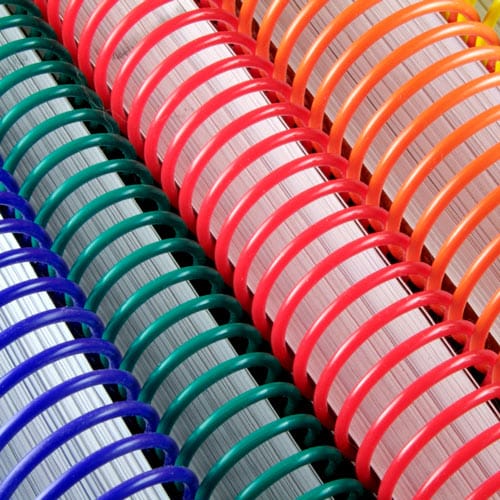
Plastic coil-bound recipe card decks — the classroom workhorse. Coil binding opens a full 360 degrees and holds up through daily flipping without the spine cracking. Plastic coil binding for recipe books walks through card counts and stock options. For a full semester's worth of recipes handled by 20-plus students, this is the pick. Buy.
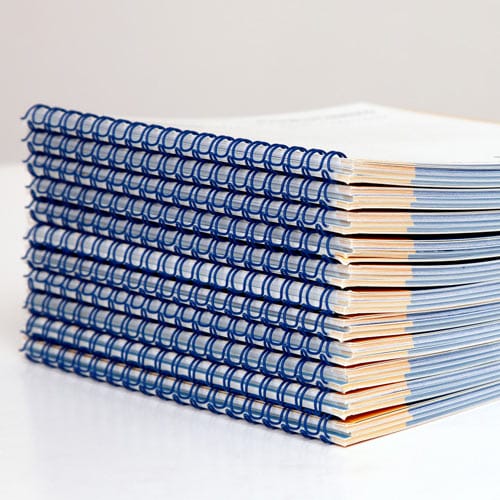
Wire-O bound recipe booklets — the demo-kitchen flat-lay. Wire-O binding lies flatter than coil and takes up less counter space when open, which matters at a shared demo station. Wire-O printing for cookbooks and recipe books covers page counts that work best for a term's recipe set. Buy for programs running group demonstrations rather than individual stations.
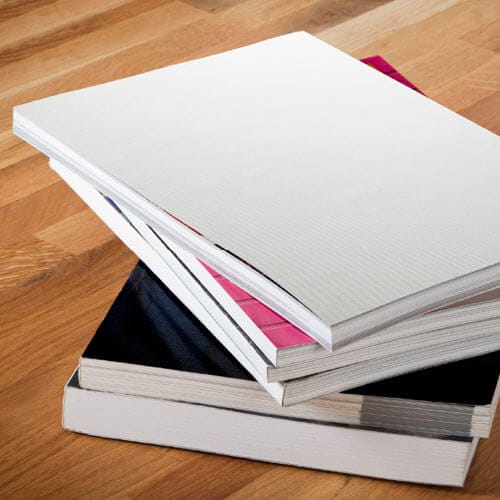
Perfect bound recipe collections — the take-home keepsake. For a graduation packet or an end-of-program compilation students keep after the course ends, a perfect bound recipe collection reads like a real cookbook and holds up on a shelf. It doesn't lie flat on a counter the way coil or Wire-O does, so it's not built for mid-cook reference. Consider for a capstone project, not daily lab use.
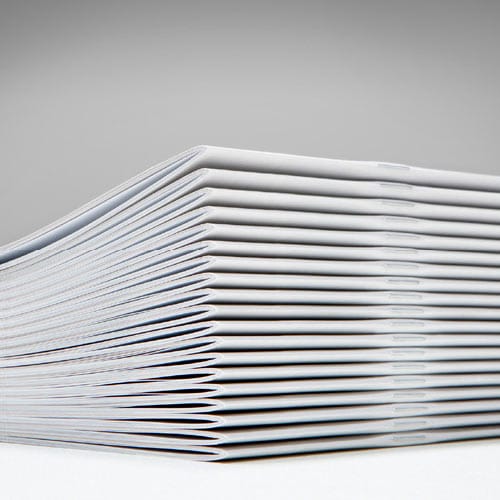
Saddle stitch recipe booklets — the single-lesson handout. For a short set of recipes tied to one lesson — six to twelve pages — saddle stitch is fast and inexpensive to produce. It won't survive a full semester of repeated use the way coil binding will, but for a one-off handout it does the job. Consider for single-session workshops, skip for anything meant to last a full term.
| Format | Lies Flat? | Best For | Durability | Verdict |
|---|---|---|---|---|
| Plastic coil | Yes, 360 degrees | Full-semester card decks | High — resists daily handling | Buy |
| Wire-O | Yes, flat and compact | Demo-kitchen group stations | High | Buy |
| Perfect bound | No | Take-home keepsake collections | Medium — shelf use, not counter use | Consider |
| Saddle stitch | Partial | Single-lesson handouts | Low for repeat use | Consider |
| Loose sheets, no binding | N/A | Nothing recommended | Very low | Skip |
What’s the best binding for recipe card printing for cooking schools?
Plastic coil binding is the best fit for cooking schools in 2026 because it opens flat and survives repeated handling near a stove. Wire-O is a close second for demo-kitchen setups where counter space is tight.
How much does recipe card printing cost for a culinary program?
Cost depends on page count, paper stock, and color versus black-and-white printing, so get a quote based on your specific card count. Short-run printing with no large minimum keeps per-term costs predictable even as recipes change.
Is plastic coil binding better than Wire-O for recipe cards?
Coil binding opens a full 360 degrees, which is better for individual student use at a personal station. Wire-O lies flatter and takes up less space, which works better for a shared demo counter.
Can recipe cards be printed in full color?
Yes, and full color is worth it for any recipe with plating or technique photos. Black-and-white keeps costs down for text-only recipes without visual steps.
What paper stock works best for recipe cards used in a working kitchen?
Coated stock at 100 lb. or heavier resists grease, steam, and repeated handling far better than standard 20 lb. copy paper. It costs more per sheet but lasts through an entire term instead of a single lab session.
How many recipe cards should a cooking school order per class?
Order enough for every enrolled student plus a small buffer for lost or damaged cards, typically 10 to 15 percent over headcount. Because minimums are low, reordering mid-term for a new section is straightforward.
Can recipe cards be reordered mid-semester?
Yes, short-run digital printing supports reorders as small as a single class section. This matters most for programs that update recipes as menus rotate through the term.
Is saddle stitch binding a good fit for recipe booklets?
Saddle stitch works for a short, single-lesson handout of six to twelve pages but won’t hold up through a full semester of daily use. For anything meant to last the whole term, coil or Wire-O binding is the better call.
Order recipe card decks in a 5×7 size instead of a full 8.5×11 sheet — it fits standard recipe boxes and station clipboards that most teaching kitchens already use, and it cuts paper cost per card without losing readability on a printed recipe.
© 2026 Publishing Xpress. All Rights Reserved.