August 10, 2026
Letterhead printing for small businesses in 2026 comes down to three decisions: paper stock, minimum order size, and whether your business cards and envelopes match the letterhead or fight it. Get those three right and a one-person consulting shop looks as buttoned-up as a firm with a lobby and a receptionist.
A prospective client forms an opinion about your consulting practice before you say a word — the letter, the invoice, the proposal cover already did that work. Letterhead printing for small businesses isn't about looking expensive; it's about looking consistent across every piece a client's hands actually touch. In 2026, most solo consultants and two-to-five-person firms don't need a 5,000-sheet offset run — they need 100 to 500 pieces that match the business cards already in a wallet. Publishing Xpress runs short stationery jobs without forcing a warehouse-size minimum, which matters when your entire firm is you and a laptop.
Get the paper stock wrong or order the letterhead separately from the cards and envelopes, and the mismatch shows up the moment a client lines up your invoice next to your proposal folder.
This guide is for solo consultants, boutique advisory firms, and small professional-services shops — two to twenty people — who send physical letters, signed engagement agreements, or mailed invoices often enough that a laser-printed logo on plain copy paper looks thin. If your firm runs almost entirely on email and PDF, skip this: letterhead is a paper-touch decision, not a branding decision you need to solve today. If you meet clients in person, sign anything, or mail collateral with your logo on it, the next section is for you.
A sheet that's too light curls in a printer tray and feels cheap in a client's hand; a glossy finish rejects ink from a fountain pen or wet signature and smears under a rubber stamp. Uncoated or matte bond stock is the standard choice for consultants because it takes both laser toner and a signature cleanly. This one decision affects every letter your firm sends in 2026 and beyond, so don't default to whatever finish looks shiniest in a sample pack.
If your logo uses a specific color, that color needs to match across your letterhead, business cards, and envelopes — not "close enough." Full-bleed printing (color that runs to the edge of the sheet, no white border) reads as more deliberate than a centered logo floating on white space. Consultants who skip this end up with a letterhead that looks like a Word template because, functionally, it is one.
Most small print shops set minimums built for retailers moving thousands of units, not a consultant who needs 150 sheets a quarter. Publishing Xpress runs a 100-copy minimum on flat sheet, business card, and envelope printing, with orders placed in increments of 1 copy past that floor — so a 120-piece starter kit doesn't cost more per sheet than a 500-piece one. That structure matters more to a two-person firm than any paper texture.
If you're printing letterhead to send a signed proposal by Friday, turnaround time isn't a nice-to-have. Confirm production time before you commit to a design revision cycle that eats your buffer — a firm that promises documents "by end of week" needs the print vendor's timeline locked in, not estimated.
Letterhead alone doesn't finish the job. A client who gets a letter on branded stock, then an invoice in a mismatched envelope, notices the seam. Order letterhead, business cards, and envelopes together so the paper stock, color calibration, and logo placement come out of the same production run.
“If your letterhead needs matching business cards and envelopes, order all three in the same run — mismatched paper stock is the fastest way to look unfinished.”
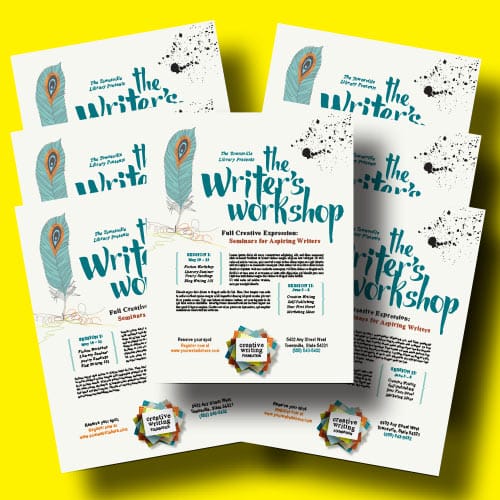
Flat Sheet Printing — the letterhead itself. This is the format letterhead actually is: a single printed sheet, no fold, no binding. Publishing Xpress prints it at a 100-copy minimum with 1-copy increments after that, which fits a consultant reordering small batches every quarter instead of warehousing a year's supply. Buy.
Business Card Printing — the handshake piece. A client remembers a card longer than a letter. Pair it with the same paper stock and color settings as the letterhead so the two pieces read as one system, not two separate print jobs. See how it's positioned for business card printing for consultants. Buy.
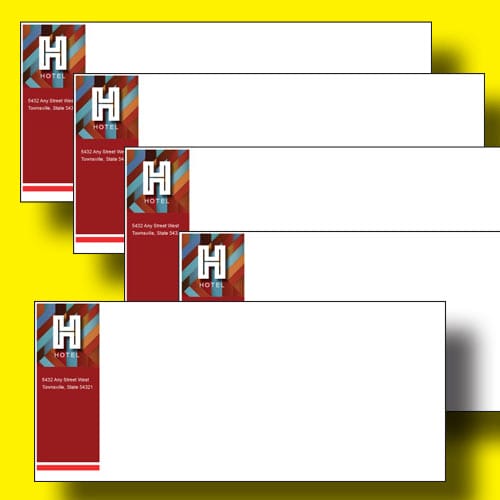
Envelope Printing — the finishing touch. A branded envelope signals the letter inside is worth opening before the recipient reads a word. Order it in the same batch as the letterhead so ink density and stock color line up exactly. Buy.
Presentation Folder Printing — the proposal wrapper. Once a consultant is submitting bids or RFPs, a branded folder around the proposal outperforms a stapled packet every time. Read the specifics on presentation folder printing for business proposals before you add it to the order. Consider.
Client Guide Booklets — the leave-behind. For firms in regulated or advice-heavy work, a printed client guide beats a PDF nobody opens twice. Financial advisors use this exact format — the approach in client guide printing for financial advisors applies just as well to a consulting practice with a repeatable onboarding packet. Consider.

| Piece | Best for | Minimum order | Verdict |
|---|---|---|---|
| Flat Sheet Letterhead | Signed letters, formal proposals | 100 copies | Buy |
| Business Card | First meetings, follow-ups | 100 copies | Buy |
| Envelope | Mailed invoices and proposals | 100 copies | Buy |
| Presentation Folder | Client proposals, RFP submissions | Confirm at order | Consider |
| Client Guide Booklet | Onboarding, leave-behind material | Confirm at order | Consider |
What’s the best paper for letterhead printing for small businesses?
Uncoated or matte bond stock is the standard for small-business letterhead in 2026 because it takes a signature and laser toner without smearing. Glossy or photo-grade finishes reject ink and read as marketing collateral, not a formal letter.
How much does letterhead printing cost for a small firm?
Cost depends on quantity, paper stock, and color settings, so get a specific quote for your run rather than relying on a generic price. Ordering letterhead, business cards, and envelopes together in one job typically brings the per-piece cost down versus three separate orders.
Is letterhead still worth printing in 2026 if most communication is by email?
Yes, if you sign engagement letters, mail invoices, or submit physical proposals — those touchpoints still carry weight for consultants and small professional-services firms. If your firm operates entirely through digital channels, printed letterhead is a lower priority.
What’s the minimum order for letterhead printing at Publishing Xpress?
Flat sheet, business card, and envelope printing all run on a 100-copy minimum, with orders placed in increments of 1 copy after that floor. That means a 120-piece kit and a 500-piece kit cost the same setup, just a different per-sheet total.
Should letterhead match business cards and envelopes exactly?
Yes — printing all three in the same production run keeps paper stock, ink density, and logo color consistent across every piece a client sees. Ordering them separately, even weeks apart, risks a visible color mismatch.
How long does letterhead printing take to turn around?
Turnaround varies by order size and paper stock, so confirm the timeline before you finalize a design revision schedule. Build in buffer time if you’re printing letterhead specifically to send a signed proposal by a deadline.
Can I order a small batch of letterhead without a bulk minimum?
Yes — Publishing Xpress prints flat sheet letterhead starting at a 100-copy minimum, which suits a solo consultant or small firm that doesn’t want to warehouse a year’s supply. Reorders in increments of 1 copy avoid the bulk minimums many print shops require.
What should a consulting firm avoid on letterhead design?
Avoid glossy stock for anything you’ll sign by hand, and avoid full-bleed color blocks if you’re hand-personalizing sheets through an office printer afterward. Both choices look fine in a sample but cause problems the moment the letterhead goes into daily use.
The detail most small firms miss isn't the logo or the paper color — it's the reorder math. Because Publishing Xpress prints flat sheet, business card, and envelope jobs at a 100-copy minimum with 1-copy increments after that, a firm can order exactly 137 sheets to match a mid-quarter headcount change instead of rounding up to 250 or 500 just to hit a bulk minimum. That's the actual advantage over a print shop built for retail volume — you pay for what you use, not what fits a pallet.
© 2026 Publishing Xpress. All Rights Reserved.