July 24, 2026
A poem's title is the first sentence of criticism it ever receives — get it wrong and the best stanza in the book goes unread. This guide breaks down how to title a poem so it earns a second look, holds up in a table of contents, and doesn't spoil the ending before line one.
A reader scanning a table of contents in 2026 spends less than two seconds per title before deciding whether to keep reading. An editor scanning a submissions pile spends about the same. The title is doing sales work before the poem gets a chance to do anything else.
A flat title — "Untitled," "Reflections," "Loss" — tells a reader nothing and gives search engines nothing to index either. A sharp title carries an image, a tension, or a specific noun that makes someone want to know what happens next. That's the entire job description.
If you're titling poems for a full poetry collection, the stakes go up — thirty flat titles in a row is a thirty-page table of contents nobody reads past page two.
Go back through the poem and circle the three lines that hit hardest. Nine times out of ten, your title is already sitting in one of them — a noun phrase, a fragment, a verb doing something unexpected.
Don't invent a title from outside the poem. "The Weight of Small Rooms" pulled from an actual line beats a generic theme word bolted on after the fact. Common mistake: writing the poem, then brainstorming a title from a blank page instead of from the text itself.
Long titles read as essay titles, not poem titles. Six words or fewer is the working ceiling for most contemporary work in 2026 — shorter titles are easier to remember, easier to cite, and easier to fit in a table of contents without wrapping to a second line.
If your working title runs eight or nine words, look for the phrase inside it that could stand alone. Common mistake: treating the title like a subtitle and trying to summarize the whole poem in it.
"Grief," "Joy," "Longing," "Hope" — these are the most overused poem titles in any workshop stack, and they tell a reader nothing specific. The feeling is the effect of the poem; the title should be a cause, an image, or a specific object.
Swap the abstract noun for the concrete thing that produced the feeling. A poem about grief titled after the object left behind — a coat, a phone number, a chair — does more work in three words than "Grief" does in one. Common mistake: naming the emotion instead of the trigger.
Say the title out loud, then the first line, back to back, with no pause. If they repeat the same word or idea, one of them has to change — titles that duplicate the opening line waste the reader's first two seconds twice.
The strongest pairing creates a small gap the poem then fills. Common mistake: a title and an opening line that both announce the same image, leaving nothing for the poem to reveal.
A quick search tells you whether your title already belongs to a widely known poem. You can reuse a title that already exists legally in most cases — titles aren't copyrightable — but reusing one attached to a famous poem invites unflattering comparison every time.
This matters more at the collection level than the single-poem level. Common mistake: assuming a title is original because it feels personal; feeling personal and being unused are not the same thing.
Hand someone the title alone, with no poem attached, and ask what they expect the poem to be about. If their guess is wildly off from what the poem actually delivers, the title is either too vague or actively misleading.
A title doesn't need to predict the poem exactly, but it shouldn't set up an expectation the poem then betrays. Common mistake: skipping this step because the poet already knows what the title means.
Don't finalize a title in isolation. Draft three real alternates and sit with all four for at least a day — the title that still feels right after 24 hours is usually the one that survives an editor's read too.
This step matters most if the poem is going into a full manuscript, where titles get compared against each other across dozens of pages. Common mistake: locking the first decent title out of relief instead of testing it against competition.
“If the title only makes sense after reading the poem twice, it’s not a title, it’s a caption.”
Once every poem in the manuscript has a title that passes the read-aloud test, lay the full list out together before you send files to print. A collection title that repeats a poem title inside it, or a run of titles that all start with the same word, is far easier to catch on a printed page than in a Word document.
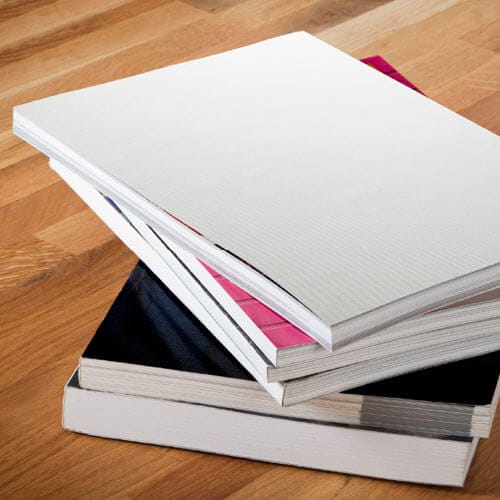
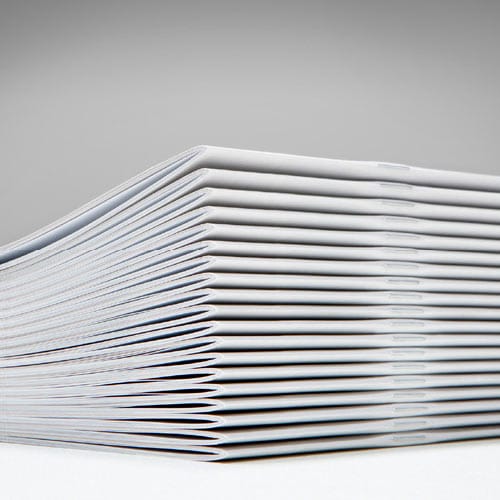
Most poetry chapbooks under 60 pages run on saddle stitch; full collections past that page count move to perfect bound poetry collection printing with a spine. Check binding fit before you finalize your cover file, since spine width shifts your back-cover layout.
What’s the best way to title a poem?
Pull the title from a concrete image or phrase already inside the poem, then cut it to six words or fewer. Titles built from abstract feeling words like Grief or Hope test flatter than titles built from specific nouns.
How long should a poem title be?
Six words or fewer is the practical ceiling for 2026 print and search. Longer titles read as essay titles and wrap awkwardly in a table of contents.
Can two poems have the same title?
Yes, titles aren’t copyrightable, so reusing one is legal. It’s riskier when the title belongs to a widely known poem, since readers compare automatically.
Should a poem title give away the ending?
No, a title should set up tension the poem then resolves, not resolve it first. Pull the title from an earlier image if the natural choice spoils the last line.
Should I title a poem before or after writing it?
After. Titling first locks the poem into an idea before the draft finds its own direction, and the strongest titles usually come from lines that didn’t exist yet at the start.
What makes a poem title bad?
A single abstract noun with no image attached — Loss, Silence, Longing — tells a reader nothing specific and gets reused constantly across submissions piles.
Do poem titles need punctuation?
Only if the title is a full sentence or a question that needs it for clarity. Most working titles in 2026 run as fragments or noun phrases with no closing punctuation.
How much does it cost to print a poetry collection in 2026?
Cost depends on page count, binding, and run size, and varies by print shop. Saddle stitch chapbooks run cheaper than perfect bound full collections because they skip the spine.
The titles that survive longest aren't the clever ones — they're the ones a reader can repeat back a week later without checking the book. If nobody in your read-aloud test can recall the title after hearing it once, it's not memorable, it's just words.
© 2026 Publishing Xpress. All Rights Reserved.