August 24, 2026
TikTok for self-published authors in 2026 isn't a numbers game — it's a discovery engine that turns a handful of short videos into steady book sales without an existing readership. This guide covers the setup, the content, and the posting habits that actually move copies, not just views.
BookTok built entire bestseller lists out of backlist titles nobody was actively marketing — readers found the books through short video, not bookstore placement. For a self-published author with no publicist and no ad budget, that's the opening: TikTok rewards a well-shot 20-second video the same way it rewards a publishing house's. Building an author platform before you post your first video keeps your bio, your link, and your book information consistent so a viewer who likes what they see doesn't hit a dead end. In 2026, the accounts still winning on BookTok are the ones treating it like a content habit, not a marketing campaign with a start and end date.
Your TikTok bio has three jobs: tell viewers what genre you write, prove you're a real author, and give them one link to click. Use your name or pen name as the handle, add your genre in the bio ("cozy fantasy author" beats "writer"), and drop your book link or Linktree. Expected outcome: a viewer who watches 10 seconds of your video knows exactly what you write before they scroll to your profile. Common mistake: leaving the bio link pointed at a general website homepage instead of the specific book page.
BookTok accounts that grow fast rotate between a small number of repeatable formats: writing-process clips, book recommendations in your genre, and behind-the-scenes of your own book (cover reveal, printing, signing). Three pillars give the algorithm a pattern to learn and give you an answer every time you're stuck for an idea. Why it matters: accounts that post one video type occasionally and another randomly the next week confuse the recommendation system and their own audience. Common mistake: treating every video as a one-off instead of a series.
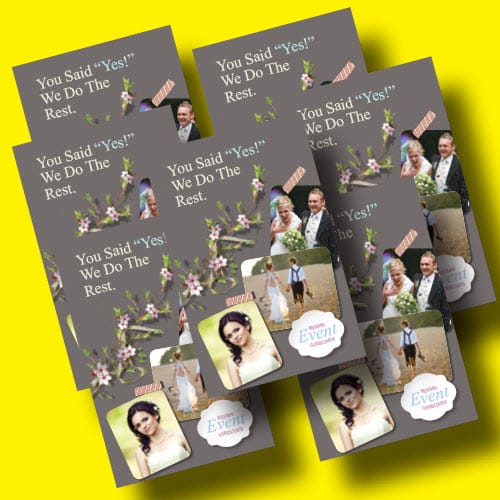
Unboxing and "shelfie" videos consistently pull more watch time than a static talking-head clip because there's motion and a payoff — the book itself. Order a small run of bookmarks for your launch and film yourself tucking one into the first page, or stack a few printed copies for a shelf-styling shot. Specific instruction: film in natural light near a window, hold the book at chest height, and keep the clip under 30 seconds. Expected outcome: a video that performs even with zero prior audience, because the visual carries it. Common mistake: filming in a dim room where text on the cover is unreadable.

TikTok decides whether to keep showing your video within the first few seconds, so the hook carries more weight than the rest of the script combined. Open with the payoff, not the setup: "I self-published a book that got banned from a school library" beats "Hi, I'm an author and today I wanted to talk about…". Why it matters: a weak hook means nobody sees the good content that follows it, no matter how strong. Common mistake: spending the first five seconds on a greeting or a logo intro.
“If your first three seconds don’t stop the scroll, the rest of the video never gets watched.”
Tag #BookTok alongside two or three genre-specific tags (#cozyfantasy, #thrillerbooks, #indieauthor) rather than ten broad ones — specificity gets you in front of readers who actually buy in your genre. Trending sounds matter less on BookTok than on comedy or dance content, but using one occasionally still helps discovery. Specific instruction: check TikTok's Creative Center weekly for sounds trending in the books category. Common mistake: using only #fyp and #booktok with no genre tag, which puts your video in front of the widest, least-targeted audience possible.
Film four or five videos in one sitting on a day you have good light and energy, then schedule them across the week instead of trying to create fresh content daily. Three to five posts a week is a realistic, sustainable cadence for a self-published author in 2026 who's also writing and fulfilling orders. Expected outcome: a content backlog that survives a busy launch week without your account going dark. Common mistake: posting seven days in a row, burning out, then disappearing for a month — the algorithm punishes inconsistency more than moderate frequency.
Duet a popular BookTok review of a book in your genre, comment thoughtfully on other indie authors' videos, and reply to every comment on your own posts for the first hour after posting. This is where AI tools for book marketing can help — drafting caption variations or hashtag lists — but the actual replying and duetting has to be you. Why it matters: BookTok rewards accounts that behave like community members, not ad channels. Common mistake: posting and immediately closing the app instead of engaging in the first critical window.
A video with 50,000 views and no sales is a vanity metric; a video with 2,000 views and a clear call to action that converts is the win. End every video with one specific instruction — "link in bio" or "comment BOOK and I'll send you the link" — instead of assuming viewers will find their own way to your book. Specific instruction: update your bio link the day you post a video referencing a specific title or offer. Common mistake: relying on your profile alone to do the selling instead of directing traffic in the video itself.
Once your BookTok content habit is running, the bigger job is building the author platform that catches everyone TikTok sends your way — website, email list, and a consistent bio link across every platform you post on. TikTok for self-published authors works best as one channel inside that larger system, not the entire marketing plan for 2026.
Does TikTok actually sell self-published books in 2026?
Yes — BookTok drives discovery for backlist and indie titles without traditional publisher marketing budgets. The mechanism is short-video recommendation, not follower count, so even small accounts can convert views into sales.
How often should a self-published author post on TikTok?
Three to five times a week is a sustainable, effective cadence for most self-published authors in 2026. Posting daily without a content plan burns writers out faster than it grows an audience.
Do I need a large following before TikTok sends me book sales?
No — a single video can outperform an account’s entire follower count if the hook and props are strong. Clear link-in-bio instructions matter more than raw audience size.
What kind of videos work best for BookTok in 2026?
Book-in-hand unboxing, writing-process clips, and genre-specific recommendations consistently outperform talking-head content. Physical props like a printed copy or bookmark give the video visual motion that keeps viewers watching.
Should I use trending sounds for book content?
Trending sounds help occasionally but matter less on BookTok than on comedy or dance content. Genre-specific hashtags do more for discovery than chasing every trending audio.
How long should a BookTok video be?
Keep most videos under 30 seconds so the payoff arrives before viewers lose interest. Longer format works only once you have a returning audience used to your pacing.
Is TikTok better than Pinterest or X for self-published authors?
TikTok generally drives faster discovery through its recommendation algorithm, while Pinterest and X work better for sustained, search-based traffic over time. Most self-published authors in 2026 benefit from running TikTok alongside at least one other platform, not instead of it.
What should be in my TikTok bio as an author?
Your genre, your name or pen name, and one direct link to your book’s sales page. A bio pointed at a general homepage instead of the book itself loses conversions.
The self-published authors doing best on BookTok in 2026 aren't the most polished — they're the ones who kept posting through the weeks when a video only got 40 views. Consistency outlasts talent on this platform, and the props in your hand (a real printed copy, a bookmark, a signed page) do more work than any script you write.
© 2026 Publishing Xpress. All Rights Reserved.