October 14, 2026
Short-run book printing has a project-specific cost: get a current quote based on your copy quantity, finished page count, trim size, paper, color, and binding. Compare the delivered order total, not just the printing charge, because shipping, applicable taxes, and separately billed preparation work belong in your budget too. For a 2026 order, settle those specifications before comparing quotes; otherwise, you are comparing different books.
Your useful cost figure is the total for the finished books delivered to you. Divide that total by the number of copies ordered to calculate your delivered cost per copy. Keep the full order total beside that calculation so a lower per-copy figure does not distract you from a larger spending commitment.
Publishing Xpress offers short-run digital book printing in black-and-white or color, with 4 binding options. The right starting point is a specification sheet, not a general average that combines unlike projects.
Use this breakdown to check what a quote covers:
| Budget component | What to confirm | Why it matters |
|---|---|---|
| Interior printing | Finished pages, paper, color selection, and copies | These describe the material being reproduced |
| Cover production | Cover stock, artwork requirements, and any selected finish | A cover is a separate part of the production specification |
| Binding | Binding method and compatibility with the book | Different methods produce different reading experiences |
| File preparation | Whether corrections or preparation services are included | A printing quote is not automatically a design-service quote |
| Proofing | What proofing method is included or offered | You need to know what you are approving |
| Delivery and taxes | Destination, shipping method, and applicable taxes | These belong in the amount you budget for the order |
Do not add a charge twice. If a quote already includes binding or shipping in its total, record that inclusion rather than adding another allowance for the same item.
A first printing is both a publishing decision and a cash commitment. You need books that work for readers, but you also need an order size you can distribute, store, or sell.
For your 2026 budget, separate production spending from publishing preparation. Editing, illustration, cover design, and interior layout are different tasks from printing a finished file. Record each separately, even when a supplier offers several services together.
A low printing total does not fix a book that is difficult to read or use. Keep readable type, suitable margins, and the necessary images; look for savings in optional specifications before compromising the content.
These are the specifications to settle before requesting a quote. Ask for alternatives only where you are genuinely willing to change the finished book.
Change one specification at a time when comparing alternatives. If you change paper, quantity, and binding together, you will not know which change accounts for the difference between quotes.
Publishing Xpress offers 4 book-binding options: perfect bound, saddle stitch, Wire-O, and plastic coil. None is the right choice for every project, and the binding name alone does not establish the final printing cost.
| Binding | Best for | Practical advantage | Trade-off |
|---|---|---|---|
| Perfect bound | Novels, memoirs, and text-led books | Glued spine gives a conventional paperback format | Does not open flat like a punched binding |
| Saddle stitch | Thin booklets, programs, and short publications | Folded pages are secured through the fold | Book thickness limits suitability; pages follow folded-sheet requirements |
| Wire-O | Reference books, presentations, and workbooks | Pages open flat for hands-free reference | Exposed wire loops can deform if crushed |
| Plastic coil | Workbooks, planners, and working reference books | Pages open flat and fold back | Punched holes require clear space along the binding edge |
For a closer format comparison, see perfect binding vs. saddle stitch. Decide how the book will be handled before requesting a binding alternative.
Choose perfect binding when readers will hold the book and read through chapters. It suits a familiar paperback presentation without exposed punched holes.
The limitation is opening behavior. Keep text clear of the inner edge, and do not choose perfect binding for a project that must stay open flat during use.
Choose saddle stitch for a short publication that works as a folded booklet. Its staples sit through the fold rather than along a glued spine.
Each folded sheet produces 4 pages, so saddle-stitched pagination normally follows multiples of 4 pages. Confirm how the printer counts the cover before finishing your file; do not remove necessary content simply to make the count fit.
Choose Wire-O when readers need an open spread while presenting, studying, or following instructions. The double-loop wire binding allows pages to turn freely.
Its exposed loops are a handling consideration. Keep important artwork clear of the punched edge, and assess how the finished books will be packed and carried.
Choose plastic coil for a book that readers will write in or fold back while working. That makes the format useful for planners and instructional material.
The binding edge still needs space for holes. A layout designed for an ordinary paperback needs a fresh margin check before you use it for a coil-bound edition.
Use the same specification sheet for every printer you contact in 2026. Send the finished files when requested, and keep the quoted specification with your order records.
Save the approved quote alongside the exact file version it describes. A later layout change can alter pagination or cover requirements, which makes the earlier specification an unreliable reference.
Publishing Xpress is best for self-publishers who need short-run digital book printing without a large minimum order requirement. Its binding and interior-color choices give you formats to compare, but you still need to supply the specifications that describe your own project.
Start with the content's job. A text-led memoir and a picture book need different production decisions, even when both are short-run projects.
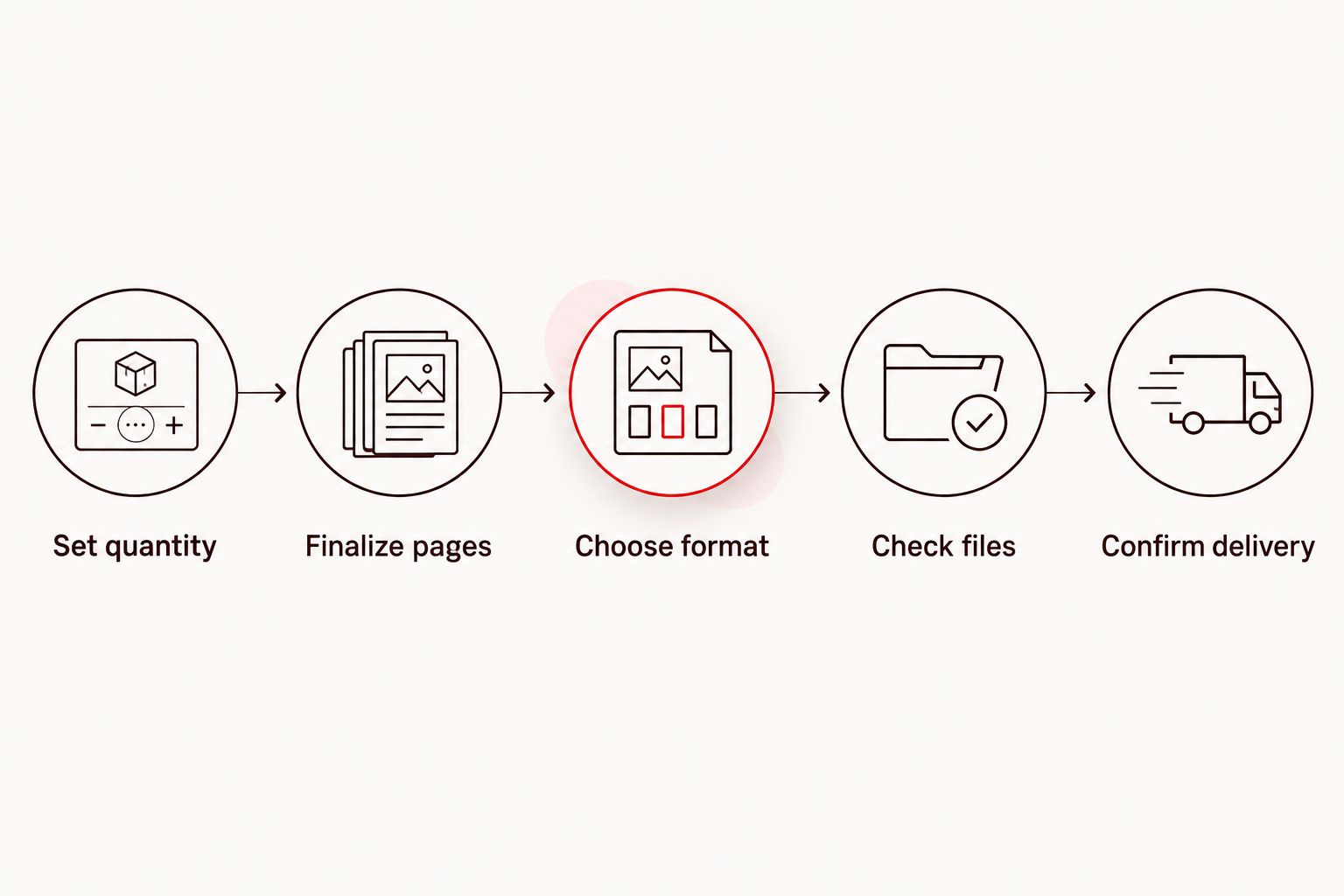
For your 2026 order, use this review before changing the quantity:
Avoid squeezing the text simply to reduce pagination. A readable book is the requirement; a shorter book is not automatically an improvement.
No. Compare the full order commitment with the delivered cost per copy, then choose a quantity you can use.
Additional copies need a distribution plan and storage space. For a dated manual, directory, or event publication, also consider whether the content will remain useful before you finish distributing the order.
Only the services explicitly listed in the quote are included. Check editing, cover design, interior layout, file corrections, proofing, and delivery separately rather than treating printing as an all-inclusive publishing package.
Keep preparation expenses separate in your 2026 worksheet. That makes a later reprint easier to assess because you can distinguish repeat production from work already completed.
Divide the relevant order total by the copies available for the purpose you are measuring. For production comparisons, use delivered copies; for sales planning, account separately for copies reserved for reviewers, contributors, or gifts.
Name the calculation clearly. Delivered cost per copy and production spending per saleable copy are different measures, even though they describe the same print order.
How much does short run book printing cost in 2026?
Short-run book printing requires a current project quote based on quantity, page count, trim size, paper, color, and binding. Compare the delivered total and confirm which preparation services are included.
Is black-and-white printing right for my book?
Black-and-white printing is a suitable choice when text and images communicate clearly without color. Keep color where readers need it to understand illustrations, photographs, or instructions.
What’s the best binding for a short-run book?
The best binding depends on how readers use the book. Perfect binding suits conventional paperback reading, saddle stitch suits thin publications, and Wire-O or plastic coil suits flat-opening reference and writing tasks.
How many binding options does Publishing Xpress offer?
Publishing Xpress offers 4 binding options: perfect bound, saddle stitch, Wire-O, and plastic coil. Match the format to your content and confirm its requirements before preparing the final files.
Does the book cover count toward my page total?
Follow the printer’s stated page-count convention rather than assuming the cover is included. Describe the complete interior and cover separately so the quote matches the files.
Should I order extra books to reduce the cost per copy?
Order extra books only when the full order total fits your budget and you have a practical use for the additional copies. A per-copy calculation does not account for unused books or storage.
Can I compare quotes before my book is formatted?
You can request a preliminary quote, but final pagination and specifications are needed for a reliable comparison. Reconfirm the quote after changes to trim size, page count, paper, or binding.
A printed page is not the same as a sheet of paper: a sheet printed on both sides has 2 page faces. That distinction matters when you describe your book, especially if your manuscript software and your printer use different counting conventions.
Before approving your 2026 order, send a plain-language summary of the finished book and ask for confirmation that the quote matches it. Approve the specification and the file together. That is more useful than chasing a general average for a book unlike yours.
© 2026 Publishing Xpress. All Rights Reserved.