August 14, 2026
Flyer printing for small businesses in 2026 comes down to four decisions: size, paper stock, quantity, and where the flyer actually gets seen — get those four right and a $60 print run pays for itself in a single weekend.
Digital ad costs keep climbing for local businesses in 2026, and a flyer taped to a shop window or handed out at a farmers market still reaches the exact three-mile radius that actually walks through your door. Flyer printing for small businesses isn't about volume — it's about matching the format to where the piece lives, whether that's a counter, a mailbox, or a car windshield.
A restaurant running a lunch special needs a different flyer than a contractor door-knocking a subdivision. Publishing Xpress runs short print jobs specifically for businesses that don't need 5,000 copies of anything — they need 250 that look right.
This guide is for the owner or marketing person at a local business — a salon, a restaurant, a contractor, a real estate office, a fitness studio — running a promotion, an event, or a seasonal push and needing print that shows up fast without a warehouse-sized order. If you're printing for a one-time flyer drop or a rack card that needs monthly reorders, the criteria below apply directly.
Weight determines whether your flyer survives a pocket or a windshield wiper. Anything under 80 lb. text feels flimsy and creases on the first fold; 100 lb. gloss text holds up through a full promotional cycle and photographs better for social reposts. Matte finishes read as more premium for professional services; gloss pops harder for food and retail photography.
Standard 8.5×11 is the default for counter displays and mail inserts, but 5.5×8.5 half-sheets cost less per unit and work just as well for tabling events or bulk handouts. Folded formats add production time and cost — for a straight promotional flyer, flat almost always wins in 2026.
Large minimums are the single biggest reason small businesses overpay for print. A 100-copy minimum with single-copy increments means you can test a design with a short run, see what converts, and reorder only the winner instead of sitting on 2,000 leftover flyers from a promotion that ended.
If your flyer has a background color or photo that runs to the edge, full bleed setup matters — text or color that stops short of the trim line looks like a mistake, not a design choice. Confirm your printer runs CMYK color matching so your logo red doesn't shift on press.
A flyer meant for direct mail needs different specs than one meant for a countertop rack. Postcard Printing skips the fold and envelope for mail campaigns, while a standard flyer format works better for in-hand distribution at events or door-to-door drops.
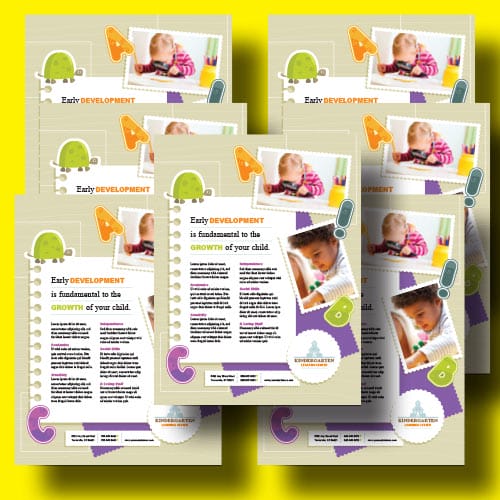
The Workhorse — Standard 8.5×11 Flyer. 100 lb. gloss text, full bleed, full color. This is the format that covers 80% of local promotions: lunch specials, sales events, service announcements. Order 250 copies to start and reorder in the same batch size once you know the design converts. Buy.
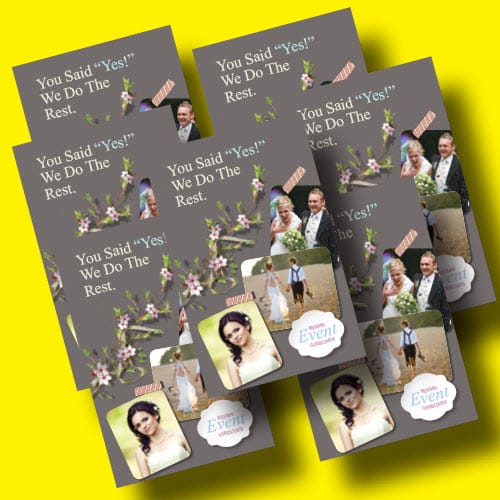
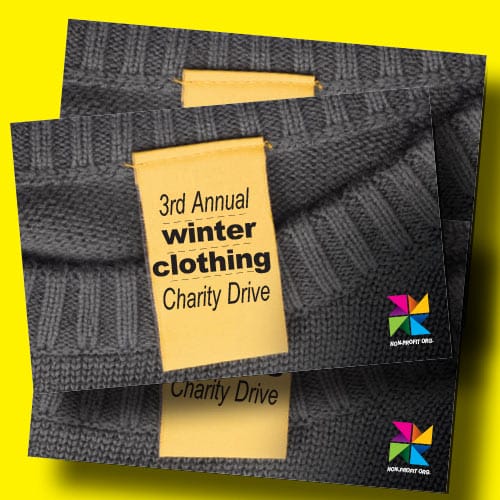
The Direct Mail Play — Postcard Format. A 4×6 or 5×7 postcard on 14 pt. cardstock skips the fold and the envelope, which cuts your per-piece mailing cost and gets opened faster than a folded flyer stuffed in an envelope. Postcard Printing works especially well for seasonal offers with a hard deadline. Buy.
The Big Statement — Poster Size. An 11×17 poster on 100 lb. gloss text works for window displays and event signage where a flyer-sized piece gets lost. If your storefront has real window space, this outperforms a stack of flyers taped up one at a time. If you'd rather compare it against a full banner printing for small businesses setup for bigger storefronts, that's the next size up. Consider.
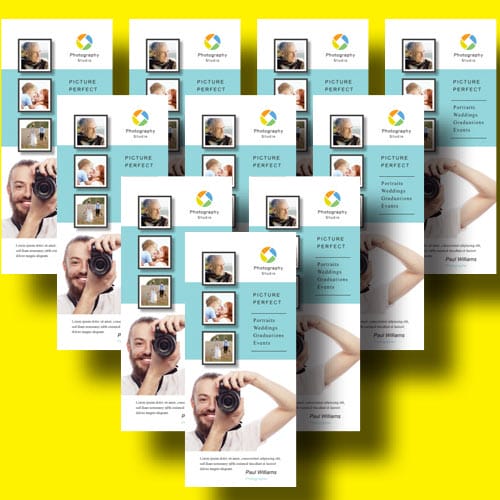
The Counter Companion — Rack Card. A 4×9 rack card on 14 pt. gloss cover fits standard retail and tourism rack slots and works as a leave-behind alongside a full flyer. It's not a replacement for a flyer campaign, but a complement for repeat visitors. Consider.
The Budget Handout — Half-Sheet Flyer. 5.5×8.5 on 80 lb. gloss text costs less per piece than a full 8.5×11 and works fine for high-volume tabling or door-to-door drops where the piece gets glanced at, not framed. Buy.
| Pick | Best Size | Paper Stock | Best Use | Verdict |
|---|---|---|---|---|
| Standard Flyer | 8.5×11 | 100 lb. gloss text | Counter displays, door-to-door | Buy |
| Postcard Mailer | 4×6 / 5×7 | 14 pt. cardstock | Direct mail campaigns | Buy |
| Poster | 11×17+ | 100 lb. gloss text | Window displays, events | Consider |
| Rack Card | 4×9 | 14 pt. gloss cover | Retail and tourism racks | Consider |
| Half-Sheet Flyer | 5.5×8.5 | 80 lb. gloss text | Bulk handouts, tabling | Buy |
What’s the best paper stock for flyer printing for small businesses?
100 lb. gloss text is the best default for 2026 — it holds up through a full promotional cycle without curling. Drop to 80 lb. only for high-volume, short-life handouts.
What size flyer should a small business use?
8.5×11 is the standard size for counter displays and mail inserts. Use 5.5×8.5 half-sheets when you need lower cost per piece for high-volume tabling or door-to-door drops.
Is a postcard better than a flyer for direct mail?
Yes, for mail specifically — a postcard skips the fold and envelope, which lowers mailing cost and gets opened faster than a folded flyer. For in-hand distribution at events, a flat flyer still wins.
How many flyers should a small business order?
Start with 250 copies to test a design before committing to a bigger run. A 100-copy minimum in single-copy increments means you’re never forced into a bulk order you don’t need.
Do flyers need full bleed printing?
Yes, if the design has color or imagery running to the edge. Full bleed setup prevents a white sliver at the trim line that reads as a production mistake.
What’s the difference between a flyer and a rack card?
A flyer is typically 8.5×11 and handed out or posted; a rack card is a smaller 4×9 format built to sit in retail or tourism display racks as a leave-behind.
Can a small business order flyers in small quantities?
Yes — short-run flyer printing with no large minimum lets a business order 100 to 250 copies instead of committing to thousands.
Should a restaurant use a poster or a flyer for a promotion?
Use a poster for window display space and a flyer for handouts or mail. Most local promotions in 2026 use both formats together rather than choosing one.
The flyer that gets reordered isn't always the flashiest design — it's the one printed on stock heavy enough to survive being handed to five people before it gets tossed. A 100 lb. gloss flyer that costs a few cents more per piece than 60 lb. stock routinely outlasts three separate promotional cycles instead of one.
© 2026 Publishing Xpress. All Rights Reserved.