August 17, 2026
Yoga and meditation studios that sell branded journals turn a one-time class purchase into a daily touchpoint students carry to every session. Custom journal printing for yoga studios in 2026 means matching binding, paper, and page count to how someone actually uses the book — cross-legged on a mat, one-handed, often in low light.
A studio journal isn't a notebook picked up at a big-box store. It's merchandise with your logo, used in front of other students, and often gifted at retreats or teacher-training completions. If the spine cracks or pages fall out inside three months, that's a visible failure your brand takes the hit for, not the printer.
Binding choice drives almost every complaint studios report: pages that won't lie flat during a seated writing exercise, coils that snag on yoga mats, or perfect-bound spines that won't open past 45 degrees. Get the binding and paper stock right in 2026 and the journal becomes a retention tool. Get it wrong and it becomes a giveaway nobody uses twice.
This guide is for studio owners, teacher-training directors, and wellness-brand managers ordering custom journals for students, retreat attendees, or new-teacher welcome kits. It assumes runs between 25 and 500 units — small enough that big-box print shops overcharge, large enough that a hand-bound Etsy vendor can't keep up on turnaround.
A journal used mid-class or during a meditation retreat needs to stay open without a hand holding it down. Wire-O and plastic coil binding both open a full 360 degrees; perfect binding and most saddle stitch books do not. If your journal gets used one-handed while seated on the floor, this single spec eliminates half the market.
Most studio journals run 40 to 120 pages — enough for a 30-day practice log or a full teacher-training term, not so much that the book feels like homework. Saddle stitch caps out around 64 pages before the spine loosens; anything longer needs coil, Wire-O, or perfect binding.
Studio spaces run warm and sometimes humid from breathwork classes. A 60 lb. uncoated text stock takes pen and pencil without bleed-through and holds up better than thin 20 lb. copy paper, which curls and tears at the binding holes within weeks.
If journals launch at the start of a new session or a retreat weekend, a printer quoting three to four weeks on short runs works; six to eight weeks does not. Confirm turnaround before you commit a launch date to students.
A soft-cover journal tossed in with a mat, blocks, and a water bottle needs a heavier cover — 10 pt. or 12 pt. C1S or C2S stock resists creasing far better than standard text-weight covers.
Most studios don't need 1,000 identical journals. Publishing Xpress runs short-run digital printing with no large minimum, which matters when you're testing a design with one class before ordering for the full studio roster.
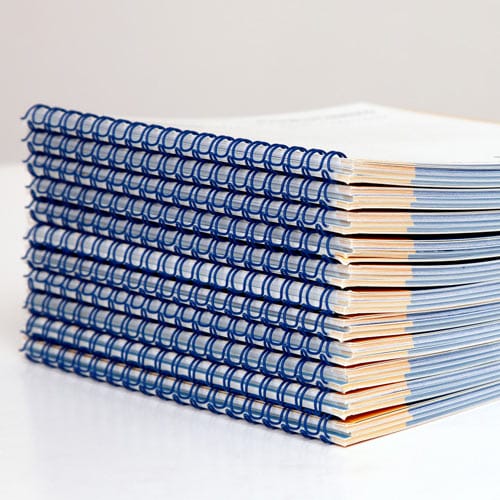
Wire-O bound journal — the safe pick. Wire-O opens completely flat and folds back on itself, so a student journaling after a 90-minute vinyasa class doesn't fight the spine. It handles 40 to 200 pages comfortably and takes a durable cover. For guided journal printing with prompts on the left page and blank space on the right, Wire-O keeps both pages aligned and readable. Buy for studios ordering their primary retail or gift journal.
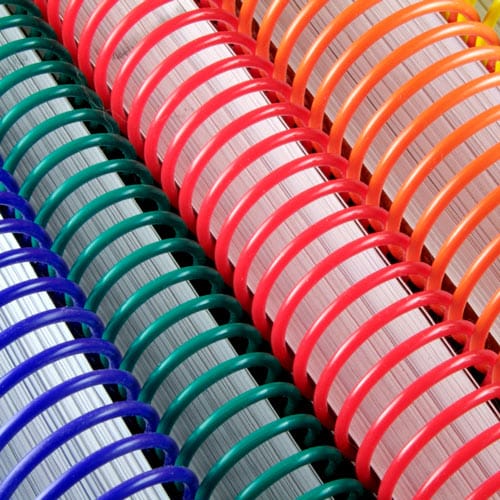
Plastic coil bound journal — the budget pick. Coil binding costs less per unit than Wire-O while still opening 360 degrees, and it's the more forgiving option if your page count shifts between print runs. It's slightly less rigid at the spine over heavy daily use than Wire-O, but for a 30 to 60 day practice-log journal that gets replaced seasonally, that's a non-issue. Buy for studios running frequent, lower-cost journal launches tied to monthly challenges.
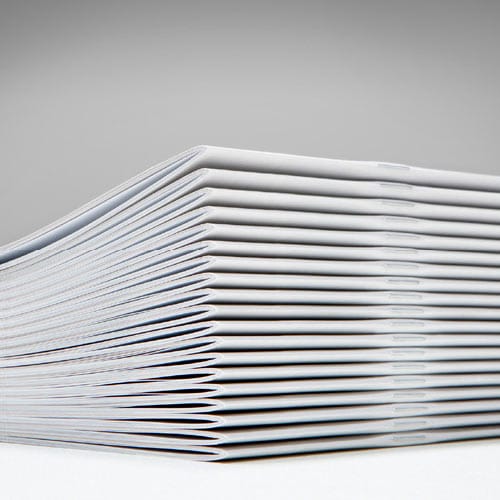
Saddle stitch journal — the short-format pick. Saddle stitching works well for a slim 24 to 48 page journal, like a single-retreat companion book or a week-long intensive log. It's the cheapest binding to produce in 2026 short runs and looks clean stapled at the fold, but push past 64 pages and the spine starts to gap. Consider it only for compact, single-use formats — Skip it for anything meant to last a full training term.
Perfect bound journal — the wildcard. Perfect binding gives a journal a retail bookstore look with a flat spine you can print text on, which some studios want for shelf display. The tradeoff: it won't lie flat, so writing mid-page requires holding the book open. That's a real problem for a journal meant to be used seated or one-handed. Skip it for functional practice journals; Consider it only if the journal is more décor object than daily-use notebook.
Spiral-adjacent workbook format — for teacher-training programs. Studios running certification programs sometimes need a hybrid journal-workbook with worksheets, reflection prompts, and blank pages together. That combination performs closer to a fitness workbook printing format than a simple gift journal, and it benefits from the same lay-flat binding logic. Buy if your journal doubles as course material.
| Binding | Lay-flat | Page range | Cost tier | Verdict |
|---|---|---|---|---|
| Wire-O | Yes | 40-200 | Mid | Buy |
| Plastic coil | Yes | 40-150 | Low | Buy |
| Saddle stitch | No | 8-64 | Lowest | Consider (short format only) |
| Perfect bound | No | 60-400+ | Mid-high | Skip for daily use |
For studios weighing binding against a related wellness product line, the same lay-flat logic applies to wellness center book printing — treatment guides and client journals share the same handling problems. And if your journal is closer to a bound planner than a prompt book, review coil-bound journal options before locking a spec.
What’s the best binding for a yoga studio journal?
Wire-O binding is the best choice for most yoga studio journals in 2026 because it lies flat during one-handed writing. Plastic coil is a close second at a lower cost per unit.
How many pages should a studio practice journal have?
Most studio journals run 40 to 120 pages, enough for a 30-day practice log without feeling like a workbook. Saddle stitch tops out near 64 pages before the spine loosens.
Is saddle stitch good enough for a meditation journal?
Saddle stitch works for short formats under 64 pages, like a single-retreat companion book. Past that page count it’s the wrong choice — the fold gaps and pages start pulling loose.
Does perfect binding work for a yoga studio journal?
Perfect binding gives a bookstore-shelf look but doesn’t lie flat, which makes daily handwriting harder. It suits a display or gift-shelf journal better than a functional practice book.
What paper stock holds up best for handwritten journals?
A 60 lb. uncoated text stock takes pen and pencil without bleed-through and resists tearing at binding holes. Lighter 20 lb. stock curls and rips within weeks of regular use.
How small a print run can a studio order?
Short-run digital printing lets studios order well under 100 units without paying an offset-press minimum. That makes it practical to test one journal design with a single class before a full studio rollout.
How long does custom journal printing take?
Short runs typically turn around in three to four weeks depending on binding and finishing. Confirm the timeline against your launch date before committing to a class announcement.
Can a yoga studio combine journal pages with a workbook format?
Yes — teacher-training programs often print a hybrid with reflection prompts and worksheets bound the same way as a journal. Wire-O or coil binding handles the mixed page types without added cost.
The detail studios skip most often isn't binding — it's cover orientation. A journal opened top-to-bottom (like a steno pad) works better for a student writing while seated cross-legged than a book that opens left-to-right, because the wrist angle is more natural without a desk. It's a five-minute file change at layout stage in 2026 and almost nobody asks for it.
© 2026 Publishing Xpress. All Rights Reserved.