August 29, 2026
Book printing for makeup artists is the process of turning portfolio shots, before-and-after pairs, and service menus into a printed piece a client can hold during a consultation, with the aim of converting more looks into bookings. A beauty portfolio has different demands than a general business booklet: it has to survive daily handling in a kit bag, reproduce skin tone accurately under studio and venue lighting, and open flat next to a mirror while a client compares looks. Get those three things wrong and the printed piece works against you instead of for you.
A bridal client or salon owner decides a lot from a physical book in the first sixty seconds of flipping through it. Screens compress and shift color depending on the device; a printed portfolio doesn't. That consistency matters more in beauty work than in most other fields, because the entire pitch is visual proof that you can match a tone, hold a look through a twelve-hour wedding day, or execute a specific editorial style.
Makeup artists also work in places screens don't reach well — bridal expo booths, salon front desks, in-person trials where a phone gets passed around and loses signal or battery. Publishing Xpress prints book and booklet formats for exactly this kind of short-run, physical-first use case, without requiring a large minimum order to get started.
Start free. Lay out the portfolio yourself in Canva or a free InDesign trial before you spend anything on printing.
Measure your actual kit bag or travel case before you pick a format — a portfolio that doesn't fit stays in the car.
A home inkjet printer shifts color between ink cartridge refills, which is a real problem when the entire point of the page is showing a matched foundation shade. This is where professional short-run printing earns its cost.
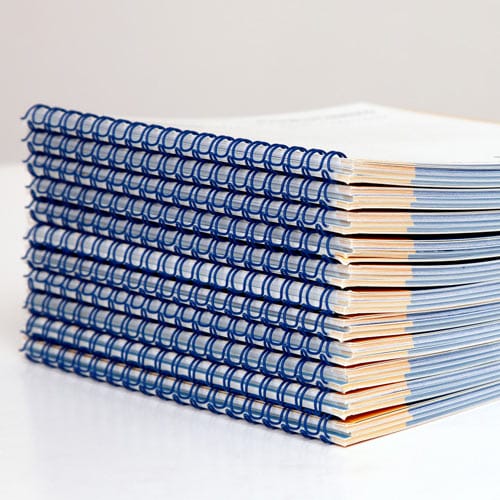
Binding decides whether the portfolio survives a season of bridal shows or falls apart at the staple by June. Coil, Wire-O, saddle stitch, and perfect binding each behave differently under repeated flipping, and the right pick depends on page count and how you present it. A lookbook printing project for a fashion brand faces nearly the same binding math as a beauty portfolio: heavy visual pages, frequent handling, and a need to lie flat during a pitch.
Keep pricing separate from the photos, always. A price change shouldn't force you to retire a portfolio full of photos that still book clients.
A working artist's book of looks shifts every season as new work replaces older shots.
A printed piece only earns its cost if it actually gets into hands.
“A portfolio that can’t survive a bridal show weekend isn’t doing its job.”
| Binding Option | Best For | Key Limitation |
|---|---|---|
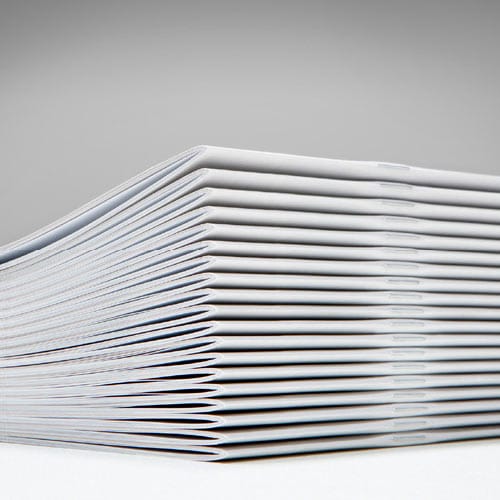
| Saddle Stitch | Short 8-48 page portfolios and leave-behinds | Pages can loosen with heavy daily flipping |
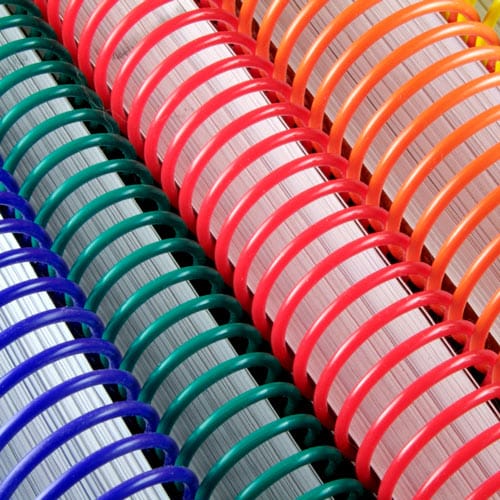
| Wire-O | Portfolios shown open next to a client's face | Wire can bend if packed tightly in a kit bag |
| Plastic Coil | Portfolios that travel in bags and cases daily | Less polished look than a bound spine |
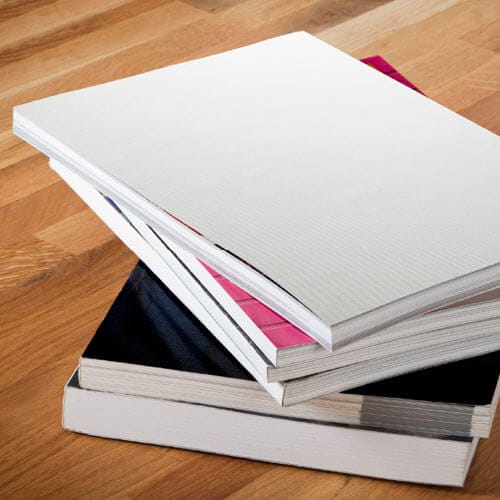
| Perfect Bound | 50+ page portfolios doubling as studio display pieces | Doesn't lie fully flat, harder to prop open |
What’s the best binding for a makeup artist’s portfolio?
Wire-O or plastic coil binding works best for most beauty portfolios because both open fully flat for side-by-side comparisons and hold up to daily kit-bag handling. Saddle stitch is fine for shorter, under-48-page books; perfect binding suits longer portfolios of 50+ pages meant to sit on display.
Is wire-o or coil binding better for a beauty portfolio?
Both open flat, so the choice comes down to look and durability. Coil tolerates rougher daily handling in a bag since there’s no wire to bend, while Wire-O gives a slightly cleaner, more polished appearance for studio display.
How many pages should a makeup artist’s print portfolio be?
Most working artists land between 20 and 60 pages, grouped by category such as bridal, editorial, and everyday glam. Longer than 60 pages usually calls for perfect binding instead of saddle stitch or coil.
What paper stock shows skin tone most accurately?
Gloss text stock in the 80-100 lb range reproduces skin tones and highlight work more accurately than matte or uncoated paper. Uncoated stock tends to mute reds and dull bridal looks under normal lighting.
Should I print a separate price guide from my portfolio?
Yes. Keeping pricing in its own booklet means a rate change doesn’t force a reprint of photos that are still booking clients. A 4-16 page saddle-stitched guide covers most package lists.
How much does it cost to print a makeup portfolio in 2026?
Cost depends on page count, binding type, paper stock, and quantity, so get a quote based on your specific spec rather than a flat number. Short-run digital printing keeps small orders affordable compared to offset runs sized for hundreds of copies.
Can I reprint a portfolio in small batches as my work changes?
Yes, and it’s the better approach for beauty work specifically. Ordering 25-50 copies per season instead of one large run lets you swap in new looks without storing outdated inventory.
What trim size fits in a makeup kit bag?
6×9 or 5.5×8.5 fits inside most makeup train cases and travel bags without feeling bulky. Standard 8.5×11 works better for a fixed desk consultation than for daily travel.
A portfolio bound in Wire-O or coil can be handed across a table and left open on its own — a client compares a page to a mirror without holding the book with both hands. That single mechanical difference is worth the switch for any makeup artist doing in-person bridal trials, and it costs no more to spec correctly the first time in 2026 than it does to reprint after a saddle-stitched book falls apart mid-season.
© 2026 Publishing Xpress. All Rights Reserved.