August 16, 2026
Lookbook printing for fashion and apparel brands turns a seasonal collection into a physical object buyers can flip through at market week, press can photograph, and stockists can leave on a desk for months after the digital lookbook gets buried in an inbox.
A buyer at a wholesale show handles 30 to 50 lookbooks in an afternoon. The ones that stay on the desk after the appointment are the ones that survive being flipped, stacked, and mailed home — not the ones with the fanciest PDF.
Print still does something a screen doesn't: it lets a buyer hold color, weight, and finish in their hands before they commit to an order. In 2026, that tactile signal is still part of how wholesale and press decisions get made, even when the rest of the pitch happens over email.
Getting the binding, stock, and trim size wrong doesn't just look cheap — it actively works against the collection. A 24-page capsule lookbook bound like a catalog reads as padded. A 90-page full-line book saddle stitched at the spine will crack before market week ends.
This guide is for apparel and accessory brands preparing a seasonal lookbook for wholesale buyers, trade show handouts, press kits, or line sheets — small labels running their first market appointment and established brands refreshing a format that's stopped working. If you're deciding between formats for a custom lookbook print run, the questions below are the ones that actually change the outcome.
A 20 to 32 page capsule collection and a 90-page full seasonal line need different spines entirely. Saddle stitch works cleanly up to roughly 60-64 pages before the spine starts to gap; past that, perfect binding holds the block together and reads as a finished product rather than a stapled zine.
Fashion lookbooks live or die on color accuracy — a buyer judging a burgundy against a maroon on undersaturated stock will misjudge the actual garment. 100 lb gloss text stock holds color and contrast noticeably better than the 80 lb stock some brands default to for cost reasons.
An oversized lookbook photographs well on a shoot but gets left behind when it doesn't fit a buyer's bag or a press kit envelope. Standard trim sizes travel; novelty sizes get admired and then abandoned at the booth.
Fashion photography depends on bleed running to the edge of the page — a garment shot with a visible white border around it looks like a proof, not a finished piece. Confirm the printer handles full bleed correctly before a full print run, not after.
A 12-piece capsule collection doesn't need 500 copies sitting in a closet. Look for a minimum order low enough to match run size to season — a 100 copy minimum with single-copy increments above that lets a brand print exactly what one season's buyer list needs.
Market weeks and trade shows have fixed dates. A lookbook that arrives the week after the show is a wasted print budget, so timeline needs to get locked before files go final, not after.
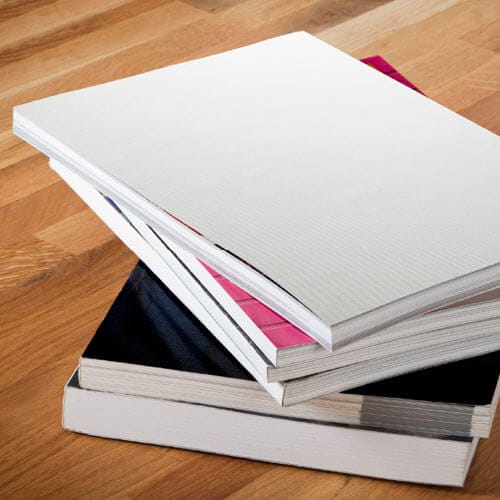
Perfect Bound Seasonal Lookbook — the safe pick. Spec that matters: holds cleanly from roughly 40 pages up through a full 100+ page seasonal line, with a flat spine that reads as retail-ready on a buyer's shelf. If the collection runs a full line rather than a single capsule, this is the perfect binding vs saddle stitch call to make early. Buy for full-line seasonal drops in 2026.
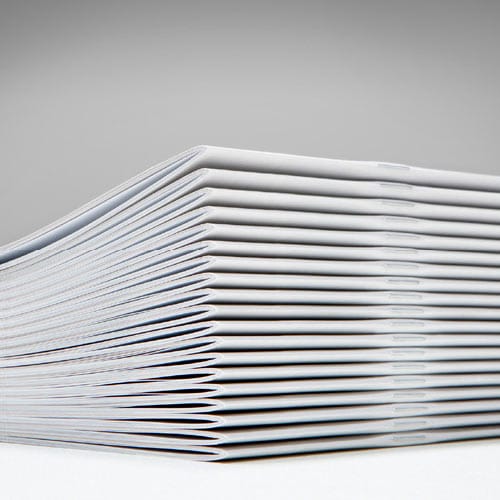
Saddle Stitch Capsule Lookbook — the budget pick. Spec that matters: stays flat and cheap through about 32 pages, which covers most single-capsule or single-category drops. It costs less per unit than perfect binding at that page count and doesn't need a wide enough page block to justify a spine. Buy for capsule collections and trend previews.
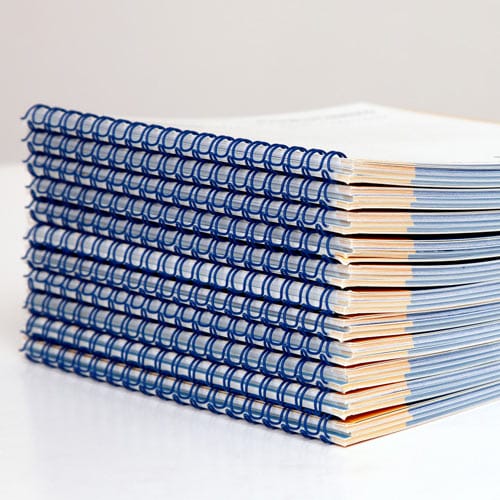
Wire-O Sample Book — the wildcard. Spec that matters: lies completely flat when open, which matters when a sales rep is flipping pages open on a buyer's desk for a full afternoon appointment rather than reading it once and setting it down. Consider for rep sample books and repeat-use showroom copies.
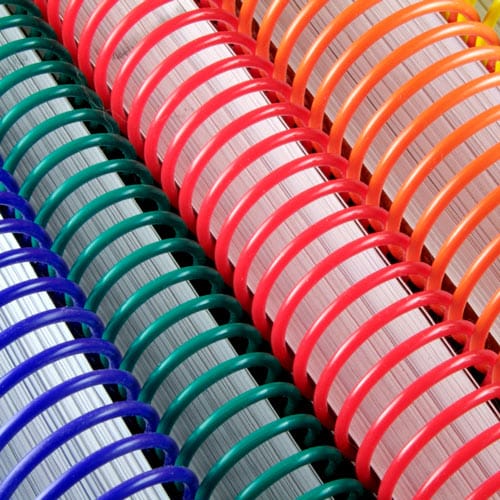
Coil-Bound Trade Show Portfolio — the underdog. Spec that matters: takes rough handling at a booth better than a stitched spine, and pages turn 360 degrees for quick single-item reference. Consider for high-traffic trade show handouts where durability matters more than polish.
| Binding | Best page range | Lies flat? | Best for | Verdict |
|---|---|---|---|---|
| Perfect Bound | 40-100+ pages | No | Full seasonal line | Buy |
| Saddle Stitch | 8-32 pages | Yes | Capsule collection | Buy |
| Wire-O | 20-80 pages | Yes | Rep sample books | Consider |
| Coil | 20-80 pages | Yes (360°) | Trade show handouts | Consider |
A fashion lookbook and a product catalog solve the same layout problem — image-heavy pages that need to hold color and let a reader scan fast. The same rules that govern a product catalog booklet printing run apply almost directly to lookbooks: consistent grid, controlled bleed, and a page count that matches the actual number of styles in the collection rather than the number the brand wishes it had.
Don't pad a 20-piece capsule to 40 pages with repeated shots just to hit a round number. Buyers notice, and the extra pages cost real print budget for zero additional information.
What’s the best binding for lookbook printing for fashion brands?
Perfect binding is the best choice for full seasonal lookbooks running 40 pages or more in 2026, since it holds a flat spine that reads as retail-ready. Saddle stitch works better for capsule collections under about 32 pages where a spine isn’t needed yet.
Is saddle stitch or perfect binding better for a lookbook?
Saddle stitch is cheaper and fine up to roughly 60-64 pages, but it starts to gap at the spine past that point. Perfect binding costs more per unit but holds together for a full-line seasonal lookbook that needs to survive repeated handling.
How many pages should a fashion lookbook be?
Most capsule lookbooks run 20 to 32 pages, and full seasonal lines run 40 to 100+ pages depending on how many styles are shown. Match the page count to the actual number of pieces rather than padding to hit a round number.
What paper stock works best for lookbook printing?
100 lb gloss text stock reproduces garment color and contrast more accurately than the lighter 80 lb stock some brands default to. Color accuracy matters more in a lookbook than in almost any other print format, since buyers judge shade directly against the printed page.
How much does a fashion lookbook cost to print?
Cost scales with page count, binding, and paper stock, so it varies by project — get a quote based on the exact page count and stock chosen. Order minimums as low as 100 copies with single-copy increments above that keep small seasonal runs from overprinting.
Do I need full bleed for lookbook photography?
Yes — fashion photography is designed to run to the edge of the page, and a visible white border around a garment shot reads as an unfinished proof rather than a finished lookbook. Confirm bleed handling before a full print run goes out.
What’s the minimum order for a lookbook print run?
A 100 copy minimum with increments of 1 copy above that lets a brand print exactly what one season’s buyer and press list needs, instead of committing to a bulk run for a capsule collection.
Should a lookbook use coil, wire-o, or a stitched spine?
Wire-O and coil both lie flat and survive repeated handling, which suits rep sample books and trade show handouts. A stitched or perfect-bound spine looks more finished for a press kit or a buyer’s take-home copy.
The detail that gets skipped most in 2026 lookbook printing isn't binding or stock — it's matching the trim size to how the book actually travels. A lookbook that fits standard mailing dimensions gets forwarded to a second buyer inside the same company; an oversized novelty format gets photographed once and left in the booth.
© 2026 Publishing Xpress. All Rights Reserved.