August 18, 2026
Daycare and preschool directors don't need a bookstore-quality paperback — they need something that survives glue sticks, juice spills, and forty small hands a day without falling apart by October. This guide breaks down book printing for daycare centers in 2026: which binding formats actually hold up in a classroom, what specs matter, and which options look fine on a sample but fail in real use.
A daycare center isn't buying a book once — it's buying a format that gets reordered every enrollment cycle, every new classroom, every fundraiser. Pick the wrong binding and you're reprinting mid-year because pages fell out of a 60-page saddle-stitched activity book after six weeks of toddler use.
The stakes are small per unit but constant. A center running three classrooms might order 30-60 copies of a curriculum booklet twice a year, plus one-off memory books at graduation. Get the format right in 2026 and that becomes a five-minute reorder. Get it wrong and it's a support call every semester.
This guide is for daycare owners, preschool directors, and center administrators ordering printed materials for classroom use — story books for read-aloud time, activity workbooks for pre-K curriculum, parent handbooks, and keepsake memory books for graduating classes. It's not for authors self-publishing a children's book for retail sale; that's a different production path with different binding priorities.
Standard 60 lb. text paper tears the first time a two-year-old grabs a page wrong. For anything going into an infant or toddler room, board book printing with a thick chipboard-style page is the only format built for that kind of handling. For preschool-age readers, 80 lb. or heavier text stock with a coated cover holds up through a full school year of daily circulation.
Binding is where most daycare print jobs fail. Saddle stitch (stapled) is fine for thin story booklets under roughly 60 pages, but push past that and staples pull loose from constant flat-opening. Coil and Wire-O let a workbook lie completely flat on a table — critical when a three-year-old is tracing letters and needs both hands free. Perfect binding (the glued spine on paperback books) looks the most professional but is the worst choice for anything under 40 pages handled daily; the spine cracks and pages start falling out.
A single classroom doesn't need 500 copies of anything. Publishing Xpress runs with no large minimum order requirement, which matters when you're ordering 15 copies of a curriculum booklet for one pre-K room instead of a full print run for a whole center network.
Most daycare reorders cluster around two windows: the fall enrollment push and end-of-year graduation. A printer that quotes weeks-long turnaround in August, right when new-family handbooks need to go out, creates a real operational problem. Ask for a firm turnaround date before you commit a print date to a parent-facing deadline.
A workbook designed for a first-grade classroom doesn't survive a re-skin for three-year-olds — line spacing, image size, and page count all need to shift down. If you're producing original content rather than reordering a template, avoid common children's book mistakes like text blocks too dense for a pre-reader or trim sizes too small for small hands to hold.
The spec that matters: page thickness. A proper board book page runs far heavier than standard text stock, which is why it survives chewing, bending, and repeated grabbing without tearing. For rooms with children under age three, this is close to the only format that lasts a full enrollment cycle without replacement. Verdict: Buy.
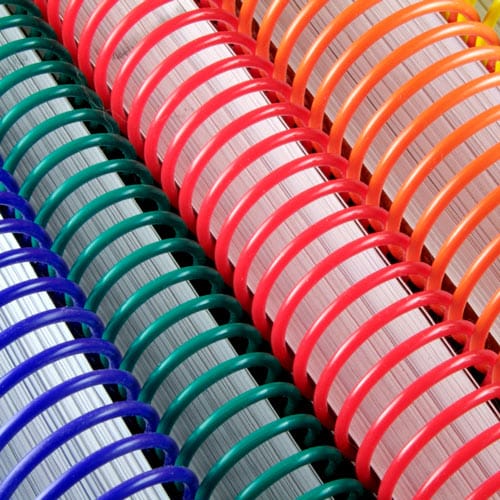
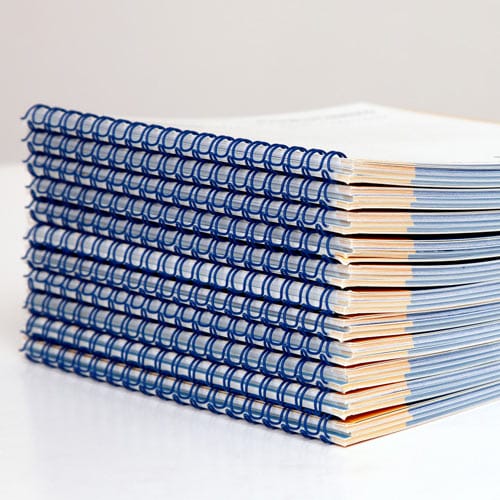
The spec that matters: lie-flat binding. Coil-bound workbooks open completely flat and rotate 360 degrees, which means a child can trace, color, or write without a teacher holding the book open. For daily curriculum use across a school year, this is the format that takes the most handling without failing. Verdict: Buy.
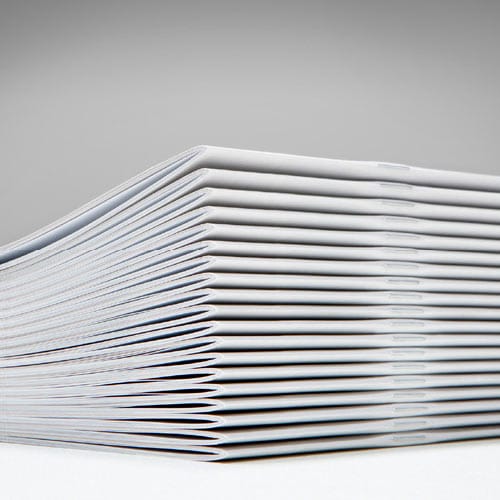
The spec that matters: page count ceiling. Saddle stitch works well up to roughly 60-80 pages before the staple binding starts to strain, which covers most short picture-book-length story booklets. It's the cheapest binding per copy, which matters when a center is ordering for multiple classrooms at once. Verdict: Buy for short runs under 80 pages, Skip past that.
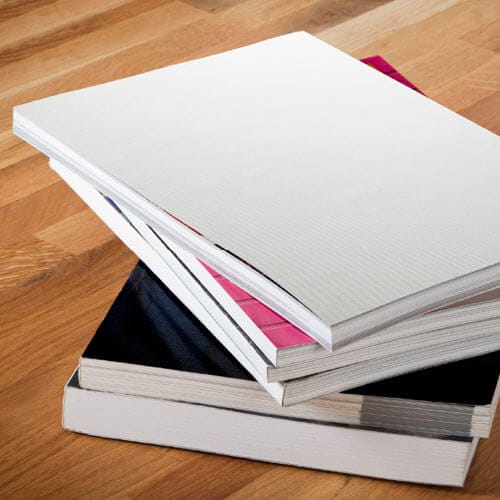
The spec that matters: this is a low-handling item, not a daily-use item. A graduation memory book gets flipped through by parents a handful of times a year rather than handled by toddlers daily, so the glued spine of perfect binding holds up fine here even though it fails for daily classroom use. Verdict: Buy, but only for low-handling keepsakes, not curriculum materials.
The spec that matters: paper weight under crayon pressure. Standard 20 lb. copy paper buckles and tears when a preschooler presses hard with a crayon; 80 lb. or heavier stock, the kind used in coloring book printing for educators, holds up to that pressure without the page warping. Verdict: Buy for take-home activities, Skip standard office paper.
| Format | Best for | Page range | Daily-handling durability | Verdict |
|---|---|---|---|---|
| Board book | Infant/toddler rooms | 8-24 pages | Highest | Buy |
| Coil / Wire-O | Pre-K workbooks, curriculum | 20-150 pages | High, lies flat | Buy |
| Saddle stitch | Story booklets, programs | Under 80 pages | Medium | Buy under 80 pages |
| Perfect bound | Keepsakes, yearbooks | 40+ pages | Low for daily use, fine for low-handling | Buy for keepsakes only |
What’s the best book printing for daycare centers in 2026?
Board book printing is the best format for infant and toddler rooms in 2026 because the thick pages survive chewing and repeated handling. For pre-K workbooks, coil or Wire-O binding wins because it lies flat for tracing and writing activities.
Is coil binding better than saddle stitch for classroom workbooks?
Yes, for daily-use workbooks. Coil binding lets a book lie completely flat and rotate a full 360 degrees, which saddle stitch can’t do, making it the better pick for tracing and activity pages.
How much does book printing for a daycare center cost?
Cost depends on page count, binding type, and quantity, so get a direct quote for your specific project. Centers ordering small classroom runs benefit from a printer with no large minimum order requirement instead of paying for a full retail print run.
Can I order just 15-20 copies of a daycare curriculum book?
Yes. Publishing Xpress runs with no large minimum order requirement, so a single classroom’s worth of copies is a workable order rather than a special exception.
What paper weight should I use for a daycare coloring book?
Use 80 lb. text stock or heavier. Standard 20 lb. copy paper buckles and tears under crayon pressure from young children.
How many pages can saddle stitch binding handle?
Saddle stitch works well up to roughly 80 pages. Past that, the staple binding strains and pages start separating from the center fold.
Is perfect binding durable enough for a preschool book?
Perfect binding holds up fine for low-handling items like graduation yearbooks, but it’s a poor choice for daily-use curriculum books under 40 pages because the glued spine cracks within a school year.
What’s the difference between board books and regular picture books for daycare use?
Board books use thick, rigid pages built to survive chewing, bending, and repeated grabbing by children under three. Regular picture books use standard text stock, which tears under that kind of handling.
The print job that trips up most daycare centers isn't the storybook — it's the parent handbook. It gets reprinted every August with small policy changes, and centers that lock it into perfect binding end up paying for a full reprint over a one-paragraph edit. A coil-bound or saddle-stitched handbook lets you swap a few interior pages without redoing the whole cover run, which is a smaller fix every single enrollment season in 2026.
© 2026 Publishing Xpress. All Rights Reserved.