October 26, 2026
Yes, you can self-publish a book without an ISBN in the United States when you distribute it privately or sell directly to readers through channels that do not require one. Buying an ISBN is also different from needing one: a publishing platform can supply an identifier, but its terms determine where you can use it.
Choose your sales channels before deciding whether to obtain an ISBN. Printing a readable, finished book and listing that book in a retailer's ordering system are separate jobs. An identifier matters to the second job, not to the physical act of printing.
For your 2026 publishing plan, write down where readers will actually get the book. A family memoir handed to relatives has different needs from a paperback offered through wholesale distribution. If you are planning physical copies, Publishing Xpress offers short-run book printing with a minimum order of 25 copies.
The practical question is not whether a book looks legitimate without a number. It is whether your intended retailer, distributor, or organization requires that number to accept and track the edition.
Yes. You have several routes, and only some require you to obtain your own ISBN. The International ISBN Agency's guidance distinguishes the identifier's role in the book trade from copyright protection; it does not make buying an ISBN a universal condition of publishing.
Use this comparison to match the identifier decision to your distribution plan.
| Publishing route | Best for | Main advantage | Main limitation |
|---|---|---|---|
| Publish without an ISBN | Private books and direct sales through channels that accept them | You can distribute the book without establishing an ISBN record | Channels that require ISBNs will not accept that edition without one |
| Use a platform-supplied ISBN | Authors publishing within the supplying platform's terms | The platform provides an identifier for an eligible edition | The identifier can carry restrictions on use elsewhere and on the listed imprint |
| Obtain your own ISBN | Authors managing their publishing identity across compatible channels | You control the publisher information associated with your ISBN assignment | You must maintain accurate edition and publishing information |
No ISBN is a valid choice for a book that does not need trade distribution. It is not a shortcut around a retailer's requirements. If a sales channel requires an ISBN, either meet that requirement or choose another channel.
Also separate two questions: whether you need an ISBN at all, and whether you need to buy it yourself. An edition with a platform-supplied ISBN is not an ISBN-free book.
You can print a family history, distribute a workshop workbook, or sell a poetry collection directly to readers without an ISBN when the distribution channel does not require one. You still need to handle orders, payments, and delivery, but those tasks do not themselves create an ISBN requirement.
This route gives you a straightforward way to put books into readers' hands. Its limitation is distribution: an ISBN-free edition does not meet the requirements of a system that uses ISBNs for book listings and ordering.
Consider a private memory book. Your recipients already know which book they are receiving, and nobody needs to locate it in a wholesale catalog. Adding an ISBN does not improve the writing, printing, or usefulness of those copies.
Direct selling also needs a precise definition. Selling copies yourself at an event is different from submitting a paperback to an online retailer. For a 2026 launch, check each proposed outlet rather than assuming that every sale outside a bookstore follows the same rules.
Choose no ISBN when your actual distribution plan works without one. Do not make the decision solely because you have not selected a retailer yet.
A platform-supplied ISBN lets you publish an eligible edition without obtaining the identifier independently. The important trade-off is control: the platform's terms determine how the identifier can be used and what publisher or imprint information appears in its records.
Amazon KDP, for example, distinguishes between its supplied print ISBNs and ISBNs publishers obtain independently. Its supplied ISBN is for use through KDP, not an identifier to take to another publishing service. Check KDP's current ISBN guidance before assigning it to your edition.
The benefit is a defined route for an author who intends to use that platform. The drawback appears when the author later wants the same identifier to work elsewhere but the original terms do not permit that use.
Before accepting a supplied ISBN, confirm:
Choose a platform-supplied ISBN only when its restrictions fit your publishing plan. A convenient setup does not make the identifier portable.
Obtaining your own ISBN is the clearest route when you want to manage the publisher information attached to your edition. In the United States, Bowker is the official ISBN agency. Authors elsewhere should use the agency responsible for their country rather than assume that U.S. procedures apply.
The advantage is control over the identifier's publishing record. The responsibility is keeping that record consistent with the book you release: title, author, format, publisher, and edition information must describe the actual publication.
An ISBN is a 13-digit identifier. It identifies a particular publication and product form, not every possible version of a manuscript. A paperback and a separately published ebook should not share an ISBN merely because their text matches.
You also do not need a fresh ISBN for every unchanged print run. Reprinting the same edition is different from releasing a new edition or product form under the International ISBN Agency's assignment rules.
Choose your own ISBN when independent control of the publishing record matters to your distribution plan. Ownership of the identifier still does not guarantee retailer acceptance, reviews, or library acquisition.
ISBN requirements follow the publication and the systems handling it. For a 2026 release, check these factors before finalizing your cover:
The useful distinction is between a legal requirement and a channel requirement. A retailer can require an ISBN even though U.S. law does not require every self-published book to have one.
Do not infer acceptance from the presence of a barcode, either. A scannable cover is not a distribution agreement, and an ISBN record is not an order from a bookseller.
Decide the distribution route first, then prepare the matching publishing information. That sequence prevents you from approving a cover that lacks an identifier your chosen channel requires.
A book planned for direct sales today can have a different distribution plan later. The important point is that existing printed copies will not automatically gain the cover information or listing eligibility required by that later plan.
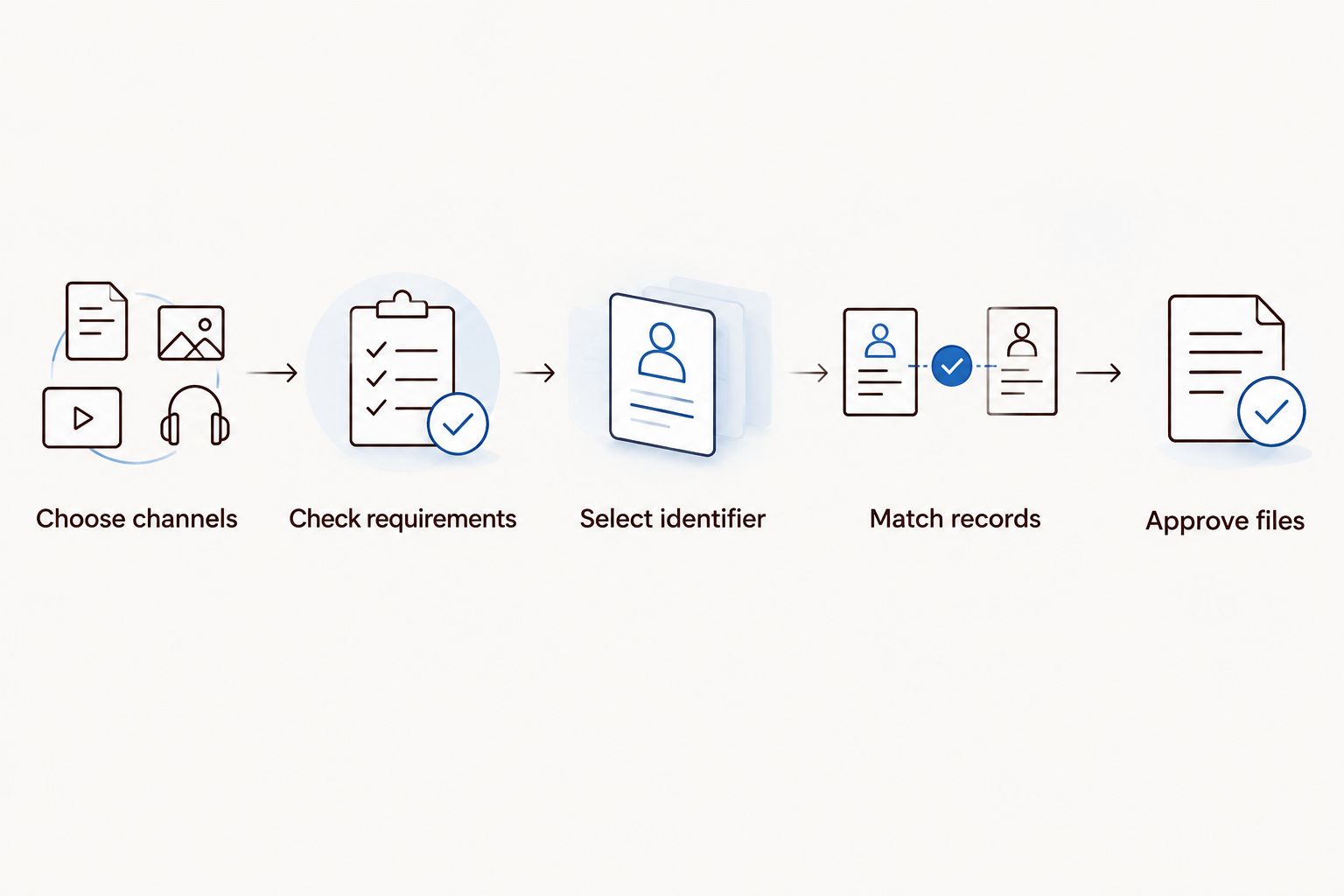
Keep a simple publication record alongside your final files. Record the edition, format, identifier if assigned, and the cover file used for that print run. That gives you a reference when ordering more copies or preparing another format.
Your ISBN decision does not replace print preparation. You still need a finished interior, a correctly sized cover, suitable margins, and a binding that fits how readers will use the book.
Publishing Xpress short-run book printing fits self-publishers ordering at least 25 copies. That minimum suits a batch of books, not an author seeking a single copy. Available binding options include perfect bound, saddle stitch, wire-o, and plastic coil.
For a 2026 print schedule, allow 4 to 6 business days after proof approval before shipping, then account separately for transit. Do not treat the approval date as the delivery date. If you select saddle stitch, the maximum offered length is 80 pages.
Publishing Xpress provides the physical printing step; your ISBN and sales-channel decisions remain separate planning tasks. Match both sides before approving files so that the book you print is the edition you intend to distribute.
Yes, you can sell a book without an ISBN directly to readers when the sales method does not require one. Your own event sales are different from entering a retailer's catalog, so confirm requirements before promising a particular outlet.
Yes, you can assign an ISBN later to an eligible publication that previously lacked one, following the ISBN agency's rules. Update the relevant book files and publication records before the next printing; copies already printed remain physically unchanged.
No, an ISBN does not protect or register copyright. In the United States, copyright generally arises when original expression is fixed in a tangible medium; copyright registration is a separate process with its own legal effects.
Can you self publish a book without an ISBN in 2026?
Yes, you can self-publish a book without an ISBN in the United States for private distribution or sales through channels that do not require one. Retailers and distributors can impose their own ISBN requirements.
Is publishing without buying an ISBN the same as publishing without one?
No, publishing without buying an ISBN can mean using a platform-supplied identifier. That edition still has an ISBN and follows the supplying platform’s terms.
Do I need an ISBN to sell books at an author event?
You do not need an ISBN solely to sell your own books directly at an author event. Check any requirements imposed by the organizer or retailer handling the transaction.
Can I publish a Kindle ebook without an ISBN?
Yes, Amazon KDP does not require an ISBN for a Kindle ebook. A separate print edition follows print-specific requirements and should not be treated as the same product.
Does every copy of my book need a different ISBN?
No, copies of the same edition and product format share an ISBN. An unchanged reprint does not require a new identifier merely because you order more copies.
Is an ISBN the same thing as a barcode?
No, an ISBN is an identifier, while a book barcode provides a machine-readable representation of it. Neither guarantees that a retailer will stock the book.
Will an ISBN get my book into libraries?
No, an ISBN does not guarantee library acquisition. It helps identify the publication, but each library applies its own selection and acquisition practices.
An ISBN identifies an edition, not a level of quality. A carefully edited family history without one is still a finished book; a poorly prepared paperback with one still needs work.
Before approving your 2026 cover, ask one final question: does every intended distribution channel accept this edition as prepared? If the answer is no, resolve that mismatch before printing rather than treating the identifier as a detail to fix afterward.
© 2026 Publishing Xpress. All Rights Reserved.