October 13, 2026
Yes, you can print a small batch of cookbooks for a fundraiser in 2026 using short-run digital printing instead of committing to a large run. Choose a binding that suits kitchen use, collect orders before setting the quantity, and include editing, delivery, and distribution expenses in your fundraising plan—not just printing.
Yes. A community cookbook does not need a large print run to become a finished, bound book. Publishing Xpress provides short-run digital printing without large minimum order requirements, with black-and-white or color printing and four binding options. Confirm the exact order requirements for your chosen specifications before collecting commitments.
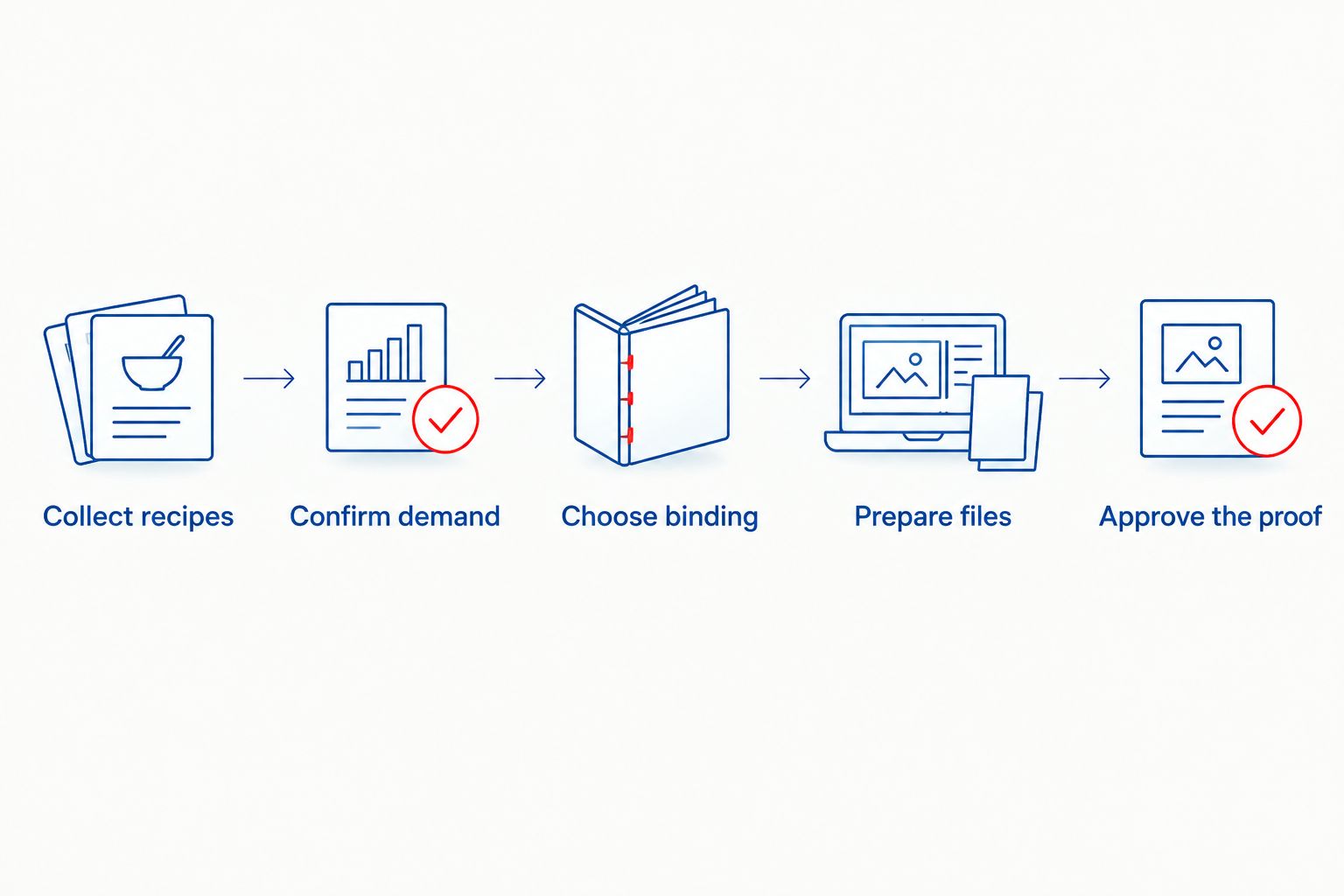
For a 2026 fundraiser, follow this sequence:
Keep responsibility clear throughout. Assign someone to maintain the recipe master file and someone to reconcile orders, so a late contribution does not silently change an approved edition.
A small batch limits the number of books you commit to before you know who wants them. It also gives your group a practical way to produce a community keepsake without making a large-run decision at the start.
The trade-off is simple: a small order does not automatically produce the strongest fundraising margin. Your result depends on the complete project budget and the copies you actually sell, not the number of recipes submitted or volunteers involved.
Plan the cookbook around confirmed buyers and useful recipes—not an optimistic attendance estimate. A book that supporters can comfortably cook from gives them something beyond a donation receipt.
Publishing Xpress offers four binding options: plastic coil, Wire-O, perfect bound, and saddle stitch. Compare them by how supporters will use the cookbook, rather than choosing only by appearance.
| Binding | Best for | Practical advantage | Limitation |
|---|---|---|---|
| Plastic coil | Everyday kitchen use | Pages turn around the continuous coil and open flat | Requires space for punched holes along the binding edge |
| Wire-O | A lay-flat community keepsake | Double-loop wire allows pages to open flat | Wire loops can bend if handled roughly |
| Perfect bound | A traditional shelf-style cookbook | Glued spine creates a conventional paperback appearance | Does not reliably stay flat on its own |
| Saddle stitch | A slim recipe booklet | Folded sheets form a compact, stapled booklet | Not suitable for a thick recipe collection |
These are binding characteristics, not promises about a particular finished order. Paper, page count, and dimensions still need to fit the printer's requirements.
Choose plastic coil when supporters will cook directly from the book. A continuous plastic spiral lets readers open the cookbook flat or fold pages back, which makes it easier to keep the current recipe visible.
Leave the binding edge clear. Ingredients, instructions, page numbers, and contributor names should sit safely outside the punched area, using the printer's specified margins rather than a guessed measurement.
Plastic coil has a visible spiral instead of a conventional spine. That is a practical trade-off, not a defect: prioritize kitchen handling if the cookbook is meant to be used rather than displayed.
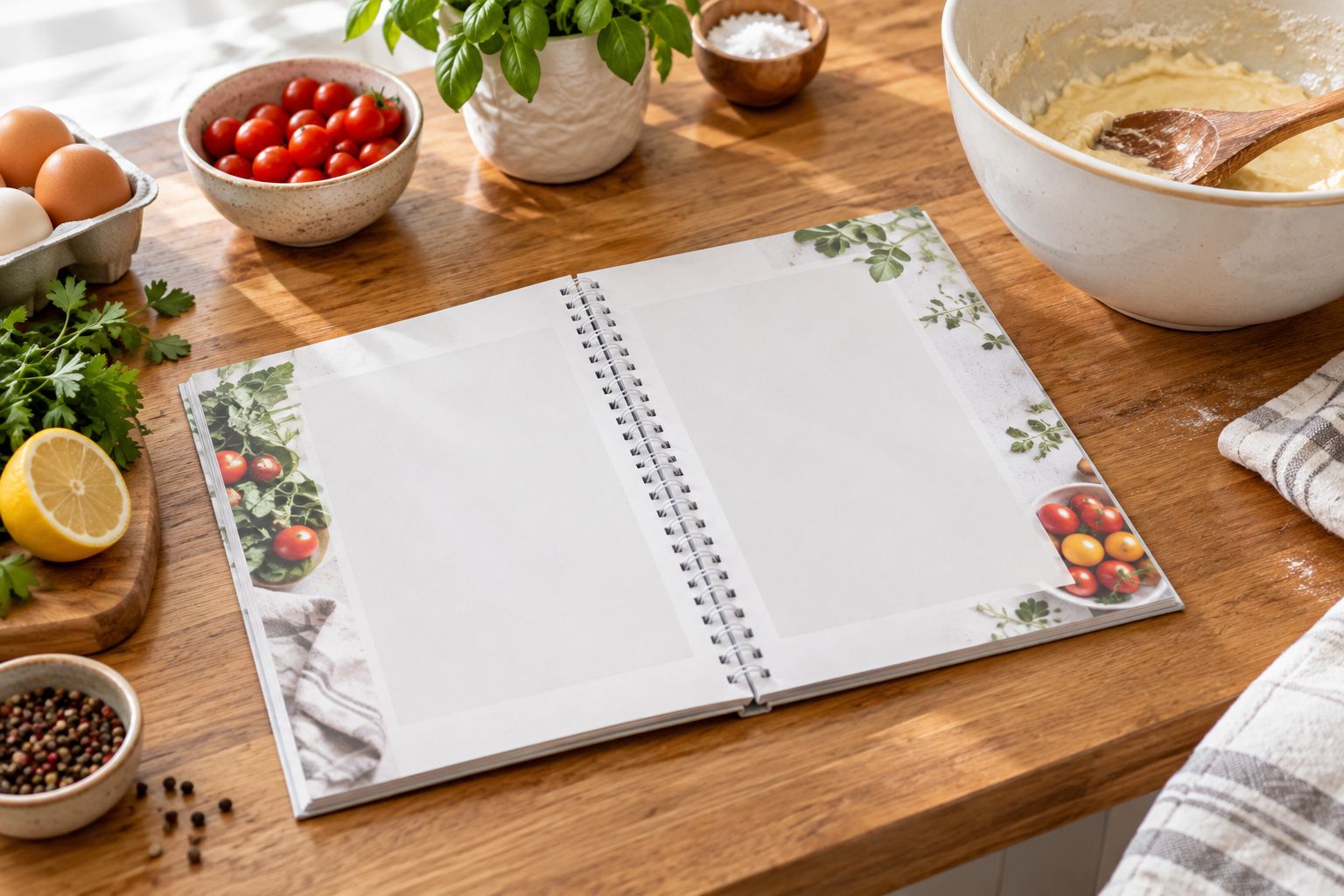
Choose Wire-O when you want flat-opening pages with a double-loop metal binding. The page-turning behavior suits recipe collections that supporters will use on a counter.
The limitation is handling. Protect the loops when transporting books to an event, and avoid packing them where heavy objects press against the binding.
Wire-O also needs a clear punched margin. Finish the layout for this binding before exporting the interior; converting a tight paperback layout at the end risks crowding the recipe text.
Choose perfect binding when the cookbook's shelf-style appearance matters more than hands-free use. The glued spine creates the familiar look of a paperback and suits a substantial collection of recipes and community stories.
Do not assume perfect binding will stay open beside a mixing bowl. Readers can use a cookbook stand, but the binding itself is not a substitute for a lay-flat format.
Confirm that your final page count and paper meet the printer's binding requirements. For the layout trade-offs, read the guide to perfect binding versus saddle stitch.
Choose saddle stitch for a focused booklet rather than a large collection. Staples secure folded sheets through the center, making this format suitable for a compact selection of community favorites.
Folded-sheet saddle-stitch booklets use page totals in multiples of 4 pages. Confirm how the printer counts the cover and interior before finalizing your document; intentional blank pages also affect the total.
Thickness limits the format. If the collection keeps growing, reconsider the binding instead of shrinking the type or compressing instructions to force everything into a booklet.
For a 2026 fundraiser, request an estimate using the finished specifications. A provisional recipe list is not enough to compare complete printing proposals.
Keep those specifications consistent when comparing estimates. Otherwise, a proposal for a text-only booklet and a proposal for a photo-heavy bound cookbook describe different projects.
Use recorded orders, not enthusiasm, to set the batch size. Ask each buyer for a quantity, contact information, and a pickup or delivery preference, then reconcile that list before placing the printing order.
Separate sold copies from other commitments. Contributor gifts, sponsor copies, display copies, and the organization's archive copy all need a place in the count, even when they do not generate sales proceeds.
Do not add an unexplained percentage for extras. Give every additional copy a purpose, and decide who is responsible for distributing it. That keeps the print decision connected to your fundraiser rather than to a convenient round total.
For a 2026 event, also decide how you will handle orders received after the file is approved. Keep later corrections in a separate revision list instead of changing the production file while volunteers are still selling the original edition.
A community cookbook needs consistent instructions more than elaborate decoration. Give every contributor the same recipe template, then edit submissions into a common structure without changing the meaning.
Ask for the recipe title, contributor credit, yield, ingredient list, method, and any essential preparation notes. Put ingredients in the order readers use them, and break the method into clear actions.
Check that every listed ingredient appears in the instructions. Also check the reverse: an instruction should not introduce an ingredient that the list omits.
Keep measurement units explicit. An abbreviation that makes sense to the contributor can confuse another cook, especially when handwritten originals are transcribed.
Preserve the submitted quantities accurately and ask the contributor to resolve unclear instructions. Do not invent a missing oven temperature, cooking time, or substitution; printing an attractive page does not make an incomplete recipe usable.
Use photographs that reproduce clearly at their placed size. 300 pixels per inch is a common print-preparation target for continuous-tone images, but confirm the printer's requirements and judge the actual image quality rather than relying on that number alone.
Get permission for contributed photographs and personal stories. Finding an image online does not establish permission to reproduce it, and crediting the creator is not a replacement for permission.
Organize recipes into clear sections and build the contents page after pagination is stable. Keep headings, ingredient lists, and instructions visually distinct so readers can find their place while cooking.
Avoid splitting a short ingredient list unnecessarily across pages. Review longer recipes as complete spreads, and check whether a page turn interrupts an essential instruction.
Calculate net proceeds from the whole project, not printing alone. Include any paid editing, design, delivery, payment processing, packaging, and distribution expenses that apply to your plan.
Keep donated work separate from paid expenses. A volunteer's help belongs in your production schedule even when it does not create a cash expense, because someone still needs to complete and approve that work.
If you include sponsor acknowledgments or advertisements, agree on the wording, artwork, placement, and approval deadline before final pagination. Late sponsor changes affect page count and can disrupt a finished layout.
For your 2026 fundraiser, make the budget decision before making public promises about proceeds. Publishing Xpress is best for organizers seeking short-run cookbook printing with a choice of binding. The organizer still needs to manage recipe editing, buyer commitments, and distribution; printing is one part of the project.
Read the exported print file, not only the editable document. Exporting can expose font, image, or pagination problems that were not obvious while you were writing.
Ask a reader who did not assemble the cookbook to follow the recipes on the page. Familiarity makes omissions easy to overlook; a fresh reader can flag confusing wording before it becomes part of every printed copy.
Also confirm the production and delivery schedule directly with the printer. A fundraiser deadline is an arrival requirement, not simply the day you submit the file.
Plan your cookbook print order
Choose your quantity, binding, and interior format before submitting your fundraiser cookbook.
Can our church print a small batch of fundraiser cookbooks?
Yes, a church can use short-run digital printing for a small batch of fundraiser cookbooks. Confirm the exact quantity requirements, binding, and delivery schedule before collecting final orders.
What’s the best binding for a cookbook that stays open?
Plastic coil and Wire-O are practical choices for a cookbook that opens flat. Choose the binding before formatting so the punched edge has enough clear space.
Do we need color photographs in a community cookbook?
No, a community cookbook can use a text-led black-and-white interior. Include color photographs when they serve the recipes or the keepsake purpose, rather than treating them as a requirement.
How many pages does a saddle-stitch cookbook need?
Folded-sheet saddle-stitch booklets use page totals in multiples of 4 pages. Confirm the printer’s cover-counting method and thickness limits before completing the layout.
Does Publishing Xpress print short-run books for fundraisers?
Publishing Xpress provides short-run digital book printing without large minimum order requirements. Its four binding options are perfect bound, saddle stitch, Wire-O, and plastic coil; confirm which specifications fit your cookbook.
Should we collect cookbook orders before printing?
Yes, collecting orders before printing gives you a documented basis for the batch size. Count contributor gifts, sponsor copies, and organizational copies separately from buyer orders.
Can we print recipes and photos that people contribute?
Ask contributors for permission to publish their submitted material and preferred credit. Resolve unclear recipe instructions and confirm photo permissions before approving the print file.
What should we confirm for a cookbook fundraiser in 2026?
For a cookbook fundraiser in 2026, confirm the final quantity, binding, page count, interior format, proof process, and arrival requirement. Include applicable delivery and distribution expenses in the project budget.
Proof the cookbook like a cook, not just an editor. Follow an ingredient from the list into the method, check that the equipment and preparation steps make sense, and ask whether a reader can complete the recipe without contacting its contributor.
A missing instruction is not something better paper or binding can fix. Before your 2026 print approval, resolve recipe questions first and polish decoration second.
© 2026 Publishing Xpress. All Rights Reserved.