August 31, 2026
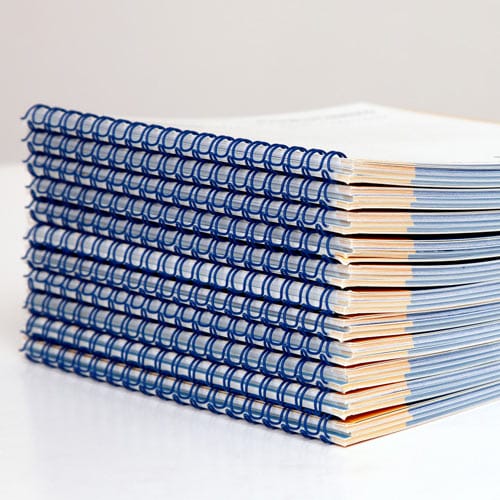
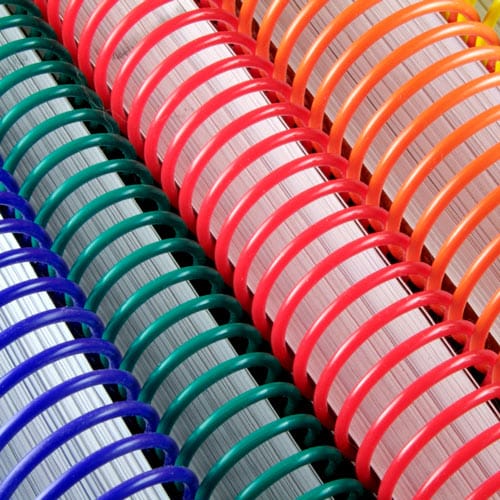
Book printing for barbershops and salons means producing durable service menus, price booklets, and chair-side guides in wire-o, plastic coil, or saddle-stitch formats that survive a busy front desk instead of falling apart after two weeks. Barbershops and salons update pricing every season, add new services constantly, and hand menus to clients with wet or product-covered hands — needs a restaurant menu or a hardcover novel never has to solve.
A salon's service menu is a sales document, not decoration. It sits on a reception counter, gets passed hand to hand at the chair, and gets read by a client deciding whether to add a beard trim or a keratin treatment to today's ticket. If the binding falls apart or the price sheet is two seasons out of date, that upsell doesn't happen.
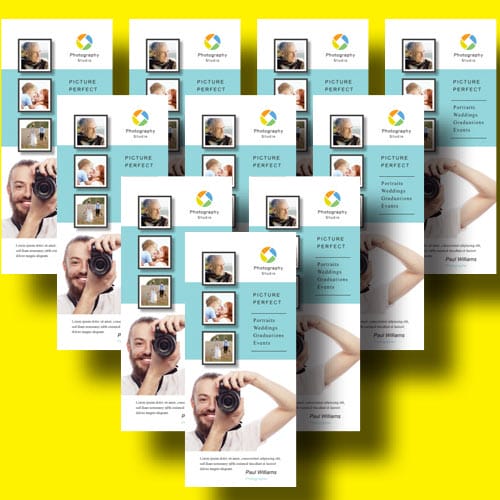
Spas and salons also lean on countertop rack cards alongside bound menus — a rack card handles a quick takeaway price list, while a bound booklet carries the full service directory, staff bios, and retail add-ons. Both formats matter in 2026 because clients still expect a printed reference even when they booked online.
Barbershops run leaner than full-service salons, which means shorter menus and shorter print runs. A shop with six chairs doesn't need 500 copies of a service booklet sitting in a drawer going stale. It needs 50 to 100 copies it can reorder the moment prices change.
Pricing chaos is the single biggest reason salon menus get reprinted early. Lock the list first, design second.
A menu that lives at a reception desk gets opened and closed dozens of times a day. Staples and glued spines don't hold up to that.
The decision mirrors what beauty professionals already do with portfolio-style booklets — a beauty professional booklet needs the same lay-flat durability a salon menu does. If you're still weighing the tradeoffs, the saddle stitch vs perfect binding comparison covers where each format breaks down on page count and handling.
Once the binding is chosen, ordering through Publishing Xpress removes the guesswork on page-count minimums — there's no large minimum order requirement, so a 12-page coil-bound menu prints in a run as small as your shop actually needs.
Salon environments are hard on paper. Water, hair product, and hand cream all touch the page.
Oversized menus look impressive on a shelf and get shoved in a drawer. A trim size that fits how the menu is actually used gets read more.
Most salons reprint menus reactively — a price changes, someone scrambles. A standing workflow avoids the scramble.
A menu that only lists haircuts leaves money on the table. Retail and add-ons belong on the same page.
| Option | Best for | Key limitation |
|---|---|---|
| Wire-O binding | Chair-side menus handled dozens of times daily | Slightly higher unit cost than coil at low page counts |
| Plastic coil binding | Budget-friendly menus that still need to lie flat | Coil can loosen on very thin covers over heavy use |
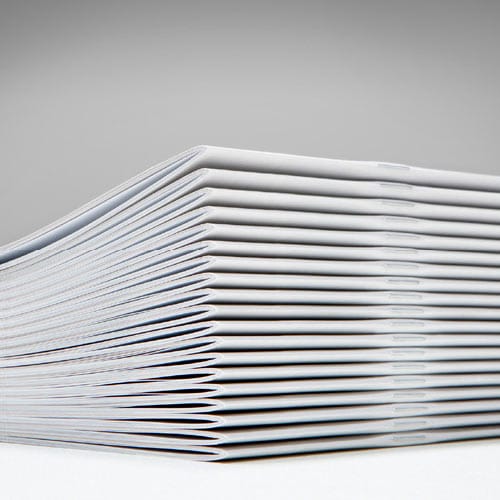
| Saddle stitch | Simple menus under 40 pages, opened occasionally | Spine cracks and pages loosen under constant flexing |
| Perfect binding | Large spa directories past 50 pages | Overkill and costlier for a short salon menu |
Verdict: Wire-O binding wins for any menu that gets picked up and handed to a client more than a few times a shift — it's the format built for that exact abuse.
“If your menu can’t survive a countertop spill, it’s not a service menu — it’s confetti.”
What’s the best binding for a barbershop or salon service menu?
Wire-O binding is the best choice for a salon or barbershop service menu handled at the chair every day. It lies flat and folds back 360 degrees without cracking, which saddle stitch and perfect binding can’t match at that handling frequency.
Is saddle stitch strong enough for a salon price list?
Saddle stitch works for a simple price list under 40 pages that stays closed most of the day. It’s not the right choice for a menu flipped open repeatedly at the chair — the staples loosen and the spine cracks over a few months.
How many copies should a salon order for a service menu update?
Order enough for roughly one review cycle, typically a 3- to 6-month supply based on foot traffic. Publishing Xpress has no large minimum order requirement, so a 50- or 100-copy reprint tied to a seasonal price change is realistic.
What paper stock holds up to wet hands and hair product?
Coated gloss or matte text stock at 80 lb. to 100 lb. resists moisture and product residue far better than uncoated paper. Uncoated stock softens and stains after a handful of touches in a salon environment.
Can I print a booklet that includes both service menus and a retail catalog?
Yes, a Wire-O or plastic coil booklet can combine a service menu section with a retail product catalog in the same document. Group the sections clearly so clients can find pricing and products without flipping back and forth.
What size should a chair-side service menu be?
5.5 x 8.5 inches fits most reception counter stands and a client’s bag without feeling oversized. Full-service spas with photography-heavy menus often move up to 8.5 x 11 instead.
How often should barbershops reprint their service menu?
Most shops reprint twice a year, tied to spring and fall pricing reviews. Shops that add services more frequently benefit from smaller, more frequent print runs instead of one large annual order.
Does book printing for barbershops and salons cost more than a basic flyer?
A bound booklet costs more per unit than a single flyer because it involves multiple pages and a binding process, but it holds up to far more handling. For a menu reused daily for months, the durability outweighs the flyer’s lower upfront cost.
Most salons print one big batch of menus a year and regret it by spring. The shops that get this right in 2026 order small, reorder often, and treat the service menu like a living document instead of a one-time print job — which is exactly what a no-minimum print process is built for.
© 2026 Publishing Xpress. All Rights Reserved.