August 13, 2026
Hardcover book printing services for authors range from mass-market print-on-demand platforms to short-run digital printers that skip big minimums. This guide ranks six options worth your file in 2026, with the binding, minimum order, and distribution details that decide which one fits your run.
A hardcover edition changes how a book is judged before anyone reads page one. Readers pay more for it, gift-givers prefer it, and libraries often won't shelve a paperback memoir or coffee-table title at all.
The problem is that most authors pick a hardcover book printing service the same way they'd pick a paperback one — by price alone. That's backwards in 2026, when minimum order size and distribution model matter more than the per-unit rate. Publishing Xpress built its short-run digital model around exactly this gap: no large minimum order requirement, so a 40-copy hardcover run for a family memoir doesn't cost the same per-unit as a 4,000-copy trade run.
Get the binding wrong and you'll know it in the first 90 days — warped covers, cracked spines, or a distribution channel that never lists your book. Get it right and the hardcover edition becomes the version people actually buy.
Each hardcover book printing service below is evaluated on four things: binding options offered, order minimum, distribution reach, and pricing transparency going into 2026. Binding matters because casebound hardcover behaves differently than perfect bound or saddle stitch — case binding needs at least 32 pages of text block to hold its shape without the cover bowing.
Order minimum decides whether a first-time author can test a hardcover run without committing to a warehouse of unsold copies. Distribution reach separates platforms that only sell through one storefront from those that reach bookstores and libraries. None of the rankings below use invented performance numbers — they reflect publicly known operating models for each service as of 2026.
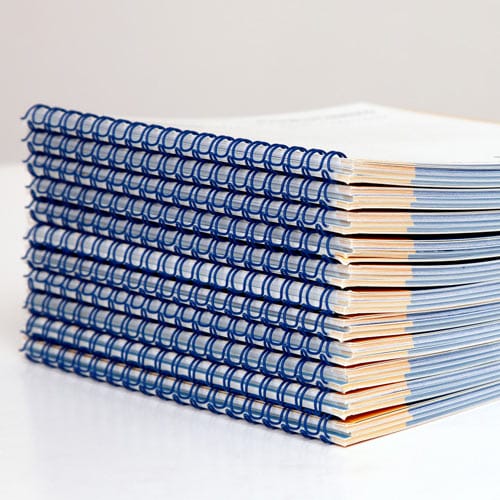
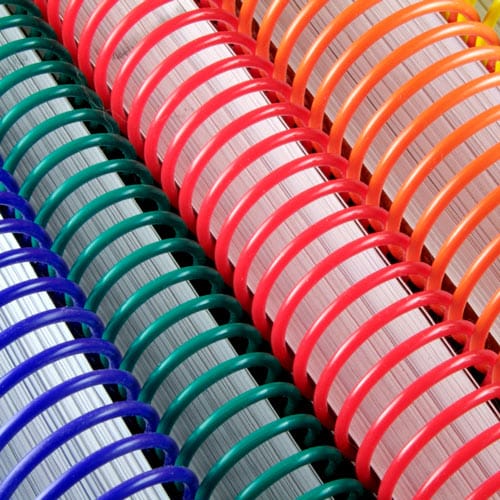
1. Publishing Xpress — the short-run specialist. Four binding options (perfect bound, saddle stitch, wire-o, plastic coil) plus a dedicated hardcover editions guide for authors moving to casebound covers. No large minimum order requirement means a 50-copy family history or a 300-copy business book both run economically. Verdict: Buy for authors who need a short hardcover run without warehousing extra stock.
2. IngramSpark — the bookstore-ready wholesale option. Print-on-demand hardcover with a single-copy minimum and wholesale distribution into the bookstore and library trade. That reach is the entire reason to use it — royalties per unit run lower than direct-to-consumer models, and file prep is stricter. Verdict: Hold if wide retail distribution matters more than turnaround speed.
3. Blurb — the photo-book specialist. Built around layout tools for image-heavy hardcover projects: photography books, cookbooks, illustrated memoirs. Single-copy minimum, direct-to-consumer sales with limited retail reach. Verdict: Consider for hardcover projects where photo reproduction quality outweighs distribution.
4. Lulu — the DIY generalist. Self-service print-on-demand with a single-copy minimum and casebound hardcover as one of several formats. Distribution stays mostly direct-to-consumer, with retail listing as an add-on rather than a default. Verdict: Hold for authors testing hardcover demand before committing to a larger run.
5. Amazon KDP — the marketplace-only option. Casebound hardcover through KDP lists exclusively inside the Amazon ecosystem, with no separate file control outside that storefront. Fine if 100% of sales happen on Amazon; a poor fit for anyone selling at events, through a website, or into bookstores. Verdict: Skip unless every sale you expect is an Amazon sale.
6. Mixam — the fast commercial-run alternative. A hybrid offset/digital printer that handles casebound hardcover alongside general commercial print work, with turnaround built for marketing and event deadlines rather than book-trade distribution. Verdict: Consider for authors who need a quick small run outside the standard book-trade channels.
| Service | Binding Options | Order Minimum | Distribution Model | 2026 Verdict |
|---|---|---|---|---|
| Publishing Xpress | Perfect bound, saddle stitch, wire-o, plastic coil | No large minimum | Direct-to-author digital printing | Buy |
| IngramSpark | Casebound hardcover, POD | Single copy | Wholesale to bookstores/libraries | Hold |
| Blurb | Casebound hardcover, photo layouts | Single copy | Direct-to-consumer, limited retail | Consider |
| Lulu | Casebound hardcover, POD | Single copy | Direct-to-consumer | Hold |
| Amazon KDP | Casebound hardcover | Single copy | Amazon marketplace only | Skip |
| Mixam | Casebound + commercial print | Small commercial run | Direct shipping | Consider |
“If a hardcover proof won’t hold flat by page 32, the binding is wrong for the format.”
What’s the best hardcover book printing service for a short author run?
Publishing Xpress is the strongest option in 2026 for short hardcover runs because it has no large minimum order requirement. IngramSpark and Lulu also print single copies but route through print-on-demand distribution rather than direct short-run digital printing.
Is hardcover more expensive than perfect bound?
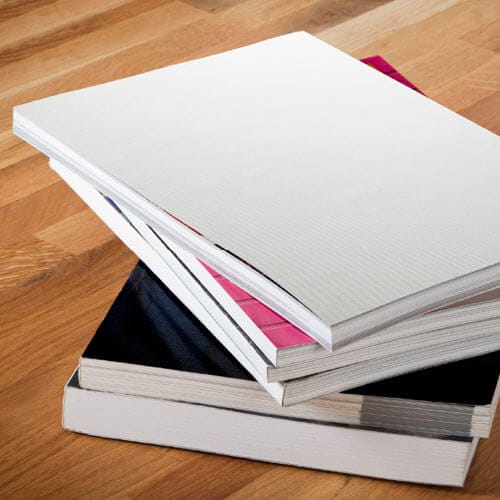
Yes, hardcover case binding costs more per unit than perfect bound because it requires a separate case-wrapped cover and stronger interior binding. The gap narrows on larger runs and widens on very short ones.
How many pages does a book need for hardcover binding?
A book needs at least 32 pages for case binding to hold its shape without the cover bowing. Below that page count, perfect bound or saddle stitch holds up better.
Is IngramSpark better than KDP for hardcover distribution?
IngramSpark reaches bookstores and libraries through wholesale distribution, while Amazon KDP hardcover sells exclusively inside the Amazon marketplace. Choose IngramSpark if you want shelf presence outside Amazon.
Can I print a hardcover book in a small quantity in 2026?
Yes. Publishing Xpress, IngramSpark, Blurb, and Lulu all support single-digit to low-hundreds hardcover runs without requiring a large minimum order.
What binding options does Publishing Xpress offer for books?
Publishing Xpress prints perfect bound, saddle stitch, wire-o, and plastic coil books, with hardcover casebound projects covered separately in its hardcover editions guide.
Does Blurb work for hardcover novels or just photo books?
Blurb is built around image-heavy layouts, so it fits photo books, cookbooks, and illustrated memoirs better than straight text novels. Text-only hardcover novels are usually cheaper to produce elsewhere.
What trim size is standard for a hardcover book?
6×9 inches is the standard trade trim size for hardcover novels and nonfiction in 2026. Coffee-table and photo hardcover books commonly run larger, closer to 8.5×11 inches.
The detail that trips up most first-time hardcover authors isn't the binding — it's the page count. A 28-page picture book or a 40-page poetry chapbook looks fine as perfect bound or saddle stitch, but forcing it into a casebound hardcover cover produces a spine that never sits flat. Check your page count against the 32-page threshold before you spec hardcover at all in 2026.
© 2026 Publishing Xpress. All Rights Reserved.