August 3, 2026
Box sets and special editions live or die on binding consistency, spine alignment, and paper matching across multiple volumes — get any of those wrong and a $200 collector set looks like three unrelated books shrink-wrapped together.
A box set is a promise to the reader: these books belong together. If volume two has a slightly different spine width or a cover that's a shade warmer than volume one, readers notice immediately — and they post about it.
Custom book printing for author box sets in 2026 isn't just "print three books." It's coordinating trim size, paper stock, binding type, and turnaround so every volume in the set matches when it ships as one unit. Choosing the right book binding type up front saves you from reprinting an entire set because volume three didn't hold its shape the same way volume one did.
This guide is for self-published authors assembling a trilogy, series box set, or limited/special edition run — anniversary reprints, signed collector editions, convention exclusives, or a companion set that pairs a novel with a journal or art booklet. If you're ordering a single standalone book, you don't need this level of coordination. If you're shipping 2 to 6 volumes as one packaged unit, every decision below compounds across the whole set.
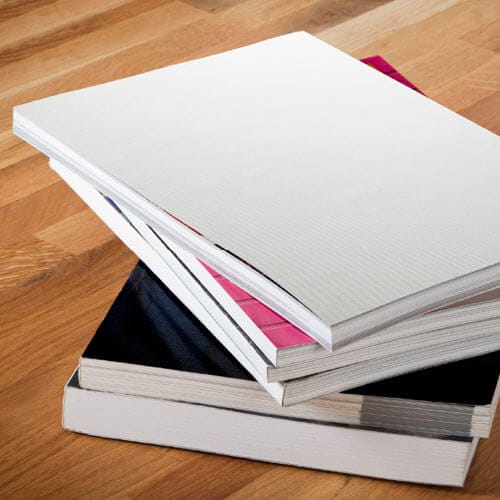
Pick one binding type for the whole set and stick with it. Mixing perfect bound and saddle stitch in the same box set reads as inconsistent even if each individual book is well made. Perfect binding is the standard choice for novels over 90 pages; saddle stitch caps out around 60-80 pages before the spine starts to bulge.
A box set with three different trim sizes never sits flush in a slipcase or a shelf display. Lock your trim size before volume one goes to press, and keep page counts within a reasonable range of each other — a 320-page volume next to a 90-page volume looks like a mismatched set even with identical covers.
Interior paper weight and finish need to match across volumes, and so does the cover stock. A gloss cover on book one and a matte cover on book two is the single most common thing that tips off readers that a box set was printed in separate, uncoordinated batches.
If you're shipping the set in a custom slipcase, every volume's spine width has to be calculated before the case is built — not after. Page count directly drives spine width in perfect bound printing, so a late page-count change on one volume can throw off the fit for the entire case.
Author box sets rarely move in bulk the way trade paperbacks do. You need a printer that lets you order in small increments per volume — 25 sets, 50 sets, 100 sets — without hitting a large minimum that forces you to warehouse inventory you can't move.
If all three volumes don't finish production at the same time, you're stuck shipping partial sets or storing finished books while you wait on the last one. Confirm the printer can run multiple titles on a coordinated schedule before you commit to a launch date.
Hardcover perfect binding is the safe, premium choice for a series box set meant to look like a collector item on a shelf. One spec that matters: hardcover holds its shape at spine widths that a paperback cover would warp under repeated handling. Hardcover book printing is the right call once you're printing 3+ volumes at 250+ pages each and charging a premium price for the set. Verdict: Buy for any box set positioned as a collector or anniversary edition.
Standard perfect bound paperback keeps a 3-book box set affordable without sacrificing the matched-spine look readers expect. It works for page counts from 90 to 400+ per volume, and Publishing Xpress runs perfect bound jobs without forcing you into a large minimum order. Verdict: Buy if you're pricing the set for wide reader accessibility rather than collector pricing.
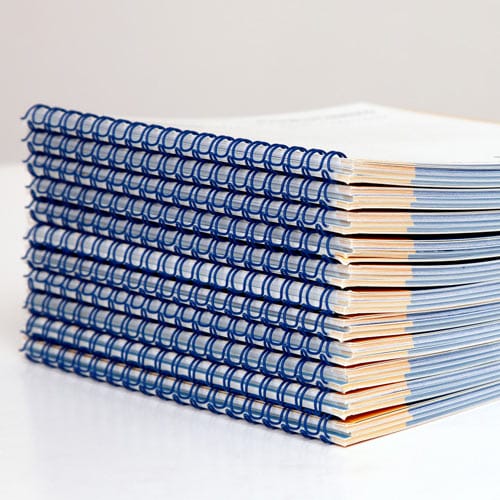
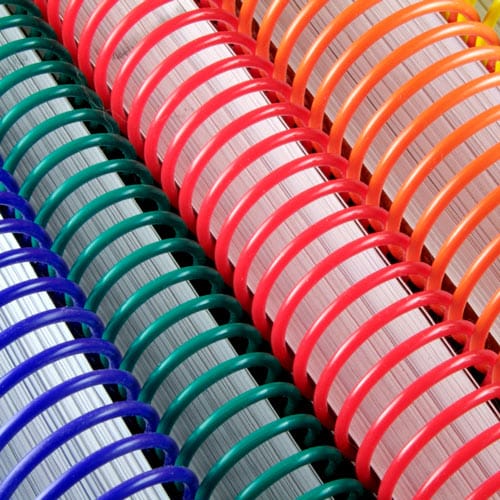
A Wire-O bound journal, sketchbook, or bonus-content booklet pairs well as a fourth piece inside a box set, since it lays flat for writing or reference in a way a perfect bound book never will. It's the wrong call for the main story volumes — a spiral spine breaks the matched-shelf look a box set is supposed to deliver. Verdict: Consider as a bonus piece only, never as a primary volume.
If the set is art-heavy — a graphic novel trilogy, an illustrated fantasy series, or a photo-driven memoir set — full-bleed printing on heavier gloss stock matters more than binding type. Coffee-table style projects need a different paper and coating decision than a standard text-only novel, and coffee table book binding choices should get locked before you finalize trim size for the rest of the set. Verdict: Buy for art-driven series, Skip if your box set is primarily text.
| Format | Best page count | Cover feel | Verdict |
|---|---|---|---|
| Perfect bound hardcover | 250+ pages per volume | Premium, rigid | Buy for collector sets |
| Perfect bound paperback | 90-400 pages per volume | Standard, flexible | Buy for budget sets |
| Wire-O companion piece | Any, as a bonus item | Lay-flat | Consider as an add-on only |
| Full-bleed illustrated | Varies, image-driven | Gloss, heavier stock | Buy for art-heavy series |
What’s the best binding for an author box set in 2026?
Perfect binding is the best binding for most author box sets in 2026, with hardcover perfect bound reserved for collector or anniversary editions. Keep the same binding type across every volume in the set for a matched shelf look.
How much does custom book printing for a box set cost?
Cost scales with page count, trim size, cover stock, and quantity per volume, so pricing varies by project rather than a single flat rate. Request a quote for each volume’s specs together so the printer can coordinate paper and cover matching across the set.
Can I order a small quantity of a box set, like 25 or 50 copies?
Yes, custom book printing for author box sets doesn’t require large minimum orders with a short-run printer, so 25 to 100 sets is a normal starting quantity. Ordering small lets you test demand before committing to a bigger print run.
Is hardcover or paperback better for a special edition?
Hardcover reads as premium and holds up better in a slipcase, making it the stronger choice for a special or collector edition. Paperback keeps costs lower and still works fine for a matched box set if the price point needs to stay accessible.
Do all volumes in a box set need the same trim size?
Yes, matching trim size across every volume in a box set is required for the set to sit flush on a shelf or fit a slipcase. A mismatched trim size is one of the fastest ways a box set looks unfinished.
What paper stock works best for an illustrated box set?
Illustrated or photo-heavy box sets need heavier gloss or matte coated stock with full-bleed printing rather than standard uncoated text paper. The heavier stock holds ink saturation better on image-dense pages.
Can a box set include a bonus item like a journal or art booklet?
Yes, Wire-O or plastic coil binding works well for a companion journal or bonus booklet packaged alongside the main volumes. Keep the bonus item’s binding distinct from the main story volumes so readers understand it’s a supplemental piece.
How do I calculate spine width for a slipcase box set?
Spine width in perfect bound printing is driven directly by page count and paper stock weight, so it needs to be calculated per volume before a custom slipcase is built. Finalize page counts across the whole set before ordering the case.
The detail authors skip most often on a box set isn't the cover art — it's locking page count before the slipcase gets ordered. A single late edit that adds 15 pages to volume two changes that book's spine width just enough to leave a gap in a case sized for the original count, and by then the case is already printed.
© 2026 Publishing Xpress. All Rights Reserved.