August 1, 2026
Spiral bound menu printing for restaurants and catering solves one problem better than any other format: a menu that lies flat on a crowded table, wipes clean after a spill, and reprints fast the moment a dish or price changes in 2026.
Menu prices move more than they used to. Protein and produce costs shift mid-quarter, seasonal dishes rotate every 6 to 8 weeks, and a banquet captain needs a booklet that survives a full Friday service without curling at the corners. Spiral bound menu printing for restaurants solves both problems at once: the binding opens flat so a server isn't fighting the spine tableside, and a short print run keeps a kitchen from sitting on 300 outdated menus the week the winter special changes.
Catering adds a second layer of wear. An off-site event menu gets carried in a folder, set on a buffet table, and passed between dozens of guests in a single night, so durability matters as much as looks. Custom menu printing built around coil or Wire-O binding covers the dining room and the off-site event without switching vendors mid-season, and Publishing Xpress runs both formats as short jobs with no large minimum order requirement.
The math on reprints matters too. A restaurant that reprints its full menu every time one entree changes pays for the same cover, wine list, and dessert pages over and over. Spiral and Wire-O formats let a kitchen swap a single interior page instead, which is the difference between reprinting one page and reprinting the whole booklet — a distinction that gets more expensive to ignore every year prices move.
This guide is for restaurant owners, catering managers, and banquet planners producing multi-page menus — 8 to 24 pages covering food, wine, and seasonal specials — that need to survive nightly handling. It's built for anyone reprinting a menu every 4 to 8 weeks as prices or dishes shift, not for a single laminated sheet taped to a host stand.
Running one fixed menu that never changes at a single location? A laminated one-pager is cheaper and simpler, and this guide isn't for you. Everyone else producing a bound, multi-page menu for 2026 service — from a single dining room to a multi-event catering operation — should keep reading.
A menu that won't stay open on a crowded table gets closed and ignored within a week. Coil and Wire-O binding both open to a full 360 degrees and hold flat under a server's hand, unlike saddle stitch, which fights the spine past 20 pages. Choosing between coil vs Wire-O binding comes down to how often the menu gets handled versus how polished it needs to look sitting on the table.
Menus sit next to sauces, wine glasses, and condiment trays all night. A laminated cover stock rated for wipe-down cleaning matters more here than in almost any other print category — a coated text stock alone tears under a damp cloth within a month of daily use.
Catering packages often run 20 to 40 pages once wine lists, dietary notes, and event add-ons get folded in, while a bar or brunch menu might sit at 8 pages. Coil and spiral formats handle both ranges without the page-count ceiling that saddle stitch hits around 20 pages.
A menu format is only as good as how fast it updates. Short runs with no large minimum order requirement mean a restaurant can reprint 25 copies or 250 the week a dish changes, instead of absorbing the cost of a menu that quotes last season's produce prices.
Photography-heavy catering menus need at least a 100 lb. gloss or matte text stock to keep food photography looking appetizing instead of washed out under dining room lighting.
A menu cover gets picked up, closed, and set down hundreds of times a week. A thin, uncoated cover shows wear at the corners inside a month, while a heavier coil or Wire-O cover stock holds its shape through a full print cycle before the next reorder.
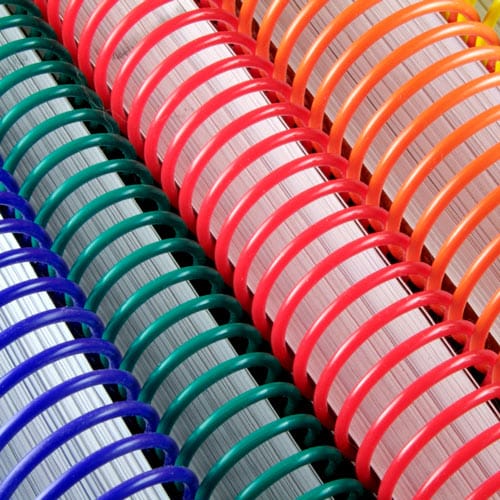
The workhorse pick. Plastic coil binding opens a full 360 degrees and takes a wipe-down after every table turn without cracking at the spine, which matters on a menu handled 40-plus times a night. It's the format Publishing Xpress recommends first for any restaurant reprinting menus every 4 to 8 weeks. Choosing a binding type for a high-handling document like a nightly menu almost always lands on coil over staple-based options. Verdict: Buy.
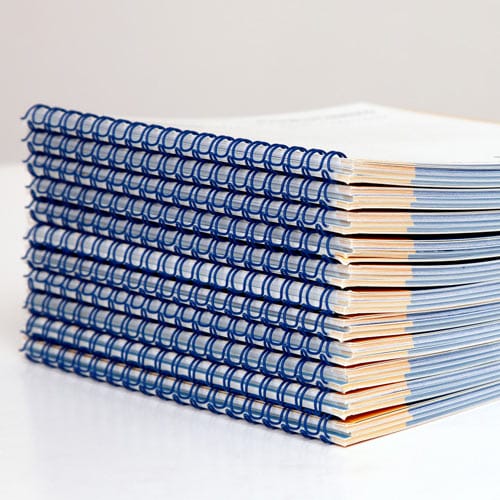
The polished pick. Wire-O's double-loop wire lies flatter than coil and reads as more upscale on a table stand or wine list presentation, which is why tasting-menu restaurants lean toward it in 2026. It costs a touch more per unit than coil, but the finish earns its keep in an upscale dining room. Verdict: Buy for upscale service, Consider for casual.
The modular pick. Off-site catering menus work best with a Wire-O or coil cover holding loose interior pages, so a caterer can swap the entree page without reprinting the whole booklet. Spiral bound printing built for repeat handling — the same logic that makes it the standard for training manuals — carries over directly to a banquet booklet passed across 200 guests in one seating.
Off-site catering adds handling a dining room never sees: folders, buffet tables, multiple servers circulating the same booklet in one night. A caterer running hibachi catering for corporate events needs a menu insert that survives that circuit without the spine cracking, which is exactly the stress test coil and Wire-O formats are built to pass. Verdict: Buy for multi-event caterers running one base menu with rotating add-ons.
The shortcut pick. A standalone laminated single sheet works fine as a daily-specials insert tucked inside a bound menu, letting a kitchen update one dish without touching the rest of the booklet. As a full replacement for a 20-plus-page catering package, it falls apart fast under daily handling. Verdict: Consider as a supplement, Skip as your only format.
“A menu that can’t survive forty table turns a night is the wrong binding for a dining room.”
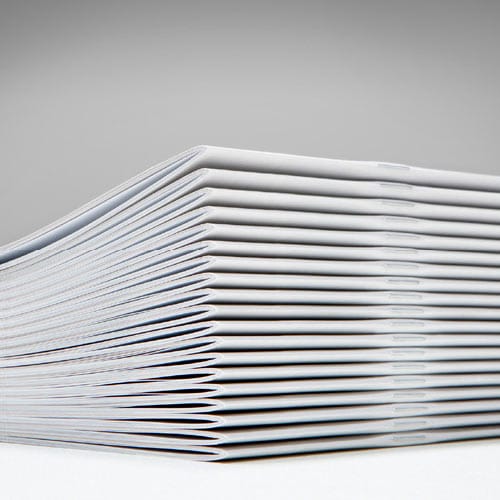
Saddle stitch past 20 pages looks fine on the sample copy but starts pulling at the staples within weeks of nightly service — the pages nearest the spine loosen first. Lightweight 20 lb. interior paper curls near steam tables and humid catering kitchens, so a menu reads cheap by the third seating even if the print quality was sharp on day one.
High-gloss laminate over dense, small-type menus glares under dim dining room lighting, which is the opposite of what a menu needs at 8 p.m. on a Saturday. And perfect binding, while durable, doesn't lay flat at all — fine for a static annual banquet menu that never changes, wrong for anything reprinted mid-season.
A quick side-by-side of how each binding holds up against the criteria that matter for restaurant and catering menus in 2026:
| Binding | Lay-flat | Durability | Best for | Verdict |
|---|---|---|---|---|
| Plastic Coil | Full 360 degrees | High, wipeable | Daily dining room menus | Buy |
| Wire-O | Full 360 degrees, flattest | High, polished | Fine dining, banquet displays | Buy |
| Saddle Stitch | Limited past 20 pages | Moderate | Slim 8 to 16 page drink or brunch menus | Consider |
| Perfect Bound | Does not lay flat | High, book-style | Static annual menus, rarely reprinted | Skip |
What’s the best binding for a restaurant menu?
Plastic coil is the best binding for most restaurant menus in 2026 because it opens flat and survives nightly wipe-downs. Wire-O is the step up for upscale dining rooms that want a more polished, flatter page.
Is spiral binding better than laminated single sheets for menus?
Spiral binding beats a laminated single sheet once a menu passes 8 pages, since a bound booklet keeps wine lists, specials, and dietary notes together without loose pages getting lost. A single laminated sheet still works fine as a daily-specials insert.
How much does spiral bound menu printing cost?
Cost depends on page count, paper stock, cover type, and quantity, so get a direct quote for current 2026 pricing rather than assuming a flat rate. Short runs with no large minimum order requirement keep small reorders affordable when only one page needs updating.
Can spiral bound menus be wiped down and reused?
Yes, a coil or Wire-O menu with a laminated cover stock wipes clean after spills and holds up through repeated nightly handling. A coated but unlaminated cover will not survive the same treatment as long.
What paper stock works best for catering menus?
A 100 lb. gloss or matte text stock is the standard for catering menus with full-color food photography, since anything lighter looks washed out under event lighting. Heavier stock also resists curling near buffet tables and steam.
How many menus should a restaurant order at once?
Order close to what one printing cycle covers — typically the 4 to 8 weeks between menu updates — rather than stockpiling hundreds that go stale the moment a price changes. Short-run printing makes frequent small reorders more practical than one large batch.
Is Wire-O or plastic coil better for menus?
Wire-O lies flatter and looks more polished for fine dining, while plastic coil is the more affordable, equally durable choice for daily dining room use. Both outperform saddle stitch and perfect binding on lay-flat handling.
How fast can a restaurant reorder menus after a price change?
Short-run digital printing skips the setup time of an offset press, so a restaurant can reorder in small batches instead of waiting on a large press run sized for hundreds of copies. That’s what makes swapping a single interior page practical instead of reprinting the whole booklet.
Most restaurants reprint the entire booklet every time one dish changes, which is the expensive habit worth breaking. The faster move: build the menu on a Wire-O spine, print only the affected interior page in the same trim size, and swap it in — the cover and unaffected pages stay in circulation.
That single change is what separates a restaurant reprinting menus every 4 to 8 weeks in 2026 from one still handing out a menu with a crossed-out price and a pen mark next to it.
© 2026 Publishing Xpress. All Rights Reserved.