August 21, 2026
Print on demand comic book printing lets indie creators order 25 copies for a convention table or 500 for a Kickstarter fulfillment without eating a warehouse full of inventory. This guide breaks down what to look for, which binding actually holds up for comics, and where creators lose money on print runs that looked cheap on paper.
Most indie creators print too early or bind wrong. A 24-page single issue bound perfect-bound looks amateurish and the spine text is unreadable. A 120-page graphic novel saddle-stitched won't lie flat and the staples pull out within a dozen reads.
Print on demand fixes the inventory problem — you're not sitting on 1,000 unsold copies from a 2026 print run that didn't move at your last con. It doesn't fix a bad binding choice. That part is still on you, and it's the part most guides skip.
This is for self-published comic creators, webcomic artists moving into print, small studios doing Kickstarter fulfillment, and anthology editors who need short runs without offset minimums. If you're printing under 500 copies per title and reordering based on actual sales instead of a forecast, print on demand comic book printing is built for your math, not against it.
Check Publishing Xpress for current specs before locking in a binding — page count and interior color mix both shift what's viable.
Saddle stitch caps out around 64 pages before the spine starts to bulge and staples stress. Perfect binding needs enough pages to hold a readable spine — thin issues bound this way look like a pamphlet trying to be a paperback. Match the binding to the page count first; everything else is secondary.
Black-and-white line art reads fine on uncoated stock, but color covers and interior color pages lose vibrancy on the wrong sheet weight. If your book has color splash pages or a painted cover, that decision changes your paper stock choice before it changes your price.
Offset printers force you into runs of 500 or 1,000 to hit a reasonable per-unit price. That math kills a first issue with unknown demand. Look for a printer that lets you order in small increments and reorder without resetting a plate.
Convention season and Kickstarter fulfillment windows are fixed dates — the printer isn't. Build in buffer for proofing rounds; a rushed file check is how misaligned bleed and wrong trim sizes end up in your hands the week before a show.
Comic pages need full bleed, correct trim size, and CMYK color conversion before they go to press. Files prepped in RGB or without bleed margins get rejected or, worse, printed with white slivers at the trim edge. Prepping comic book files for print before you submit saves a reprint.
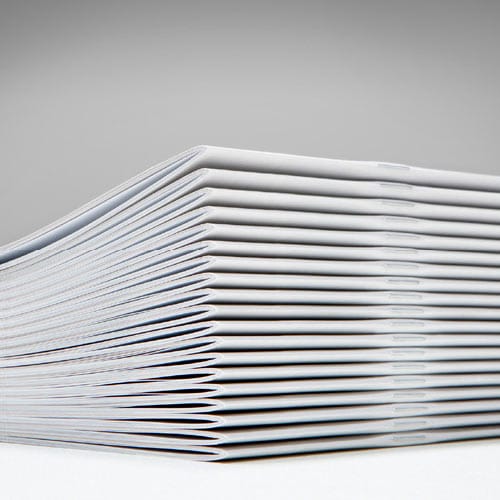
Saddle stitch handles 8 to 64 pages and is the standard for single-issue comics. It's the cheapest binding per copy at low volumes and the format readers expect for a 22-page or 32-page issue. Verdict: Buy for any standard single issue in 2026.
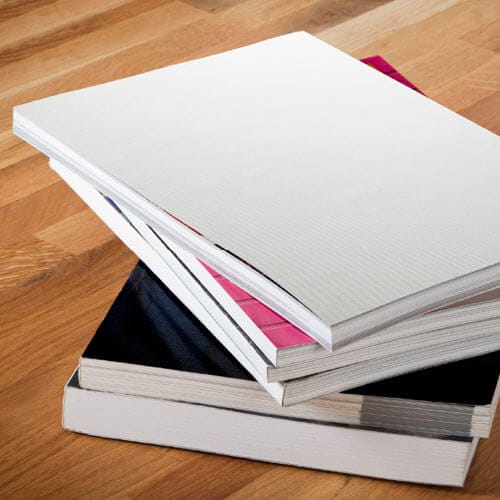
Perfect binding needs real page count to work — think 80 pages and up, where the spine has room for a title. It's the right call for collected editions, story arcs bundled into a trade, or anthology volumes. Verdict: Buy for collected editions, Skip for anything under 80 pages.
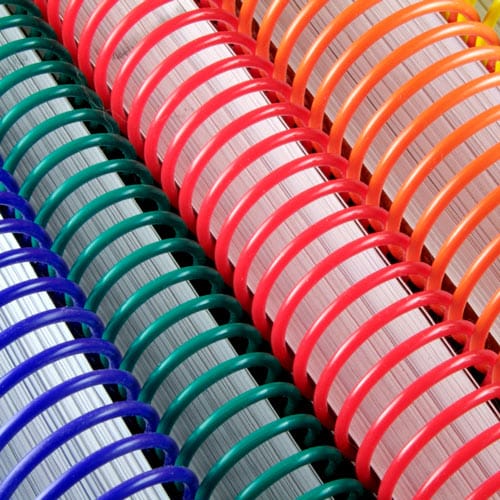
Plastic coil binding lets a book lie fully open at 360 degrees, which matters for sketchbooks, art references, or process books creators sell alongside the main title. It costs more per copy than saddle stitch. Verdict: Consider for companion art books, Skip for standard issues where the extra cost doesn't buy anything readers notice.
Wire-O uses a metal spine instead of plastic and holds up better through repeated handling at a convention table or in a backpack. It's the pick when the book needs to survive months of demo copies getting flipped through by strangers. Verdict: Consider for demo and portfolio copies, Skip for the retail print run where cost per unit matters more.
| Binding | Best for | Page range | Lies flat | Verdict |
|---|---|---|---|---|
| Saddle Stitch | Single issues | 8-64 pages | No | Buy |
| Perfect Bound | Collected editions | 80+ pages | No | Buy for trades |
| Plastic Coil | Art/sketch companions | Any | Yes | Consider |
| Wire-O | Demo/portfolio copies | Any | Yes | Consider |
Running short print numbers against offset math still comes down to one comparison: print on demand vs offset printing — for anything under roughly 250 copies, print on demand wins on cash flow even when the per-unit price looks slightly higher on paper.
What’s the best binding for a 22-page comic issue?
Saddle stitch is the standard for 22 to 32-page single issues in 2026. It’s the cheapest option at low volume and matches reader expectations for a standalone issue.
Is print on demand comic book printing cheaper than offset?
For runs under roughly 250 copies, yes. Offset requires large minimums to hit a reasonable per-unit cost, while print on demand comic book printing lets you order small batches and reorder based on actual sales.
Can I bind a comic under 80 pages with perfect binding?
You can, but the spine won’t hold readable text and the book will look thin and awkward. Perfect binding works best at 80 pages and up.
What paper stock works best for color comic covers?
A coated stock with enough weight to resist show-through holds color and line art better than uncoated sheets, especially on covers with painted or gradient art.
How much lead time does comic printing need before a convention?
Build in time for at least one proofing round beyond the print run itself. Rushing the file check before a con deadline is the most common cause of trim and color errors.
Does Wire-O binding cost more than saddle stitch?
Yes, Wire-O costs more per copy than saddle stitch because of the metal spine and extra assembly. It’s worth it for demo copies and portfolios, not for a standard retail print run.
What file format do I need for comic book printing?
Print-ready PDFs in CMYK color with full bleed and correct trim size. Files submitted in RGB or without bleed margins typically get rejected or printed with visible white edges.
Can I reorder a comic after my first print run sells out?
Print on demand printers let you reorder in small batches without resetting a plate, which is the entire point versus committing to an offset minimum upfront.
The binding decision matters more than the paper stock decision for most indie creators, and it's the one people research least — they'll spend hours picking cover stock and five minutes picking a binding that determines whether the book survives being read twice. Get the binding right for the page count first in 2026; everything else is a smaller lever.
© 2026 Publishing Xpress. All Rights Reserved.