July 31, 2026
Print on demand book printing lets a small press or hybrid publisher put out a title without committing to a warehouse full of stock, but the binding, minimums, and paper choices that work for a self-publisher's single novel don't always fit a press running six titles a year.
A small press juggling five backlist titles and a hybrid publisher fulfilling pre-orders for one debut author have the same core problem: neither wants to tie up cash in 1,000 copies of a book that might sell 80 this year. Print on demand book printing for small presses solves the inventory problem, but it introduces a new one — matching binding, paper stock, and trim size to a catalog that isn't one book, it's a rotating list.
Get the binding wrong and a 210-page novel shows up with a floppy saddle-stitch spine, or a 40-page chapbook comes back perfect bound with a spine too thin to print the title. Get the minimum order wrong and a press pays offset-run prices for a run that never needed to be that big. Publishing Xpress built its short-run model around exactly this mismatch problem, with no large minimum order requirement standing between a press and its next title.
This guide is for small press owners running a catalog of 3-20 active titles, and hybrid publishers who split cost and creative control with authors instead of running a pure vanity model. Both groups reprint constantly, both need consistent color and trim across multiple runs of the same title, and neither wants to explain to an author why book two looks different from book one because a supplier changed paper stock.
If you're a single self-published author printing one title once, the calculus is simpler and a different comparison guide fits better. This one assumes you'll be back next quarter with another manuscript, another format, or another reprint of a backlist title that just sold out.
A press that prints 25 copies for a launch event and 300 for a wider release needs a supplier who prices both fairly, not one who treats anything under 500 units as a rounding error. Minimums that scale down to single digits matter more to a hybrid publisher testing an unproven title than they do to anyone printing one book once.
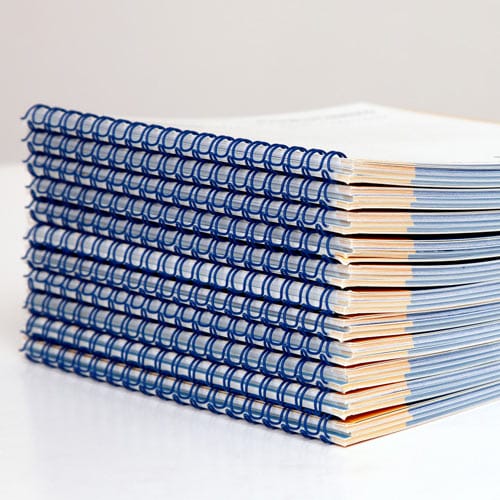
Perfect binding, saddle stitch, Wire-O, and plastic coil all solve different problems, and a catalog with mixed formats — novels, workbooks, poetry chapbooks — needs a printer offering all four rather than forcing every title into one binding. The print on demand vs offset printing decision usually comes down to run size, but binding choice comes down to page count and use case, and getting it wrong is visible on the shelf.
A memoir with a handful of family photos doesn't need full-color interior printing throughout, but a cookbook or illustrated children's book does, and pricing the wrong option either wastes money or ships a book that looks flat. Small presses running both fiction and illustrated nonfiction need a supplier who prices color per-page rather than forcing an all-or-nothing interior.
A press with a backlist in 5.5×8.5 and a new title spec'd at 6×9 will see two different books on the same shelf unless trim size gets locked at the catalog level, not the title level. Consistency across a series or imprint matters more to a hybrid publisher building a brand than to a one-off author.
Reprints need to match the first run exactly — same paper stock, same color calibration — or readers who bought book one in a series notice book two looks slightly different. This is the criterion single-title printers rarely think about and multi-title presses can't ignore.
Hybrid publishers working with nonprofits, schools, or churches on commissioned titles need pricing that accounts for tax-exempt or bulk-organizational buyers, not just individual author checkout flows.
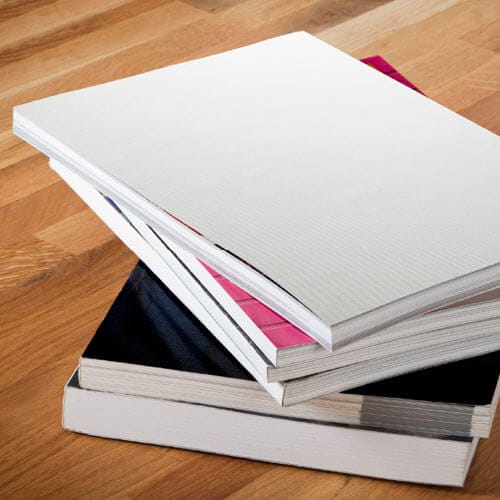
Perfect Bound Printing — the workhorse pick. Perfect binding handles novels, memoirs, and nonfiction from roughly 90 to 800 pages with a flat spine that can carry a title and author name, which matters for shelf visibility in indie bookstores. It's the format most small presses default to for anything book-length, and the best printing service for low volume book orders comparisons consistently rank it as the safest general-purpose choice for 2026 catalogs. Buy for any full-length fiction or nonfiction title in an active catalog.
Short-run print options — the flexible pick. For a press juggling multiple titles at different sales velocities, book printing options for short print runs let you order 25 copies of a backlist title and 250 of a new release without renegotiating terms each time. This flexibility is the entire reason print on demand book printing for small presses exists as a category. Buy if your catalog has titles selling at different speeds.
Wire-O Printing — the lay-flat specialist. Wire-O binding opens flat and folds back on itself, which matters for workbooks, journals, and any hybrid-published title meant to be written in rather than just read. It's the wrong call for a novel — nobody wants a wire spine on fiction — but it's the right call for course materials or planners in a mixed catalog. Consider only when the content is meant to lie flat and get written in.
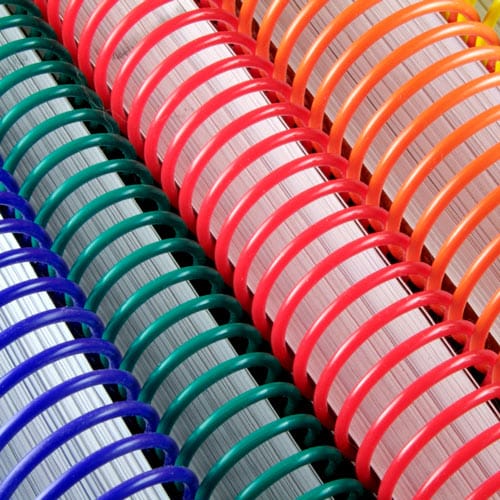
Plastic Coil Printing — the budget flexible pick. Coil binding costs less than Wire-O in most cases and still opens flat, making it a reasonable choice for recipe books, training manuals, or coloring books where durability matters more than a polished spine. Consider for utility titles; Skip it for anything meant to look like a traditionally published book.
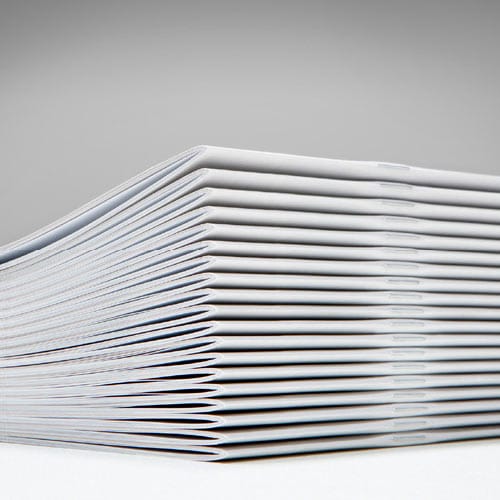
Saddle Stitch Printing — the short-form pick. Under 48 pages, saddle stitch (stapled at the fold) is cheaper and faster than perfect binding, and it's the right call for poetry chapbooks, novellas, and sampler anthologies. Push past 60 pages and the spine starts to bulge unevenly. Buy for short-form work; Skip once page count climbs past 60.
“If your book runs under 32 pages, skip perfect binding and go saddle stitch instead.”
| Binding | Best page range | Best use case | Verdict |
|---|---|---|---|
| Perfect Bound | 90-800 pages | Novels, memoirs, nonfiction | Buy |
| Saddle Stitch | Under 60 pages | Chapbooks, novellas, samplers | Buy for short work |
| Wire-O | Any, needs lay-flat | Workbooks, journals, planners | Consider |
| Plastic Coil | Any, needs lay-flat | Recipe books, training manuals | Consider |
What is the best binding for print on demand book printing for small presses?
Perfect binding is the best default for full-length novels and nonfiction from roughly 90 to 800 pages in 2026. Saddle stitch works better for anything under 60 pages, and Wire-O or coil fit workbooks and journals that need to lay flat.
Is print on demand cheaper than offset printing for a small press?
Print on demand costs less per unit at low volumes because there’s no large minimum order to hit before pricing improves. Offset printing gets cheaper per copy only once run sizes climb into the hundreds or thousands, which most small press titles never need.
How many pages do you need for perfect binding to work?
You need at least 32 pages for perfect binding to produce a spine wide enough to hold readable title text in 2026. Below that, saddle stitch is the better call.
Can a hybrid publisher print different binding types in one catalog?
Yes, and most small presses do — perfect bound for novels, saddle stitch for chapbooks, and Wire-O or coil for workbooks in the same catalog. The key is picking a printer that offers all four rather than forcing every title into one format.
What’s the minimum order for print on demand book printing?
Minimums vary by printer and by binding type, but the point of print on demand is avoiding the large minimums offset printing requires. Confirm current minimums and pricing directly with the printer before committing to a run size.
Does color printing cost more for a small press catalog?
Full-color interior printing costs more than black-and-white per page, which matters most for text-heavy manuscripts with only occasional color sections. Pricing color by section rather than throughout the book keeps costs down for mixed-content titles.
What trim size should a small press standardize on?
6×9 inches is the most common trim size for fiction and nonfiction in 2026, while 5.5×8.5 fits shorter or more compact titles. Standardizing trim size across a catalog keeps a series looking consistent on the shelf.
The 32-page threshold for perfect binding trips up more first-time small presses than any pricing question. A press that commissions a 28-page novella, specs it for perfect binding without checking page count first, and only catches the problem at proofing stage loses a production cycle it didn't need to lose — check page count against binding type before a manuscript ever reaches layout, not after.
© 2026 Publishing Xpress. All Rights Reserved.