August 16, 2026
Franchise operations manuals get handled daily on kitchen lines, sales floors, and warehouse racks — the binding and paper stock you pick determines whether that manual survives 2026's first busy season or falls apart by month three.
A franchise operations manual isn't a book someone reads once and shelves. It sits open on a prep table, gets flipped through during a shift, and travels between a corporate office and 40 or 200 locations. The wrong binding choice means franchisees photocopy loose pages by month six because the spine cracked, or reprint the whole run every time HR updates one policy.
Getting operations manual printing for franchises right in 2026 comes down to three things: does it lie flat, can you update individual sections without a full reprint, and does the cost scale sanely across a multi-unit rollout.
This guide is for franchise operations directors, training managers, and multi-unit franchisors printing manuals that get shipped to individual locations — think restaurant groups standardizing prep procedures, retail franchises training new hires, or service franchises (cleaning, fitness, home repair) codifying field protocols. If you're printing one manual for internal use only, a lot of these tradeoffs matter less. If you're printing 20, 50, or 200 copies for a franchise system, binding choice and reorder flexibility become the whole decision.
Publishing Xpress prints operations and instruction manuals in short runs with no large minimum order requirement, which matters when a franchise system is adding five new locations a quarter instead of fifty at once.
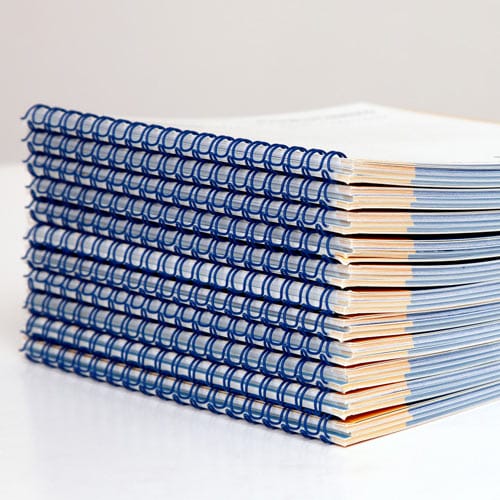
A manual that snaps shut the moment someone lets go doesn't get used — it gets ignored. Wire-O and plastic coil both open to 360 degrees and stay flat on a counter or workstation, which matters more in a kitchen or on a sales floor than in an office. Perfect binding and saddle stitch don't offer that same flatness once page count climbs past 100.
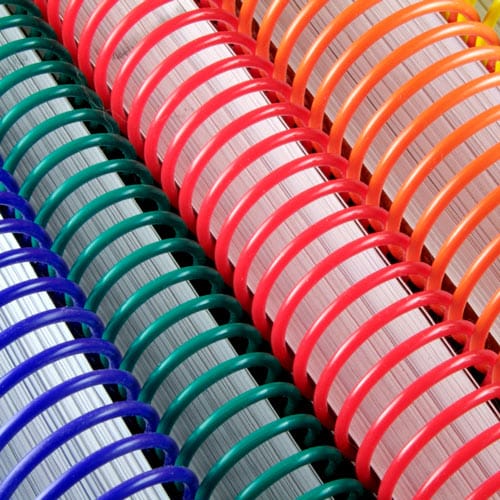
Franchise policies change — new food safety rules, new POS software, a revised return policy. Coil binding lets you uncoil the spine and swap a section without reprinting all 180 pages. Wire-O requires re-punching but still beats reprinting a perfect-bound book for a five-page policy update.
A manual in a warehouse or kitchen environment takes grease, spills, and repeated flipping. Heavier cover stock (100 lb. or higher) and interior paper that resists tearing at the binding edge matter more here than they do for a manual that sits in a drawer.
Franchise rollouts rarely need 500 identical copies. A system launching in three new markets this quarter might need 12 manuals, not 300. Printers with high minimums force you to either overorder or wait until you hit their threshold — neither works for a rolling franchise expansion.
Running the math per-location matters more than per-copy price on a single unit. A $14 manual times 60 locations is a real line item; know the per-copy cost before you commit to a binding type across the whole system.
New franchisee training dates don't move for a print vendor's schedule. Confirm turnaround before you lock a binding choice, especially for onboarding cohorts scheduled in 2026's first and third quarters, when most systems cluster new-unit openings.
Wire-O binding — the flexible pick. Spec that matters: 360-degree page rotation with a durable double-loop wire spine that survives repeated flipping better than plastic coil over a multi-year lifespan. It's the standard choice for training and course materials that get referenced daily rather than read once. Verdict: Buy for full operations manuals distributed to multiple locations.
Plastic coil binding — the budget-friendly workhorse. Spec that matters: fully removable pages by uncoiling the spine, so a franchisee can pull one section for an update without a reprint. Costs less per copy than Wire-O at comparable page counts. Best fit for systems that revise sections quarterly rather than annually. Verdict: Buy for update-heavy manuals; Consider if your policies rarely change.
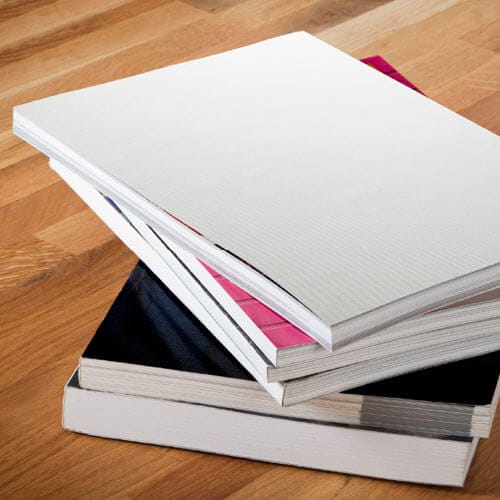
Perfect binding — the polished-cover pick. Spec that matters: a printed spine that looks like a professional paperback, which some franchisors want for manuals handed to investors or new franchisee candidates during the sales process. It does not lay flat, and pages can't be swapped without a full reprint. Verdict: Consider for a franchise sales kit or investor-facing overview; Skip for the working manual that sits on a kitchen counter.
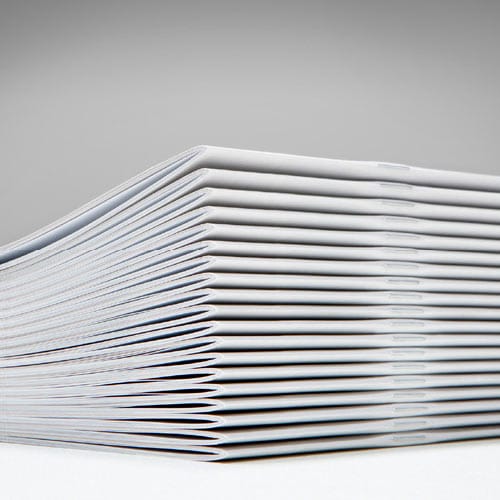
Saddle stitch — the short-section option. Spec that matters: works cleanly for booklets under 60 pages but starts to bulge and crack at the fold past that count. Fine for a quick-reference safety card or a single-topic addendum. Verdict: Consider for slim supplements; Skip as the binding for a full operations manual running 100+ pages.
“If a manual doesn’t lie flat on a stainless steel counter, employees stop opening it.”
| Binding | Lays flat | Update-friendly | Best page count | Verdict |
|---|---|---|---|---|
| Wire-O | Yes, 360 degrees | Moderate (re-punch needed) | 60-300 pages | Buy |
| Plastic coil | Yes, 360 degrees | High (uncoil to swap pages) | 40-250 pages | Buy |
| Perfect binding | No | Low (full reprint) | 100+ pages | Consider / Skip for daily use |
| Saddle stitch | Partial | Low | Under 60 pages | Consider for short sections |
What’s the best binding for operations manual printing for franchises?
Wire-O and plastic coil binding are the best choices for franchise operations manuals in 2026 because both lay flat on a counter or workstation. Perfect binding and saddle stitch don’t hold open the same way and work better for shorter or presentation-style documents.
Is Wire-O or plastic coil better for a franchise training manual?
Wire-O holds up better over years of daily flipping thanks to its double-loop wire spine, while plastic coil costs less and lets you uncoil the spine to swap out updated pages. Pick Wire-O for long-term durability and plastic coil for manuals that get revised every quarter.
How much does it cost to print a franchise operations manual?
Cost depends on page count, binding type, and color versus black-and-white interiors, with coil binding typically running less per copy than Wire-O at the same page count. Ask for a per-unit quote across your full location count rather than pricing a single copy.
Can I update pages in a printed operations manual without reprinting the whole thing?
Yes, with coil binding you can uncoil the spine and swap individual pages for an updated policy section. Wire-O requires re-punching the replacement pages, and perfect-bound manuals require a full reprint since the pages are glued into the spine.
What page count is too short for perfect binding?
Under 100 pages, a perfect-bound spine reads too thin and the title text barely fits. Saddle stitch or coil binding both handle shorter manuals better.
Do franchise operations manuals need a minimum order quantity?
Not with every printer. Publishing Xpress doesn’t require a large minimum order, which matters for franchise systems adding a handful of new locations at a time instead of ordering hundreds of copies up front.
What paper stock holds up best for a manual used in a kitchen or warehouse?
Interior stock at 60 lb. text weight or higher resists tearing at the binding holes under daily handling. A heavier cover stock, 100 lb. or above, protects against grease and repeated flipping better than a standard cover weight.
Should a franchise sales kit use the same binding as the working operations manual?
No. A perfect-bound manual with a printed spine looks more polished for investor or franchisee-candidate presentations, while the working manual that sits on a counter needs Wire-O or coil binding to lay flat during daily use.
Most franchise systems don't fail their manual on the first print run — they fail it on the third update, when nobody budgeted for a reprint and the binding they picked can't handle a page swap. Pick coil or Wire-O from the start in 2026 and that problem never comes up.
© 2026 Publishing Xpress. All Rights Reserved.