August 12, 2026
Pick the wrong paper stock for postcard printing and you get soft, floppy cards that curl in a mailbox or get bounced by USPS machinery. Get it right and your postcard looks like a $2 print piece for a fraction of that cost.
Paper stock decides three things on a postcard: how it feels in the hand, how the ink sits on the surface, and whether the post office will even mail it without a surcharge. A postcard printed on 12pt stock might look fine on screen and still get flagged as "non-machinable" at the post office, which triggers letter-rate postage instead of postcard-rate postage.
Authors mailing book launch postcards, real estate agents sending farm cards, and nonprofits printing fundraiser mailers all hit the same wall: they picked a stock based on price per unit instead of end use. Publishing Xpress prints postcard runs on cardstock built for both handheld distribution and USPS mailing, and the stock choice matters more than the design template you pick.
This single decision filters half your paper stock options before you look at a swatch book. A card mailed through USPS has to meet federal thickness rules; a card handed out at a farmers market or book signing does not.
Mailed postcards need stock between 0.007 inch and 0.016 inch thick as of 2026 USPS standards. Hand-distributed cards can go heavier — 18pt or even 32pt — because nobody is running them through a sorting machine.
Common mistake: ordering premium 32pt stock for a mailed campaign, then paying letter-rate postage because the card is too thick to qualify for postcard rates.
14pt cardstock (0.014 inch) is the sweet spot for paper stock for postcard printing that goes through the mail in 2026. It's thick enough to feel substantial, thin enough to clear USPS automation without a hand-cancel stamp.
If your card skips the mail entirely — say it's a leave-behind at a trade show table — 16pt or 18pt gives a heavier, more premium feel without any mailing penalty.
Expected outcome: a card that doesn't bend in a mailbox stack and doesn't trigger a postage surcharge.
Gloss and matte aren't just a look — they change how ink and ballpoint pens behave on the surface.
If your postcard is double-duty — professional design on the front, handwritten note space on the back — ask about a spot-gloss or matte-front/uncoated-back combination.
Paper stock choice interacts with order size. Heavier, specialty stocks sometimes carry higher minimums or longer lead times than standard 14pt gloss. Publishing Xpress runs postcard printing without a large minimum order requirement, which matters if you're testing three different postcard designs before a full mailing.
Common mistake: locking into a 5,000-unit order on a stock you've never held in your hand.
A thicker stock (16pt+) can shift slightly during trimming compared to a thin 14pt sheet. Build in a standard 0.125 inch bleed on all sides regardless of stock weight, and double-check your file's trim box matches the postcard size you ordered — 4×6 files submitted for a 5×7 order get rejected or rescaled, and rescaling distorts photos.
Color on a monitor and color on 14pt gloss cardstock are two different things. A short sample run — even 100 copies — shows you exactly how your reds, skin tones, and background colors render on the stock you picked. This is the cheapest insurance in the entire process.



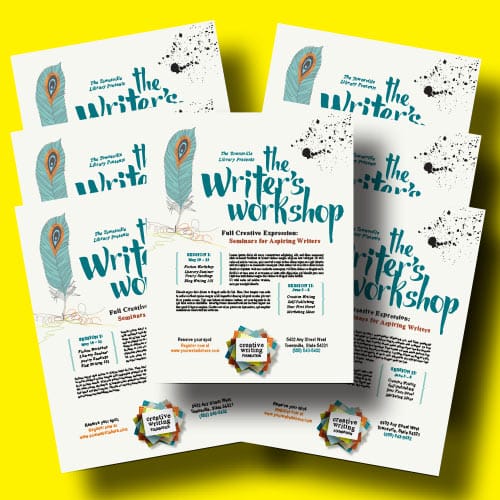
Once your stock and finish are locked, the next decision is quantity and mailing strategy. Authors running a launch campaign should look at how postcard runs pair with event promotion and direct mail timing before locking a print date.
What is the best paper stock for postcard printing in 2026?
14pt cardstock is the best paper stock for postcard printing in 2026 for mailed cards — it meets USPS thickness rules and feels substantial. Hand-distributed cards can go heavier, up to 18pt or more.
Is gloss or matte better for postcards?
Gloss suits photo-heavy postcards because it makes colors pop; matte suits cards where someone will handwrite a note or address. Pick based on how the card will be used, not just looks.
How thick can a postcard be for USPS mailing?
USPS postcard mailing rules in 2026 require thickness between 0.007 inch and 0.016 inch. Anything thicker gets charged letter-rate postage instead of the postcard rate.
What size postcard is standard for printing?
4×6 inches is the most common standard postcard size, with 5×7, 6×9, and 6×11 used for larger promotional or event mailers. Larger sizes cost more per unit but stand out more in a mail stack.
How much does postcard printing cost?
Cost depends on quantity, stock weight, and coating, and pricing varies by order size. Request a quote based on your exact specs rather than relying on a flat per-card estimate.
Can I print postcards in small quantities?
Yes — postcard printing does not require a large minimum order, so small runs of 100 copies or fewer are workable for testing a design before a full mailing.
Does postcard paper stock affect mailing cost?
Yes. Stock over 0.016 inch thick disqualifies a card from postcard-rate postage, pushing it into letter rate, which costs more per piece. Staying at 14pt keeps you inside the mailing rate.
Should I use double-sided printing on postcards?
Double-sided printing works well on 14pt or heavier stock because the paper is thick enough to prevent show-through from the front image. Thinner stock under 12pt often lets ink bleed through visually on the reverse.
The detail most people skip: coating changes how a postcard photographs for social media promotion after the mailing. Gloss stock reflects camera flash and studio lighting, so if you're planning to photograph your postcard for an Instagram announcement or a press kit, matte or satin finish photographs cleaner than gloss under direct light.
© 2026 Publishing Xpress. All Rights Reserved.