Custom book printing for tattoo artists and portfolio books

Book Printing for Tattoo Artists: 2026 Portfolio Guide

Ann O'Brien

Ann O'Brien

August 29, 2026

Book printing for tattoo artists means producing a compact, durable portfolio book that shows flash art, custom designs, and healed work to clients, guest spots, and shop owners without relying on a phone screen. Tattoo artists need a portfolio that survives convention tables, client consultations, and repeat handling — a different bar than a coffee table art book built to sit on a shelf.

TL;DR
  • Wire-O binding wins for book printing for tattoo artists because pages lie flat under a tattoo machine or on a consultation table.
  • Publishing Xpress prints short runs with no large minimum order requirement in 2026.
  • Perfect binding looks like a finished art book but cracks faster under daily convention handling than Wire-O or coil.
  • Skip glossy stock for skin-tone heavy portfolios — matte or satin text stock cuts glare under booth lighting.

Why book printing matters for tattoo artists

Tattoo artists search for book printing when a phone portfolio stops being enough — at a convention booth, during a guest spot walk-in, or when a shop owner asks for print samples before offering chair time. A printed portfolio survives a dead phone battery, bad wifi, and the awkward moment of asking a client to swipe through your camera roll themselves.

The binding matters more here than in almost any other portfolio category. A photographer's coffee table book sits on a shelf; a tattoo portfolio gets handled dozens of times a day, sometimes near ink, gloves, or a tattoo table. Before you touch layout, understand your book binding type options — the format decision drives everything from cover stock to how the book holds up over a convention weekend.

How to print a tattoo portfolio book that gets you booked

Curate your flash and custom work

A portfolio book only works if a client or shop owner can find what they're looking for in seconds, not minutes.

  • Group images by style (traditional, fine line, blackwork, color realism) so a reader flips straight to their interest
  • Cap the book around 30-50 images — past that, reviewers skim past your strongest pieces
  • Include 2-3 healed shots per style, not just fresh ink, to prove the work holds up
  • Order pages so the strongest work opens and closes the book — primacy and recency both drive what a reader remembers
  • Drop any piece you wouldn't want copied — a printed book travels further than a phone screen ever will

Set your trim size and layout

  • 8.5×11 or 6×9 works for a shop counter or consultation copy; 5×7 fits a booth handout that survives a bag
  • Use full-bleed photos on every page — white borders compete with skin tone and ink saturation
  • Run one image per spread for large pieces, two to four per spread for flash sheets
  • Leave gutter margins wide enough that the binding doesn't eat into a sleeve tattoo photo

Pick a binding that lies flat

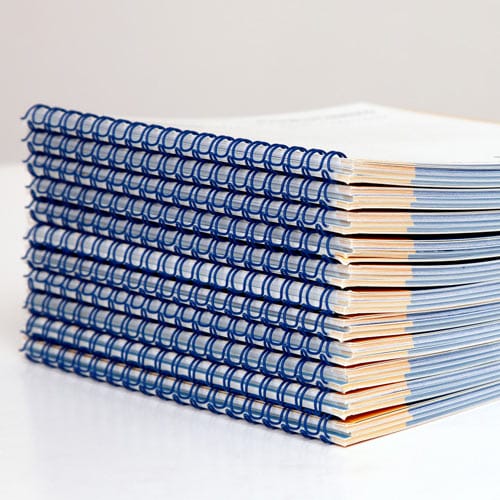
  • Wire-O binding opens flat at any page and takes a beating on a convention table — see Wire-O binding for art portfolios for the specifics
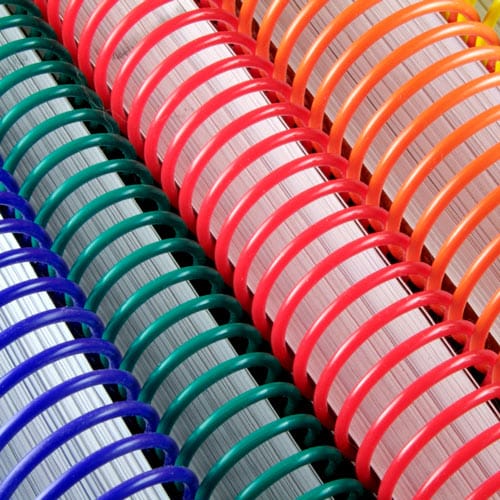
  • Plastic coil binding is a close second and usually costs less on short runs
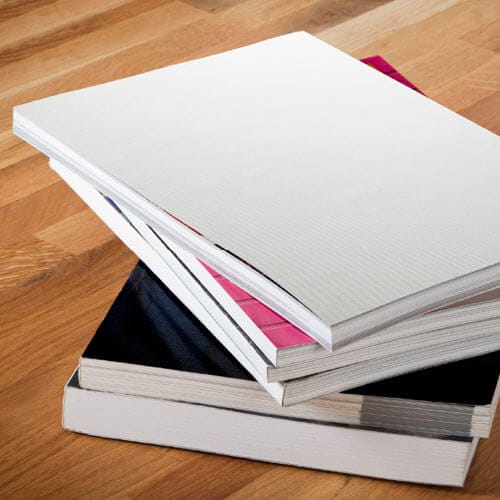
  • Perfect binding looks like a finished book but its spine glue cracks faster under daily handling
  • Saddle stitch only works under roughly 60 pages and won't survive repeated flipping over months
  • Compare coil vs Wire-O binding before you lock the file — wire gauge and coil diameter both shift with page count
Binding options for a portfolio book

Choose paper stock for accurate skin tone and ink color

  • 100 lb or 80 lb gloss text stock reproduces ink saturation and shading better than matte on close-up work
  • Satin stock splits the difference — less glare under booth lighting than gloss, more color pop than matte
  • Match interior stock weight to your cover stock so pages don't feel flimsy against a heavier cover
  • Proof under the lighting you'll actually use — convention fluorescents shift color differently than a shop's LED strips

Decide between a one-off portfolio and a reprintable run

Printing a single copy at home or a copy shop works for a first draft, but color and binding quality vary machine to machine and don't hold up over repeated handling.

  • A short digital print run through a service like Publishing Xpress locks in consistent color across every booked copy
  • Order in small batches — 10 to 25 copies — so you can refresh the book each time your style shifts
  • No large minimum order requirement means one artist can order one book without paying a bulk-run fee
  • Rush options exist for artists heading to a convention on short notice — confirm turnaround before you build the file
  • Keep a source file saved so a 2027 update only means swapping pages, not rebuilding the layout

Proof the file before it goes to print

  • Check every photo at 300 DPI minimum — convention photos shot fast on a phone often fall short
  • Confirm bleed and margin settings match your chosen trim size
  • Order one physical proof copy before committing to the full run, even for a home-printed draft
  • Check spine width math if you picked plastic coil or perfect binding — both depend on exact page count

“If the binding can’t lie flat on a tattoo table, it’s the wrong binding for a working portfolio.”

Binding options for tattoo portfolio books

Option Best for Key limitation
Wire-O binding Convention booths and daily client handling Bulkier than perfect bound when stacking several client copies
Plastic coil binding Budget short runs that still need to lie flat Coil edges can bend if the book gets stuffed into a tight bag
Perfect binding A polished, book-like display copy for a shop counter Spine glue cracks under repeated daily flipping
Saddle stitch A quick guest-spot handout under 60 pages Can't hold a full-career page count

Verdict: Wire-O binding is the buy for a working tattoo portfolio in 2026; perfect binding is a hold for a display-only copy; saddle stitch is a skip once your page count grows past a single style.

Common mistakes tattoo artists make with portfolio books

  • Building the book around Instagram crops instead of full, uncropped photos — cropped images pixelate when blown up to print size
  • Choosing perfect binding for a book that lives in a tattoo bag for two years straight
  • Skipping a physical proof and finding out reds print orange under gloss stock
  • Printing one giant portfolio instead of a style-specific handout for a guest spot or convention table
  • Never updating the book — showing three-year-old work at a 2026 convention undersells current skill level

FAQ

What’s the best binding for a tattoo portfolio book?

Wire-O binding is the best binding for a tattoo portfolio book because it opens flat at any page and holds up under daily convention and consultation handling. Plastic coil binding is a close, lower-cost second choice.

Is perfect binding good for a tattoo portfolio?

Perfect binding looks more like a finished art book but its spine glue cracks faster than Wire-O or coil under repeated daily flipping. It works better as a display-only copy than a booth handout.

How many pages should a tattoo portfolio book be?

Most working tattoo portfolios run 30 to 50 images, grouped by style. Past that range, reviewers tend to skim past your strongest work instead of studying it.

What paper stock shows ink color best in print?

100 lb or 80 lb gloss text stock reproduces ink saturation and shading most accurately for close-up tattoo photography. Satin stock is a good middle ground under bright booth lighting.

Can I order just one tattoo portfolio book?

Yes — short-run digital printing services print small batches without a large minimum order requirement, so a single artist can order one book or a small batch of 10 to 25 copies.

Should I include healed tattoo photos in my portfolio?

Include 2 to 3 healed shots per style alongside fresh work. Healed photos prove your line work and shading hold up over time, which fresh-ink photos alone can’t show.

What trim size works for a convention handout?

A 5×7 trim size fits a booth handout that survives being carried in a bag, while 8.5×11 or 6×9 works better for a shop counter or consultation copy.

How fast can a tattoo portfolio book be printed for a convention?

Turnaround depends on the print run and binding type, so confirm timing with your printer before you build the file if you’re heading to a convention on short notice.

One last thing

Most artists default to perfect binding because it looks the most like a real book — then wonder why the spine splits after six months in a tattoo bag. Wire-O binding is the less glamorous choice that actually survives the job it's built for. Build the file around how the book gets used, not how it looks sitting still on a shelf.

Related guides

Leave a Reply

Your email address will not be published. Required fields are marked *

© 2026 Publishing Xpress. All Rights Reserved.

Email Quote