July 29, 2026
Tabletop rulebooks get handled hundreds of times before a group commits to a game, and most standard book printers were never built for that kind of abuse. Custom book printing for game rulebooks means matching binding, paper, and page count to a product that gets thumbed through mid-session, not read once and shelved.
A rulebook is a working tool, not a novel. Players flip to the combat chapter, flatten the page against the table, and reference it fifteen times an hour during a session. Pick the wrong binding and pages crack, wire teeth pull loose, or the book won't stay open without a hand pinning it down.
The binding decision also drives cost and turnaround for short runs — a 40-page quick-reference booklet for a Kickstarter add-on has completely different production needs than a 220-page core rulebook meant for retail shelves. Getting this right the first time on custom book printing for game rulebooks saves a reprint. For a full breakdown of binding mechanics, see choosing the right binding type before you lock a page count.
This guide is for tabletop game designers, RPG publishers, and Kickstarter creators printing rulebooks, GM screens booklets, expansion manuals, or quick-reference sheets in runs from a few dozen copies to a few thousand. It's built around what happens after the box ships — the book gets opened flat on a table, stacked under dice, and referenced constantly, not stored on a shelf.
A rulebook that won't stay open is a rulebook nobody reads mid-game. Mechanical bindings — Wire-O and plastic coil — let pages rotate a full 360 degrees and stay flat without cracking the spine. Perfect binding and saddle stitch both fight the player's hand at some point, especially past the middle pages.
Saddle stitch caps out around 48 pages before the fold starts distorting and staples strain. Wire-O and coil handle much thicker stacks — often 200+ pages depending on paper weight — which matters for a full core rulebook versus a quick-start booklet. Match your page count to the binding's real capacity before you finalize layout in 2026.
Rulebooks get gripped, flipped, and occasionally splashed with drink at game night. A heavier text stock (80 lb. or higher) resists show-through from double-sided diagrams and holds up better than a thin 60 lb. sheet under repeated handling.
Most rulebooks mix black-and-white rules text with color maps, icons, or reference charts. Confirm whether your printer prices color per-page or as an all-or-nothing run — mixed interiors keep cost down without flattening your combat diagrams to grayscale.
Playtest copies, convention proofs, and Kickstarter fulfillment runs rarely need thousands of units. A printer with no large minimum order lets you print 25 playtest copies this month and 500 fulfillment copies next quarter without re-negotiating a print contract.
A rulebook trimmed too large doesn't fit next to a game board; trimmed too small, the text gets cramped. 8.5" x 11" or 6" x 9" both work depending on whether the book travels in the box or sits open beside the play area.
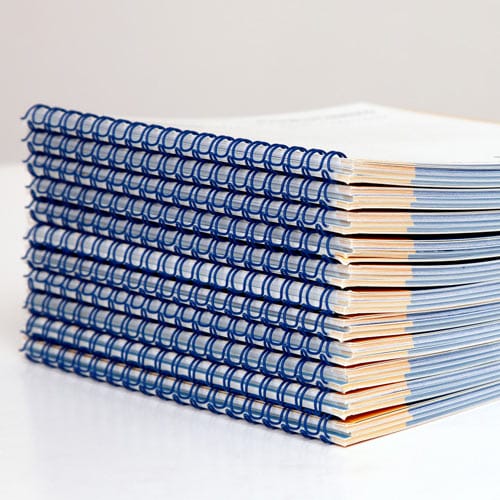
Wire-O binding — the lay-flat pick. The spine punches through the page stack and loops a wire coil that lets the book rotate fully open at any page. This is the binding that survives a four-hour session without a hand holding it down. Buy for any rulebook that gets referenced mid-play, especially GM screens and combat reference sections.
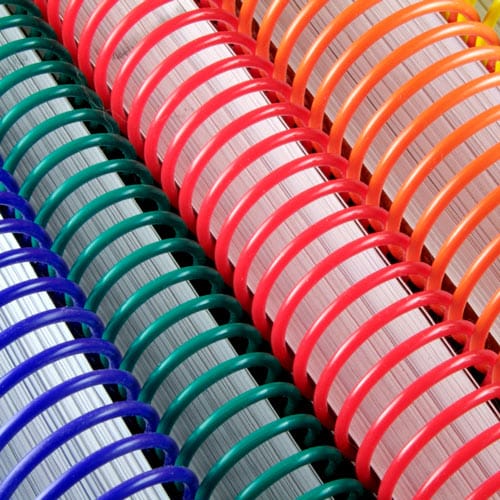
Plastic coil — the flexible workhorse. Coil bends back on itself more aggressively than Wire-O and handles thicker stacks, making it the better call for a 200-plus-page core manual. It costs less to produce at volume too. Buy for thick rulebooks and expansion compendiums that need to survive years of table use.
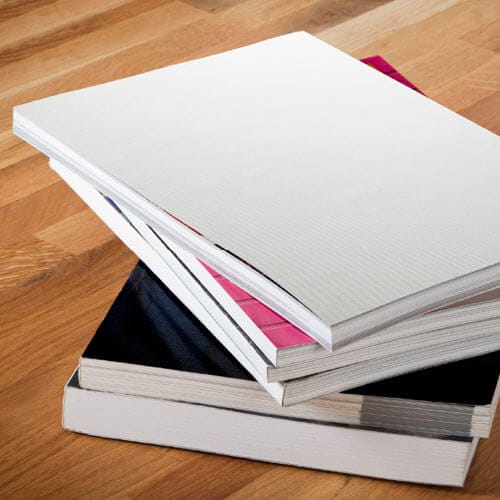
Perfect binding — the bookshelf pick. Square spine, glued edge, looks like a retail paperback sitting next to a novel. It reads well as a display copy or a core rulebook sold in a game store, but it resists lying flat past page 100. Consider it only if the book is meant to look retail-ready rather than function as an open reference during play.
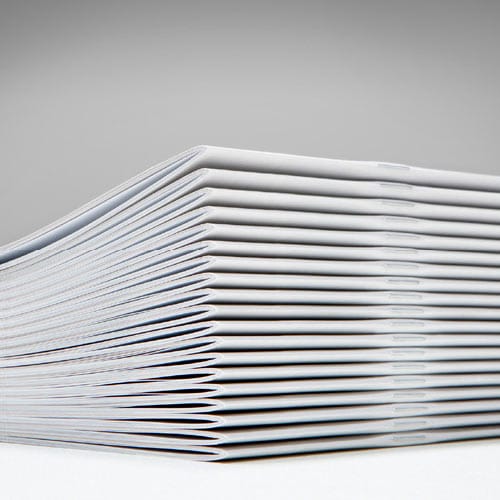
Saddle stitch — the budget pick for thin booklets. Two staples through a folded sheet, no spine to crack, cheapest per-unit cost of the group. It works well for a 24-page quick-start guide or a convention handout. Buy under 48 pages; Skip for anything longer — the fold distorts and pages start separating from the staple.
“If your rulebook needs to lie flat during a four-hour session, saddle stitch is out and Wire-O is in.”
For a side-by-side on the two most common mechanical bindings, coil vs Wire-O binding covers which one fits thicker manuals versus lighter booklets. And if the goal is specifically a manual that won't fight you open, manuals that stay flat when open walks through the layout adjustments that matter.
| Binding | Lay-flat at table | Page range | Best for | Verdict |
|---|---|---|---|---|
| Wire-O | Yes, 360 degrees | Up to ~200 pages | Combat reference, GM screens | Buy |
| Plastic coil | Yes, folds back fully | 200+ pages | Thick core rulebooks | Buy |
| Perfect bound | No, resists past page 100 | 100-400+ pages | Retail-shelf core rulebook | Consider |
| Saddle stitch | Partial, distorts past 48 pp | Under 48 pages | Quick-start guides, handouts | Buy under 48 pp / Skip over |
For training-style manuals with similar handling demands as a rulebook, training and instruction manual printing covers a nearly identical set of binding tradeoffs outside the tabletop space.
What’s the best binding for a tabletop game rulebook in 2026?
Wire-O binding is the best choice for rulebooks used during active play in 2026 because it lets pages rotate a full 360 degrees and lie flat without cracking. Plastic coil is the next-best option for thicker manuals over 200 pages.
Is saddle stitch good enough for a rulebook?
Saddle stitch works for rulebooks under 48 pages, like quick-start guides or convention handouts. Past that page count, the center fold distorts and staples start pulling away from the spine under repeated use.
How many pages can Wire-O binding handle?
Wire-O binding typically handles up to roughly 200 pages depending on paper weight, which covers most full-length rulebooks. Heavier stock reduces the maximum page count the wire coil can comfortably hold.
Does perfect binding work for a rulebook?
Perfect binding works for a rulebook meant to look retail-ready on a shelf, but it resists lying flat once you’re past roughly page 100. Choose it for a core rulebook sold in stores, not one referenced constantly during play.
Can I print a small run of rulebooks for a Kickstarter?
Yes — short-run digital printing supports orders from a few dozen copies up to a few thousand without a large minimum order requirement. This fits playtest batches, convention proofs, and staged Kickstarter fulfillment.
What paper stock holds up best for game manuals?
An 80 lb. or heavier text stock resists show-through on double-sided diagrams and survives repeated handling better than lighter 60 lb. paper. Heavier stock also feels more durable to players flipping through combat tables.
Should a rulebook interior be full color or black and white?
Mixed interiors — black-and-white rules text with color maps, icons, or reference charts on select pages — keep cost down while preserving the visuals that matter most. Confirm whether pricing is per-page or all-or-nothing before finalizing layout.
What trim size works best for a rulebook used at the table?
8.5 x 11 inches or 6 x 9 inches both work well depending on whether the book stays in the box or sits open beside the play area. Larger trim sizes suit dense reference tables; smaller trims suit quick-reference booklets.
The binding choice that looks cheapest on a per-unit quote — saddle stitch — is often the one that costs a reprint once a 96-page rulebook starts shedding staples after a few sessions. Custom book printing for game rulebooks pays off when the binding matches actual table use, not just the page count on a spec sheet. Publishing Xpress prints rulebooks and manuals across Wire-O, plastic coil, perfect bound, and saddle stitch with no large minimum order, so a 30-copy playtest run and a 1,000-copy fulfillment run both ship without renegotiating terms.
© 2026 Publishing Xpress. All Rights Reserved.