July 29, 2026
Hotels that print their own guest directories and area guides need binding that survives nightly handling by different guests, paper that wipes clean after coffee spills, and reorder minimums low enough to update a spa menu or shuttle schedule every season instead of once every five years.
A guest directory gets opened, flipped through, and shoved back in a drawer hundreds of times a year across a property with 80 or 150 rooms. Binding that looks fine in a design mockup can crack a spine or shed pages by month three if it's not built for that kind of handling.
Hotels also update content on a cycle nothing else in publishing deals with: restaurant hours change seasonally, spa pricing shifts, a shuttle schedule gets revised, and a new GM wants the welcome letter rewritten. Custom short-run book printing matters here because it lets a property reorder 50 copies of an updated section instead of committing to a 500-copy run that's obsolete by spring.
Guests still reach for a printed guide when Wi-Fi is spotty or a phone is charging across the room. That's the case for keeping a physical directory in 2026 even as more properties push QR codes for menus and checkout.
This guide is for hotel general managers, hospitality marketing managers, and boutique property owners producing in-room directories, welcome guides, or local area guides for guests — not for chains ordering from a corporate print program with fixed templates. If you're deciding binding, paper, and reorder cadence for a single property or a small group, the criteria below apply directly.
A directory that won't stay open on a desk gets closed and ignored. Wire-O and plastic coil both open to 360 degrees and stay flat without a hand holding the pages down, which matters more for a guest directory than for almost any other document type.
Guest directories sit near coffee cups, room service trays, and wet swimsuits. A coated or laminated cover stock survives that; uncoated matte stock stains and curls within a single season.
Restaurant hours, holiday programming, and spa pricing change multiple times a year. A print vendor that forces a 500-copy minimum locks a property into outdated content for months after the first change happens.
A black-and-white property map or a grainy photo of the pool undersells the room. Full color matters more here than in most short-run print categories because the directory doubles as a sales piece for on-property amenities.
A new wing opening, a rebrand, or a seasonal menu swap all come with a hard date. Turnaround time matters as much as price when the front desk needs directories in guest rooms before a specific weekend.
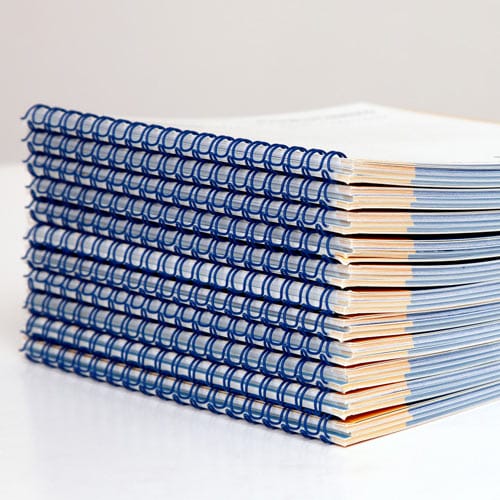
Wire-O binding uses a double-loop metal spine that opens completely flat and lets pages fold back on themselves without stress on the binding. It's the right call for a full property directory covering dining, spa, amenities, local attractions, and checkout details — the document a guest actually keeps open while comparing options.
The double loop also survives repeated opening far better than a stapled or glued spine over a multi-year print life. Verdict: Buy for any full guest directory running past 40 pages.
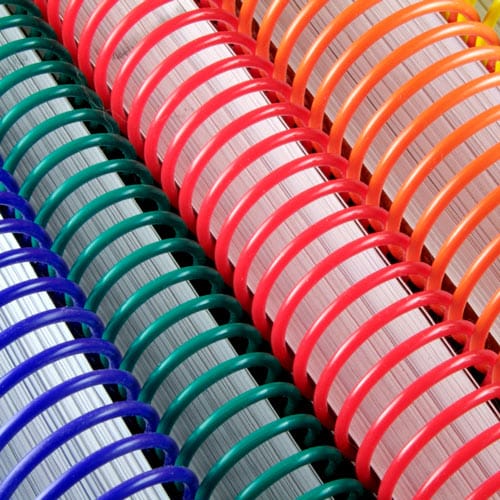
Plastic coil binding lets a property swap out or reprint individual sections without reprinting a full directory from scratch, which matters when spa hours or a shuttle schedule change mid-season. It opens flat like Wire-O but costs less per unit on shorter runs, making it the practical choice for a guide a property expects to touch three or four times a year.
Boutique and independent properties lean on plastic coil binding for planners and journals for exactly this kind of frequent-update document. Verdict: Buy for any guide you expect to revise more than twice a year.
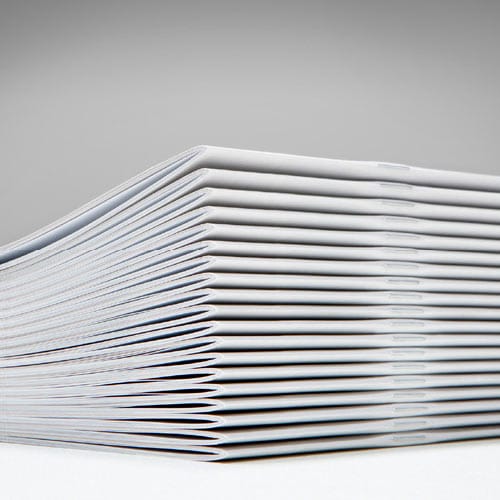
A short 16-24 page insert covering just restaurant menus or spa services doesn't need the cost or bulk of Wire-O or coil. Saddle stitch — two staples through a folded spine — handles a thin insert cheaply and still looks clean sitting on a room desk.
The tradeoff shows up fast past 40-page counts, where a stapled spine starts to gap and the pages don't sit flush. Compare the binding types directly in perfect binding vs saddle stitch: which should you use before committing to a page count. Verdict: Consider for a thin insert only — not for a full directory.
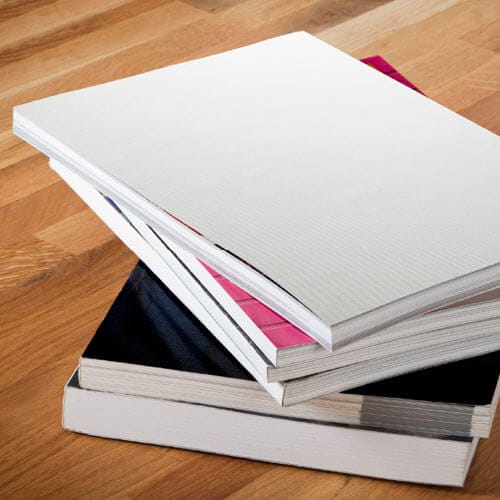
A perfect bound guide with a printed spine reads as a finished book rather than a working document, which fits a lobby coffee-table piece meant to sell the property to guests browsing while they wait for a room. It's not the format to pick if the content changes seasonally, since a full reprint is required for any edit.
Verdict: Consider for a polished, rarely-updated brand piece — Skip it for anything you expect to revise this year.
| Binding | Best for | Reorder ease | Verdict |
|---|---|---|---|
| Wire-O | Full property directory, 40+ pages | Moderate — full reprint per section | Buy |
| Plastic coil | Welcome guide updated 3-4x/year | High — swap sections cheaply | Buy |
| Saddle stitch | Dining/spa insert, 16-24 pages | High on thin runs | Consider |
| Perfect bound | Lobby coffee-table guide, rarely updated | Low — full reprint required | Consider/Skip |
What’s the best binding for a hotel guest directory?
Wire-O binding is the best choice for a full hotel guest directory because it opens flat and holds up to nightly handling across a multi-year print life. Plastic coil is the runner-up when the content needs updating several times a year.
Is plastic coil or Wire-O better for guest guides?
Plastic coil costs less on short runs and makes section swaps easier, while Wire-O holds up better over a longer print life and heavier handling. Pick coil if you’re reprinting several times a year, Wire-O if the directory stays mostly static.
How many pages should a hotel welcome guide be?
Most hotel welcome guides land between 16 and 40 pages depending on how many amenities and local attractions get covered. Under 16 pages, saddle stitch works fine; past 40, Wire-O or coil holds up better.
Can you order small print runs for hotel directories?
Yes — custom book printing for hotels doesn’t require large minimum orders, so a single property can reorder a small batch after a seasonal update instead of committing to hundreds of copies. That flexibility is the main reason short-run printers fit hospitality better than bulk offset shops.
Do hotels still need printed guides in 2026?
Printed guides still matter in 2026 because guests reach for them when Wi-Fi is unreliable or a phone is charging across the room. A printed directory also doubles as a passive sales piece for on-property dining and spa services.
How much does custom book printing for hotels cost?
Cost depends on binding type, page count, paper stock, and run size, with saddle stitch inserts running cheapest and Wire-O directories costing more per unit but holding up longer. Get a specific quote based on your page count and binding choice rather than estimating from a generic per-book price.
What paper stock works best for guest directories?
A coated or gloss cover stock resists spills and handling better than uncoated matte stock, which stains and curls within a season of guest room use. Interior pages can run lighter weight uncoated stock to keep cost down on longer directories.
Can hotels reorder mid-season for updates?
Yes — plastic coil and saddle stitch formats in particular make mid-season reorders practical since minimums stay low and turnaround is fast. That’s the main reason those two formats beat perfect binding for content that changes more than once a year.
The binding decision matters more than the cover design for a hotel guest directory — a beautifully designed cover on a stapled spine still falls apart by the third season, while a plain Wire-O directory keeps working through hundreds of guest room turnovers. Pick the binding for how the book gets used first, then design around it.
© 2026 Publishing Xpress. All Rights Reserved.