August 30, 2026
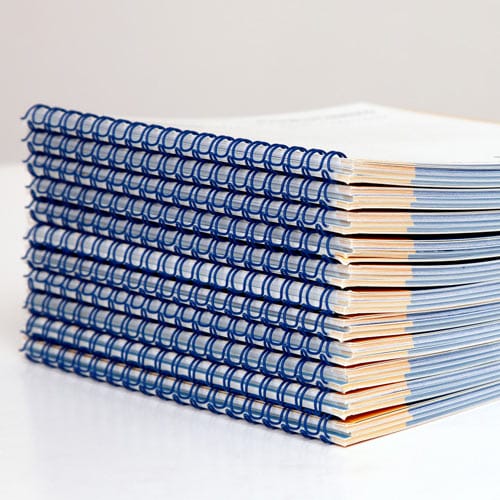
Custom book printing for home builders and construction companies covers the project portfolios, model home walkthrough books, subcontractor safety manuals, and client closing binders that move a prospect from bid to signed contract. Construction buyers judge a builder on the quality of what lands on the table before they ever see the framing — a book that looks cheap or falls apart at the spine undercuts a $400,000 pitch.
A construction company's printed materials do two jobs a website can't: they sit in a truck cab for months and they get handed to a client at the exact moment a decision gets made. A bid package leave-behind, a subcontractor safety manual, or a model home walkthrough book has to survive daily handling and still look presentable at closing. That's a different set of constraints than a novel or a corporate report — the binding has to take abuse, the paper has to hold up under jobsite grime, and the print run has to track a build season instead of a fixed catalog.
Most general commercial printers treat these as one-off jobs and charge accordingly. Publishing Xpress prints short runs of books, booklets, and manuals without a large minimum order requirement, which matters for a builder who needs 30 copies for one subdivision launch and 300 for a regional trade show the same quarter.
A project book that lives in a glove compartment needs different specs than one that sits on a closing table. Nail this down first or every downstream decision — binding, paper, page count — gets guessed instead of chosen.
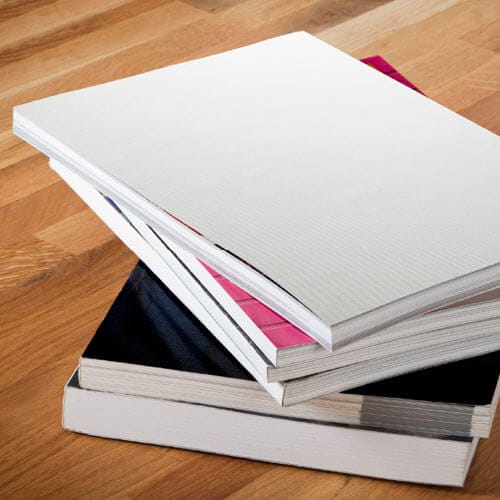
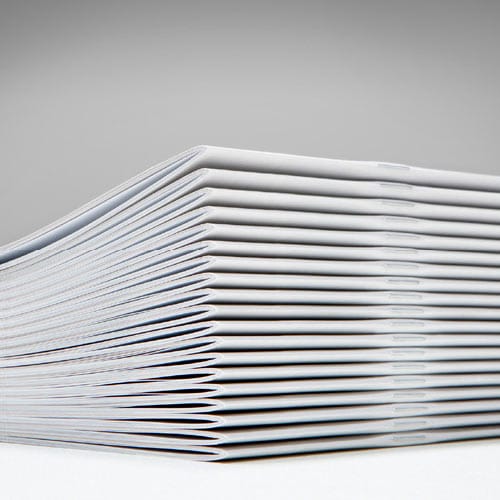
This is where most construction print jobs go wrong: builders pick the cheapest binding without asking how the book actually gets used. A comparison of perfect binding versus saddle stitch shows the tradeoff plainly — saddle stitch is cheap and fast under 48 pages, but the spine folds and tears with repeated open-close cycles on a jobsite.
Construction sales books live or die on how the floor plans and renderings look on the page. Matte stock reads as more professional for spec sheets and blueprints; gloss stock makes exterior renderings and finished-home photography pop under showroom lighting.
Don't print 500 copies of a book tied to floor plans that might change before the model home opens. A short proof run catches spec errors, binding issues, and color mismatches before they're baked into a few hundred copies. This is the step where the manual, DIY approach — print-on-demand through a local shop, one book at a time — stops scaling, and a printer built for short runs earns its keep.
A safety manual that changes format every crew or every subdivision creates confusion during inspections. Standardizing the binding and layout once, then reprinting as content updates, keeps every crew working from the same physical document. A look at binding options for workbooks and study guides applies directly here — the same durability tradeoffs that matter for a training workbook matter for a jobsite safety manual.
Model home season, parade of homes events, and spring permit surges all create predictable spikes in printed material demand. Printing once a year in bulk means half the run sits outdated by the second event.
Floor plans change, pricing updates, and warranty terms shift — a warehouse full of outdated 2026 project books is wasted money and a liability if a client gets stale information. Reordering in short batches as details change keeps every copy in circulation accurate.
| Option | Best For | Key Limitation |
|---|---|---|
| Perfect Binding | Polished sales portfolios over 40 pages | Doesn't lie fully flat for side-by-side plan review |
| Saddle Stitch | Short bid packages under 48 pages | Spine cracks with repeated open-close handling |
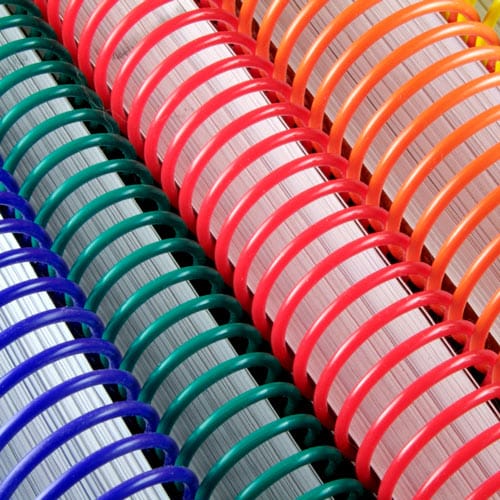
| Wire-O | Portfolios and manuals needing a flat lay | Higher material cost than saddle stitch |
| Plastic Coil | Jobsite manuals taking daily abuse | Bulkier profile, less polished for closing tables |
| Local copy shop | One-off flyers or last-minute reprints | No consistency in stock or binding at volume |
The Wire-O binding used for architect portfolio books is worth a look for builders producing design-forward presentation books — the same flat-lay requirement that serves architects serves a construction sales team walking a client through floor plans page by page.
What’s the best binding for a construction project book?
Wire-O or plastic coil for anything handled daily on a jobsite, and perfect binding for a polished sales portfolio over 40 pages. Saddle stitch works for short bid packages under 48 pages but the spine won’t survive repeated handling.
Is saddle stitch or perfect binding better for a sales portfolio?
Perfect binding looks more polished for a client-facing sales portfolio and holds up better over 40 pages. Saddle stitch is cheaper and faster but only makes sense for a short handout under 48 pages.
How many copies do I need for a model home walkthrough book?
Start with a short proof run of 10-25 copies before committing to a full print, since floor plans and pricing often shift before a model home opens. Reorder in small batches as the season progresses rather than printing a year’s supply upfront.
Can a construction safety manual lie flat while someone’s working?
Yes — plastic coil and Wire-O binding both fold back 180 degrees, which is what lets a manual stay open on a table or clipboard without someone holding the spine. Perfect binding and saddle stitch don’t fold flat the same way.
How much does book printing cost for a construction company?
Cost depends on binding type, page count, and paper stock, so it varies by project. Ordering with no large minimum requirement keeps a small run from being penalized the way it would be with a print shop built for bulk orders only.
What paper stock works best for floor plan renderings?
Gloss stock around 100 lb. text makes exterior renderings and finished photography pop under showroom lighting, while matte or uncoated stock reads cleaner for spec sheets and line drawings. Mixing both within one book is common for construction sales materials.
How far ahead of a trade show should printed materials be ordered?
Order a proof copy weeks before the event, not days, so binding and color issues surface with time to fix them. Rush reprints under deadline pressure almost always cost more than a planned run.
Is Wire-O binding better than plastic coil for construction manuals?
Wire-O gives a cleaner, more professional look for a manual that also gets handed to clients, while plastic coil is more forgiving for a manual that lives entirely on a jobsite. Both fold flat; the choice usually comes down to whether the book is client-facing.
Warranty booklets get read more after the sale closes than before it — a homeowner flips through page 40 two years later looking for the roof warranty terms, not on closing day. Print those in Wire-O or plastic coil, not saddle stitch, so the spine survives the years it's actually going to be used, not just the handshake moment it was printed for.
© 2026 Publishing Xpress. All Rights Reserved.