August 1, 2026
Restaurant kitchens destroy books. Grease, steam, and constant page-flipping wreck standard bindings inside a season, which is why cookbook printing for restaurants needs different specs than a bookstore cookbook aimed at home cooks.
A chef who orders a cookbook built like a retail bestseller ends up with a book that won't stay open on a stainless counter, curls under heat, and shows grease stains through the paper by week three. Cookbook printing for restaurants is a working-tool decision first and a keepsake decision second. Get the binding and stock wrong and the reprint bill lands before the first season is over.
Publishing Xpress prints in run sizes that fit a single restaurant group or a single chef, with no large minimum order requirement forcing a 2,000-copy commitment before anyone knows if the recipes hold up in a live kitchen. That matters in 2026 more than it did five years ago, since menus rotate faster and a fixed printed cookbook has to survive at least one full seasonal cycle without falling apart.
This guide is for chefs, restaurant groups, and culinary directors printing a working kitchen manual, a guest-facing cookbook, or a limited chef's compendium tied to a menu launch. It is not for home cooks assembling a personal recipe scrapbook — the cookbook printing and recipe collections guide covers that use case with different priorities.
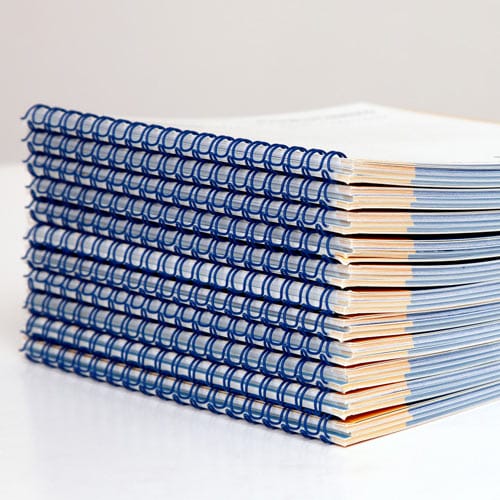
A book that snaps shut mid-recipe is useless six inches from a hot pan. Wire-O and plastic coil bindings open to a full 360 degrees and stay flat without a hand holding the page, which is the single biggest functional difference between a kitchen cookbook and a coffee-table cookbook.
Standard uncoated text stock absorbs oil and shows stains within days on a line. A coated or gloss text stock resists spotting and wipes clean, which matters more for a working kitchen manual than it does for a book that sits on a shelf.
A recipe book without accurate plating photos is a text document with extra steps. Color accuracy on sauces, doneness, and garnish placement is what lets a line cook match a dish without a chef standing over them, so full-color interior printing is not optional for a restaurant's working cookbook.
A restaurant testing a new seasonal menu in 2026 does not need 500 copies of a book built around dishes that might rotate off in 90 days. A print run of 25 to 50 copies lets a kitchen validate a menu before committing to a larger guest-facing edition.
A cover that survives being wiped down, dropped near a fryer, and stacked with other line books needs a heavier laminated or coated cover stock, not a standard matte cover meant for a bookshelf.
Menus change. A binding and file setup that makes a reprint simple — rather than a full redesign — saves real money across a year of seasonal rotations.
Wire-O binding — the workhorse pick. Wire-O opens flat at 360 degrees and holds that position without weights or clips on a stationary prep line. It handles a 40 to 150-page working manual well and takes reprints without a full redesign. Full Wire-O cookbook printing specs cover page counts and cover stock options in more detail. Verdict: Buy for any book that will live on a counter or a line during service.
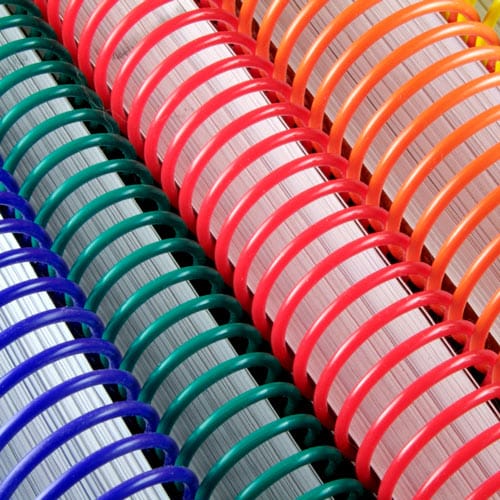
Plastic coil binding — the budget pick. Coil binding gives the same lay-flat function as Wire-O at a lighter weight, and it is the more forgiving choice for a first 2026 menu-testing run before a restaurant commits to a permanent kitchen manual. See plastic coil binding for cookbooks for stock and page-count guidance. Verdict: Consider for test runs and short menu cycles; move to Wire-O once the recipe set is locked.
Spiral-bound cookbook printing — the fast-turnaround pick. Spiral binding suits a 24 to 48-page seasonal recipe booklet built around a single menu launch rather than a full restaurant compendium. The spiral-bound cookbook printing format keeps costs down on shorter page counts. Verdict: Buy for a single-season insert; Skip if the book runs past 150 pages, where spiral wire starts to strain.
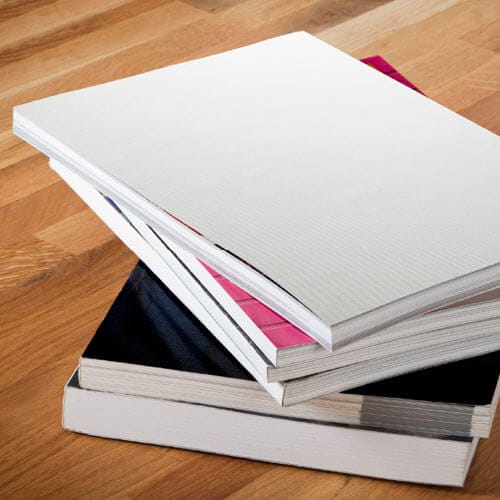
Perfect bound printing — the guest-facing pick. Perfect binding gives a cookbook a printed spine and a retail look, which matters when guests buy the book at the host stand or a chef sells signed copies at events. It does not lie flat on a working counter, so it is a front-of-house product, not a line tool. Verdict: Consider for guest sales, Skip for kitchen use.
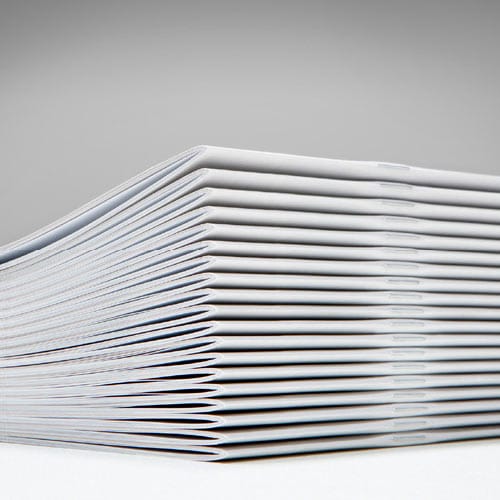
Saddle stitch printing — the quick-menu pick. Saddle stitch keeps costs lowest on a short recipe booklet, typically under 48 pages, and works well for a single tasting-menu handout or a pop-up event recipe card set. Past 64 pages the spine gets bulky and pages start to gap. Verdict: Buy for a short seasonal insert; Skip for a full-length chef's compendium.
“A cookbook that won’t stay open on a counter isn’t a kitchen tool, it’s a coffee-table book that happens to have recipes in it.”
| Binding | Lies flat | Best page count | Kitchen or front-of-house | Verdict |
|---|---|---|---|---|
| Wire-O | Yes, 360 degrees | 40-150 pages | Kitchen | Buy |
| Plastic coil | Yes, 360 degrees | 40-150 pages | Kitchen | Consider |
| Spiral | Yes | 24-48 pages | Kitchen (short runs) | Buy for short runs |
| Saddle stitch | No | Under 48 pages | Either | Buy for short runs |
| Perfect bound | No | 60+ pages | Front-of-house | Consider |
What is the best binding for cookbook printing for restaurants?
Wire-O binding is the best choice for cookbook printing for restaurants because it opens flat at 360 degrees and stays open on a counter during service. Plastic coil is the closest budget substitute with the same lay-flat function.
Is perfect binding good for a restaurant cookbook?
Perfect binding works for a guest-facing cookbook sold at the host stand, but it will not lie flat on a working kitchen counter. Restaurants that need both should print a Wire-O working copy and a perfect bound retail edition.
How many copies should a restaurant order for a first cookbook print run?
A test run of 25 to 50 copies is enough to validate a seasonal menu before committing to a larger guest-facing edition in 2026. Publishing Xpress does not require a large minimum order, so a small first run is realistic.
What paper stock holds up best in a working kitchen?
A coated or gloss text stock resists grease and steam better than uncoated stock and reproduces plating photos with more accurate color. Uncoated stock stains faster and shows less detail on photo-heavy pages.
Can a restaurant reprint a cookbook after a menu change?
Yes, Wire-O and plastic coil bindings both take reprints without a full redesign, since only the interior pages need updating. Perfect bound books require more file rework because the spine width shifts with page count.
What page count works for a seasonal recipe booklet?
A seasonal recipe booklet tied to a single menu launch typically runs 24 to 48 pages and prints well on saddle stitch or spiral binding. A full chef’s compendium covering a year of menus usually runs 100 pages or more and needs Wire-O or perfect binding.
Is spiral binding durable enough for daily kitchen use?
Spiral binding holds up for a single seasonal menu cycle under normal kitchen handling, but the wire can loosen faster than Wire-O under heavy daily use. For a permanent kitchen manual meant to last multiple seasons, Wire-O is the sturdier choice.
The detail most chefs miss: a cookbook built for the line and a cookbook built for guests are two different print jobs, not one book serving both purposes. Order the working copy in Wire-O, and if guests want a take-home edition, print a separate perfect bound run once the recipes are locked — trying to make one book do both jobs is what leads to the reprint nobody budgeted for.
© 2026 Publishing Xpress. All Rights Reserved.