August 6, 2026
Nonprofits, schools, and churches turn to coloring book printing when they need a low-cost item that sells itself at a fundraising table, and the binding or paper choice you make decides whether that run actually turns a profit in 2026.
A fundraiser coloring book only works if it survives being colored in, carried home, and handed out at a table for a full weekend. Get the paper stock wrong and markers bleed through to the next page before the event ends. Publishing Xpress prints coloring books, booklets, and catalogs in black-and-white or color with no large minimum order requirement, which matters when a PTA or church group only needs 75 to 150 copies for one event, not a 500-copy print run they'll never sell through.
Most nonprofit groups get this decision backwards. They pick the format that looks the cheapest per copy instead of the one that matches how the book gets sold — table sale, ad-book premium, or donor gift. That single choice changes your binding, your page count, and your paper weight.
This guide is for PTA fundraising chairs, church youth ministries, animal shelters, hospital foundations, and school booster clubs running an ad-book, product sale, or donor-appreciation campaign in 2026. If you're printing a coloring book to sell at a table, bundle with a sponsor ad program, or hand out as a thank-you gift, the criteria below apply directly to your order.
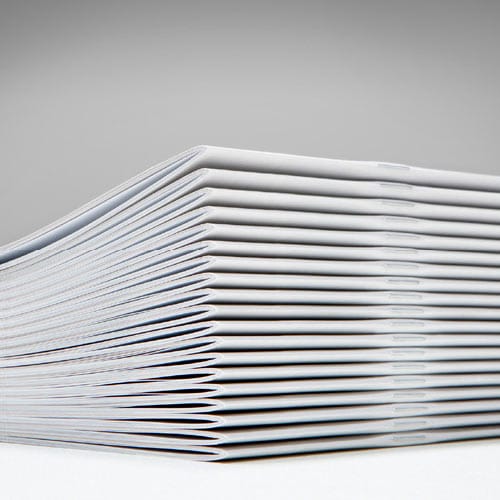
Saddle stitch binding — stapled through the fold — is the standard for short coloring books under 32 pages and it lies flat for coloring, which coil and perfect bound don't always do at low page counts. Wire-o and plastic coil cost more per unit but let the book fold back on itself, which matters if kids color at a cramped table. For most fundraiser runs, saddle stitch wins on cost and simplicity.
Standard 20 lb copy paper bleeds through with markers almost every time, which ruins the illustration on the back of that page. A 60 lb or 80 lb text weight interior stock holds up to crayon, colored pencil, and most markers without soaking through, and it's the range most short-run coloring book printers recommend for kid-facing projects.
8.5×11 is the standard trim size for fundraiser coloring books because it gives kids room to work with a crayon without cramping the line art. A smaller 8.5×8.5 square trim reads as more of a gift-shop item and works better for a donor giveaway than a table-sale product aimed at kids.
A 16-page coloring book sells fine at a low price point for a bake-sale-style table. Push to 24 or 32 pages and you can justify a higher price tag or bundle it into an ad-book premium. Going past 32 pages on a coloring book usually adds cost without adding sales — kids don't finish a 60-page coloring book any faster than a 24-page one.
Check whether your printer forces you into a minimum order that's bigger than what you'll actually sell. Printing a coloring book for kids at the volume your event actually needs — not the volume a bulk-print minimum forces on you — keeps unsold inventory from eating your fundraiser margin.
Fundraiser dates don't move, but print schedules can slip if you order late. Confirm turnaround before you lock your event date, especially if the book still needs proofing, ad sales collected, or content finalized close to the deadline.
The default pick — saddle stitch coloring book, 16 to 24 pages. This is the format most PTAs, churches, and shelters land on for a straight table sale in 2026. Saddle stitch keeps unit cost low, the pages lie flat while a kid colors, and 16 to 24 pages is enough content to feel like a real product without adding weight to your print bill. Coloring book printing for a nonprofit fundraiser almost always starts here. Buy.
The moneymaker — ad-book hybrid with coloring pages and sponsor ads. Some of the highest-margin fundraiser books mix coloring pages for kids with a page or two of local business ads sold to sponsors, turning one print job into two revenue streams. Running an ad-book fundraiser alongside the coloring content covers your print cost before you sell a single copy at the table. Buy.
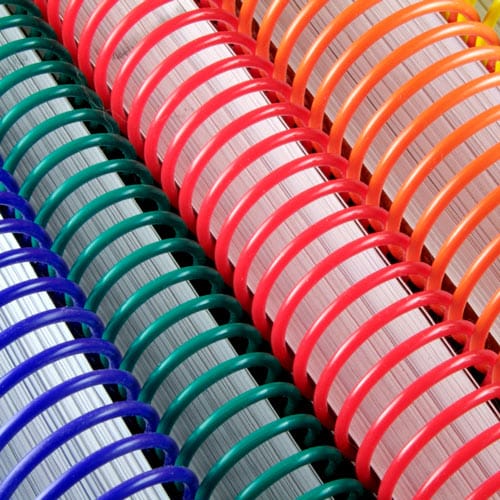
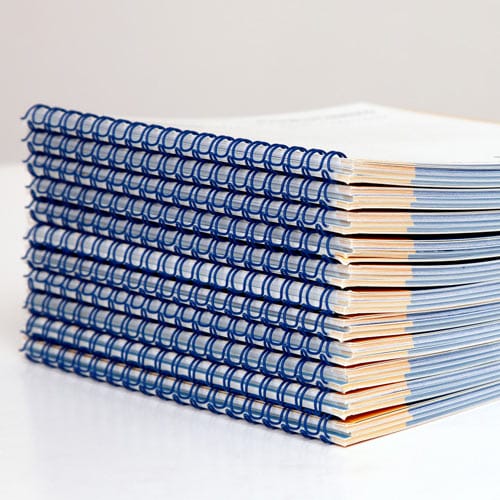
The premium pick — coil-bound keepsake edition, 24 to 32 pages, 80 lb stock. Reserve this format for major donors or sponsors who deserve something nicer than the version sold at the table. Coil binding lets the book lay fully open, and heavier 80 lb stock holds up to gift-quality handling. It costs more per copy than saddle stitch, so it's not the format for a 200-copy general sale. Consider.
The overkill pick — full-color perfect bound edition, 32-plus pages, glossy stock. This looks impressive in a sample and expensive on the invoice. Perfect binding and heavy gloss stock push per-copy cost well above what a fundraiser table can recover, and kids don't need a coffee-table-book production to enjoy coloring it in. Skip for anything under a 300-copy run.
“If the crayon bleeds through to the next page, the coloring book doesn’t survive a fundraiser table.”
| Format | Binding | Page count | Paper weight | Order minimum | Verdict |
|---|---|---|---|---|---|
| Standard fundraiser book | Saddle stitch | 16-24 pages | 60 lb text | No large minimum | Buy |
| Ad-book hybrid | Saddle stitch | 24-32 pages | 60 lb text | No large minimum | Buy |
| Donor keepsake edition | Plastic coil | 24-32 pages | 80 lb text | No large minimum | Consider |
| Full-color coffee-table edition | Perfect bound | 32+ pages | 100 lb gloss | No large minimum | Skip |
What’s the best binding for a nonprofit coloring book fundraiser?
Saddle stitch is the best binding for a nonprofit coloring book fundraiser in 2026 because it keeps per-unit cost low and lies flat while a child colors. Coil or wire-o only make sense for a donor keepsake edition, not a bulk table sale.
How many pages should a fundraiser coloring book have?
Most fundraiser coloring books run 16 to 24 pages, which is enough to feel like a real product without pushing print cost too high. Going past 32 pages rarely increases how much a kid enjoys or finishes the book.
Can you combine coloring pages with sponsor ads in one book?
Yes, an ad-book hybrid mixes coloring pages for kids with a section of paid local business ads, which is a common fundraiser format for schools and churches. This structure covers print costs through ad sales before the coloring book sells a single copy.
What paper stock keeps markers from bleeding through a coloring book?
A 60 lb or 80 lb text weight stock holds up to crayon, colored pencil, and most markers without soaking through to the next page. Standard 20 lb copy paper is too thin for coloring book interiors.
Is saddle stitch or coil binding better for a fundraiser table?
Saddle stitch is better for a general fundraiser table sale because it’s cheaper per copy at 16 to 32 pages. Coil binding costs more but lays fully flat, which fits a smaller batch of donor-tier gifts rather than a bulk sale.
Do nonprofits get a discount on coloring book printing?
Check directly with your printer about nonprofit pricing, since terms vary by vendor and order size. Ask before you finalize page count and quantity so the discount, if offered, factors into your budget.
How many copies should a school or church order for one event?
Base your quantity on past attendance or ad-book sponsor counts rather than rounding up to a printer’s bulk minimum. Ordering to actual demand, not a forced minimum, is what keeps a fundraiser profitable.
What trim size works best for a kids’ coloring book fundraiser?
8.5×11 is the standard trim size for a fundraiser coloring book because it gives kids enough room to color without cramping the line art. A smaller 8.5×8.5 square trim reads more as a gift item than a table-sale product.
The fundraiser groups that make the most money on coloring books rarely sell the coloring book by itself — they staple in an ad-book section, sell sponsor pages to local businesses first, and treat the coloring content as the reason kids ask their parents to buy a copy. Cover the print bill with ad sales, then every table sale afterward is pure margin.
© 2026 Publishing Xpress. All Rights Reserved.