October 8, 2026
A standard perfect bound book does not reliably lie flat when open without support. Its glued spine holds the pages together but resists opening into a flat spread; forcing it down risks damaging the binding. If your reader needs both hands free for writing, cooking, or following instructions, choose plastic coil or Wire-O rather than expecting perfect binding to behave like a lay-flat format.
For your 2026 print project, start with how to choose a book binding type. Decide whether your reader will hold the book or leave it open on a surface before you finish the layout.
Not reliably: standard perfect binding is designed to hold a book together, not to guarantee a flat, unsupported opening. Some copies open more comfortably than others, but a book that stays open at one spread does not necessarily stay open throughout the interior.
The difference is structural. Perfect binding attaches the page edges to a glued spine, while plastic coil and Wire-O let punched pages turn around a separate binding element. Saddle stitch holds folded sheets together through the fold.
| Binding | How it behaves when open | Best for | Main advantage | Main limitation |
|---|---|---|---|---|
| Perfect bound | Pages curve toward the glued spine; unsupported opening is not assured | Novels, memoirs, and text-led reports | A continuous cover and printable spine when dimensions permit | Not a dependable hands-free format |
| Plastic coil | Pages turn around a flexible coil and can lie flat | Workbooks, journals, and working cookbooks | Supports flat opening and folding pages back | Visible coil and punched binding edge |
| Wire-O | Pages turn around paired wire loops and can lie flat | Reference manuals, planners, and presentation books | Supports flat opening and folding pages back | Wire loops can deform if crushed |
| Saddle stitch | Folded sheets open at the center fold | Thin programs and booklets | No glued spine restricting the page edges | Folded sheets can spring back; thickness limits suitability |
Plastic coil and Wire-O can fold back through 360 degrees, letting you use one page at a time. That is different from opening a spread to 180 degrees, where both facing pages remain visible. Standard perfect binding should not be specified on the assumption that it will do either comfortably without support.
A binding mistake changes how readers use your book. A student filling in answers needs an accessible writing area, while someone reading a memoir can hold the pages open without interrupting the task.
The practical question for 2026 is not whether you can press a paperback flat. It is whether your reader can use the content comfortably without pressing it flat. Choose the binding for the activity, then design the pages around that binding.
This also protects your layout. A beautiful spread on a screen can become awkward in print when a diagram label, recipe instruction, or photograph's subject sits deep in the gutter.
Perfect binding suits books where reading is the main activity and readers can support the open pages. Novels, memoirs, poetry collections, and many reports fit that pattern. A continuous cover also gives the book a familiar paperback form.
The limitation is the center opening. Pages rise and curve near the spine, so text placed too close to the binding becomes harder to see. Full-spread artwork also loses some visibility where the facing pages meet.
Choose perfect binding for a held reading experience, not a guaranteed hands-free experience. If your workbook needs readers to write near the inner edge, a conventional paperback appearance is not enough reason to select it.
A reference book can still use perfect binding when readers consult it briefly and hold it open. But if the reference must remain beside tools, ingredients, or a keyboard, treat unsupported opening as a requirement rather than a bonus.
Plastic coil binding lets each punched page move around the coil instead of bending against a glued spine. Readers can leave a spread open or fold the book back to show a single page. That makes it a practical choice for exercises, logs, and instructions used during another activity.
The trade-off is visible hardware. You also need a clear binding-side area so the punched holes do not interrupt text, answer boxes, or illustrations. Changing from perfect binding to coil therefore requires a layout check, not just a different order selection.
Choose plastic coil when easy page handling matters more than a continuous paperback spine. For a working cookbook or student workbook, that is often the more useful compromise.
Wire-O uses paired wire loops through punched holes, allowing pages to turn and rest open without the resistance of a glued spine. It supports both facing-page use and folding pages back. Planners, manuals, and portfolios can benefit from that movement.
The limitation is the exposed wire. Crushing the loops can interfere with page turning, and the punched edge still needs space in your design. Lay-flat opening does not remove the need for careful handling or binding clearance.
Choose Wire-O when your reader needs an open reference spread and accepts an exposed binding. Do not choose it solely because a screen mockup looks flat; check the actual pages and how the finished book will be carried.
Saddle stitch joins folded sheets at their center, so it does not have the same glued-spine restriction as perfect binding. Thin booklets can open comfortably across the fold. Event programs and brief instructional booklets are natural uses.
However, folded paper can still spring toward a closed position. Saddle stitch is not a universal substitute for coil or Wire-O when every page must stay open unattended, and it is not suitable for every book thickness.
Choose saddle stitch for a thin booklet; choose coil or Wire-O when hands-free use is essential. Confirm that your page count and paper combination suit the binding before completing the file.
There is no single opening result for every perfect bound book. The page block, cover, and binding work together, so a sample with different materials does not establish how your own book will behave.
These physical factors explain the difference:
For a 2026 order, ask about the finished construction rather than relying on a broad description such as flexible binding. A more flexible perfect bound spine is not the same promise as a purpose-built lay-flat book.
Use a bound sample with the proposed paper and binding whenever practical. A loose printout tells you about page design, but it cannot demonstrate a glued spine's resistance or a punched binding's page movement.
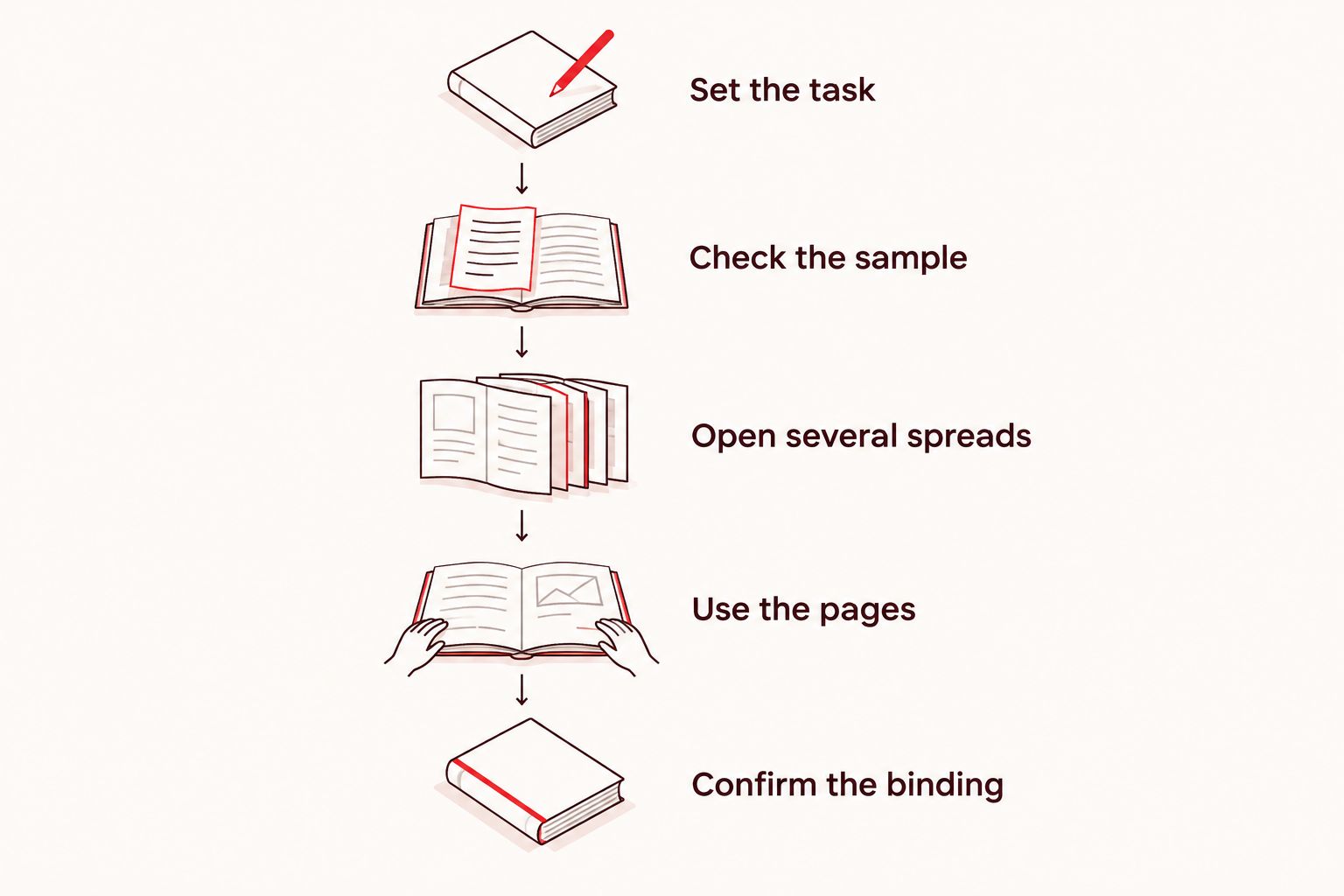
Do not reject a reading book simply because it needs a hand to stay open. Equally, do not approve a workbook because it looks attractive when someone holds it flat for a photograph. Those are different tests.
Make the content readable without forcing the spine. Allow an appropriate inside margin, and keep essential text, labels, faces, and answer spaces away from the center opening. Ask the printer for file requirements before settling on a gutter measurement.
Use mirrored margins for facing pages so the binding allowance follows the inside edge throughout the book. Review left-hand and right-hand pages separately; a layout that works on one side can fail on the other if the margins are not set correctly.
For photographs across a spread, inspect what falls at the center. An image can continue across facing pages, but you should not place its essential subject where curvature makes it difficult to see. Split diagrams into readable units when readers need to follow precise relationships.
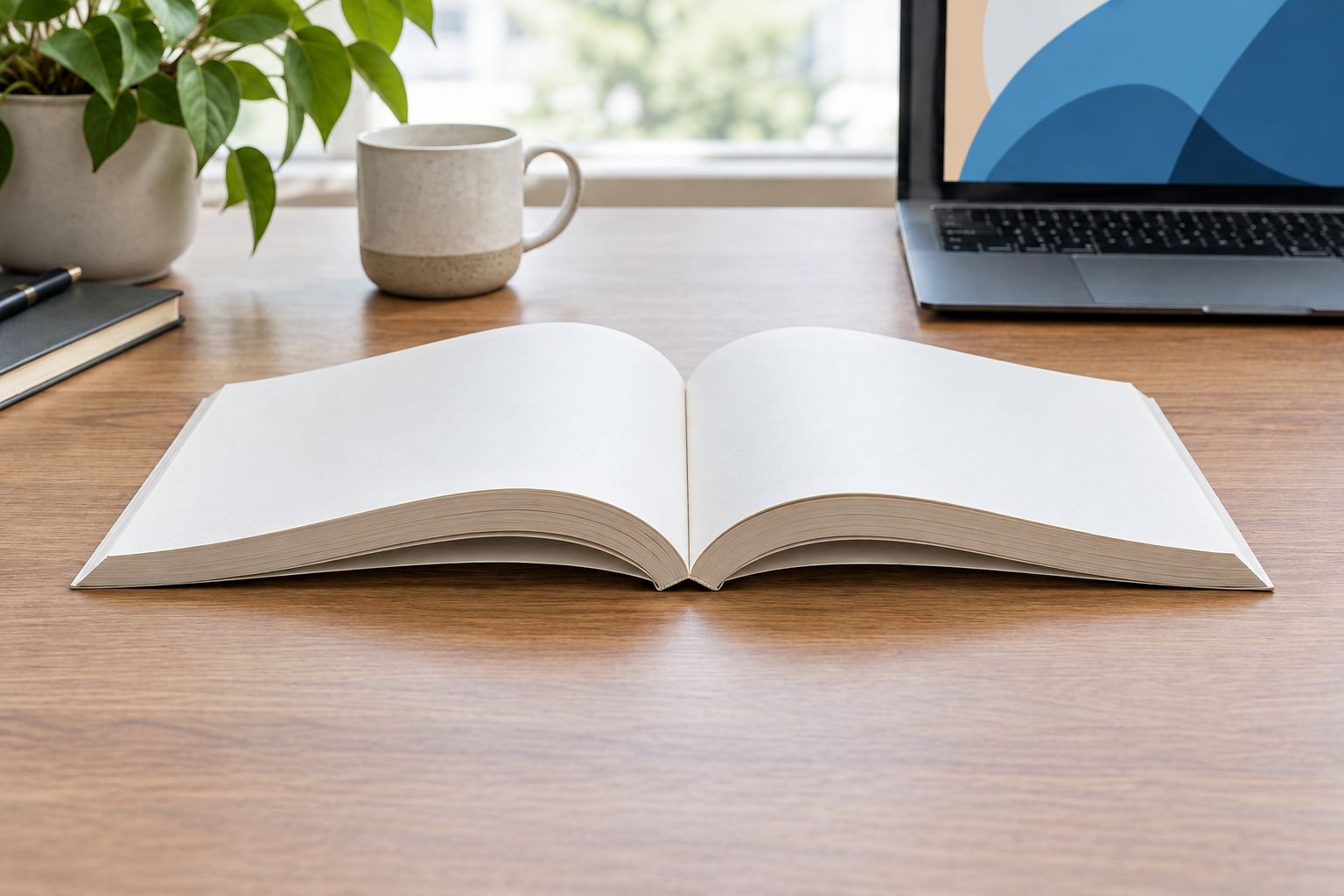
Your 2026 layout should accommodate that curve rather than pretend it is absent. Wider inside margins improve access to the content, but they do not change the binding into a lay-flat construction.
No. A book that opens widely still needs support if its pages spring back or rise sharply at the gutter; a useful lay-flat book stays open for the intended task without that support.
Ask whether the description refers to the opening angle, unsupported use, or folding pages back. Specify the behavior you need instead of relying on the label alone.
Do not force a perfect bound book flat. Heavy pressure can crease the cover or damage the spine and page attachment, especially when you press against the binding's natural resistance.
Use a suitable book stand or page holder when you need occasional support. For a new hands-free project, changing the binding is a better design decision than asking every reader to work around it.
Publishing Xpress is best for self-publishers and organizations that need short-run book printing with a choice of binding formats. Its four binding options are perfect bound, saddle stitch, Wire-O, and plastic coil. The choice lets you separate a conventional reading book from a book that readers need to leave open.
Publishing Xpress book printing includes those formats, but choosing perfect binding still does not create a lay-flat guarantee. Describe how readers will use the book, then confirm the relevant file requirements through Publishing Xpress.
For your 2026 print brief, state the intended use plainly: a held reading book, an open reference, or a write-in workbook. That gives the binding decision a practical basis before you spend time adjusting the interior.
Can a perfect bound book lie flat on a table?
A standard perfect bound book does not reliably lie flat on a table without support. The pages curve toward its glued spine, and opening behavior varies across the book.
What’s the best binding for a workbook that stays open?
Plastic coil and Wire-O are better choices for a workbook that must stay open while you write. Both require a clear binding-side area for punched holes.
Can a perfect bound cookbook stay open while I cook?
A perfect bound cookbook is not a dependable hands-free format. Choose coil or Wire-O when the reader needs to follow recipes without holding the pages open.
Does a wider gutter make perfect binding lie flat?
A wider gutter does not make perfect binding lie flat. It moves important content away from the spine so readers can see it more comfortably.
Is Wire-O better than perfect binding for a manual?
Wire-O is better when the manual must stay open beside the reader’s work. Perfect binding remains suitable when readers hold the manual and do not require unsupported opening.
Can plastic coil books fold all the way back?
Plastic coil books can fold back through 360 degrees so a single page faces upward. Keep important content clear of the punched binding edge.
Does Publishing Xpress offer alternatives to perfect binding?
Publishing Xpress offers saddle stitch, Wire-O, and plastic coil alongside perfect binding. Match the format to the reader’s activity rather than selecting solely for appearance.
Test the page where the reader has the hardest job. For a workbook, that is the exercise nearest the inner edge; for a cookbook, it is the recipe that requires attention while both hands are occupied.
A book does not need to lie flat to be a good reading book. It does need the right binding when staying open is part of its job.
© 2026 Publishing Xpress. All Rights Reserved.