August 18, 2026
Community health clinics need booklets that survive a waiting room, get updated fast when a program or insurance list changes, and print in quantities that match a real patient count — not a warehouse pallet. Booklet printing for health clinics comes down to four decisions: binding, page count, color use, and how small a run you can actually order without overpaying per copy.
A clinic booklet has a different job than a marketing brochure. It has to explain a screening program to someone reading it in a waiting room chair, hold up to being folded into a bag, and get reprinted the moment a phone number or eligibility rule changes. Get the binding or the run size wrong and you're either paying for 500 copies you'll shred in six months or handing patients a booklet that falls apart before their next visit.
Booklet printing for medical and dental offices runs into the same problem — short shelf life, frequent content changes, tight budgets — and the fixes are the same across both. Match the binding to how the booklet gets used, not to what looks impressive on a shelf.
This guide is for clinic administrators, patient outreach coordinators, and nonprofit health program managers ordering patient education materials, service directories, sliding-scale fee guides, or annual community health reports. If you're printing under 500 copies at a time and reordering every few months as programs shift, the criteria below apply directly to you.
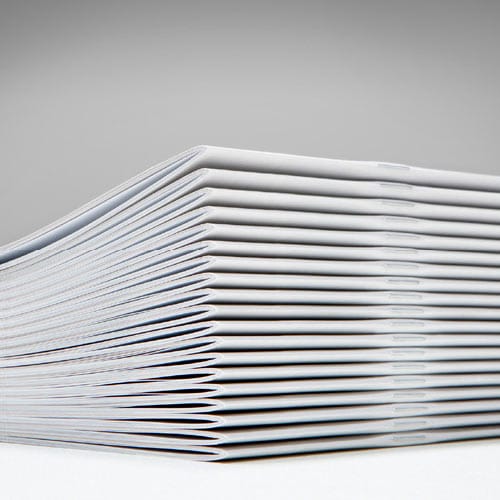
A booklet that gets passed between a front desk and an exam room needs a spine that doesn't crack after ten opens. Saddle stitch (staples through the fold) holds up fine for anything under about 64 pages, but past that page count the staples start to strain and pages loosen at the center.
Clinics update program details, phone numbers, and provider lists more often than a retail catalog updates its pricing. A no large minimum order requirement means you can print 75 copies of an updated diabetes screening booklet instead of committing to 1,000 you'll have to shred at the next revision.
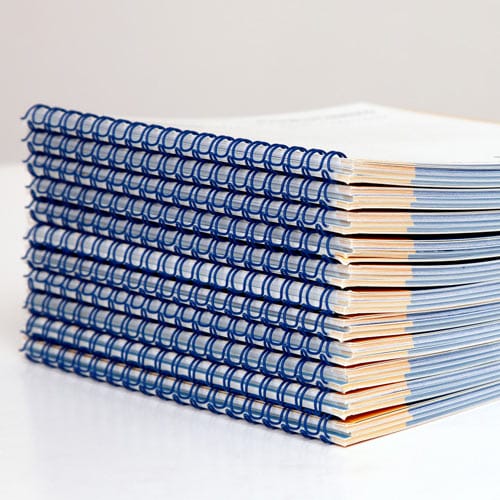
Any booklet a staff member reads while filling out a form — intake instructions, sliding-scale worksheets — needs to stay open on its own. Wire-O and plastic coil both lie flat; saddle stitch and perfect binding don't. Perfect binding vs saddle stitch covers the tradeoff in more depth if you're deciding between the two for a longer document.
Patient education material with icons, arrows, or color-coded sections reads faster for patients with lower health literacy or limited English proficiency. Black-and-white keeps costs down for internal reference guides, but public-facing booklets do better in color.
Grant cycles, open enrollment periods, and screening events all have fixed dates. Confirm current production timelines before you lock a print date to an event — turnaround varies by binding type and page count.
Most community health clinics operate as nonprofits or under a nonprofit umbrella. Ask about nonprofit discount pricing before you finalize a quote — it changes the math on frequent short runs.
Saddle stitch — the everyday patient handout. Works cleanly for booklets up to roughly 64 pages, keeps unit cost low on short runs, and holds up fine for single-visit reads. Use it for screening program guides, new-patient welcome booklets, and single-topic education handouts. Verdict: Buy for anything under 64 pages that a patient reads once or twice.
Wire-O — the reference desk pick. Lies fully flat and folds back on itself, which matters when a front-desk staffer is flipping between pages while a patient waits. Best for intake reference guides, sliding-scale fee tables, and multi-section resource directories. Verdict: Buy for any booklet used open on a desk or counter.
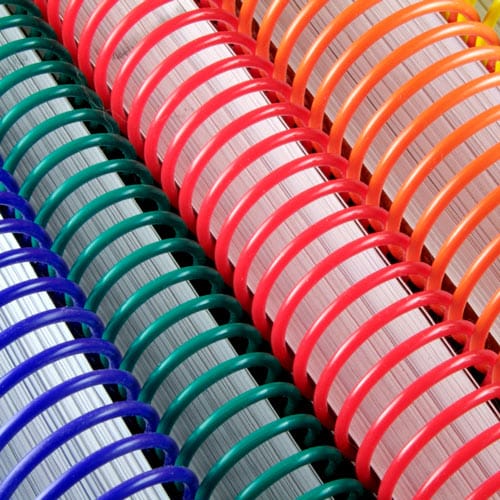
Plastic coil — the budget lie-flat option. Does most of what wire-o does at a lower cost, with a slightly less polished look. Good fit for internal staff manuals or training booklets that don't need to look client-facing. Verdict: Consider when budget matters more than presentation.
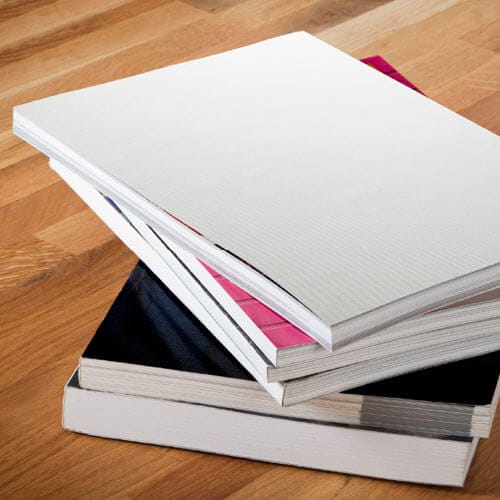
Perfect binding — the annual report format. Gives a booklet a flat spine and a bookstore-quality finish, but only makes sense past roughly 80-100 pages. Fits community health needs assessments, annual impact reports, and multi-program service directories. Verdict: Consider for long-form reports; skip it for anything under 60 pages — the spine won't have enough thickness to look right.
Before locking a page count, run through how to choose booklet size for your project — trim size affects both binding choice and per-copy cost more than most clinics expect.
For a booklet built on a tight nonprofit budget, printing an informational booklet on a budget walks through where the real savings are — and where cutting corners backfires.
| Binding | Best page range | Lies flat | Reprint flexibility | Verdict |
|---|---|---|---|---|
| Saddle stitch | Up to ~64 pages | No | High — low minimums | Buy for patient handouts |
| Wire-O | 20-150 pages | Yes | High | Buy for reference guides |
| Plastic coil | 20-150 pages | Yes | High | Consider for internal use |
| Perfect bound | 80+ pages | No | Moderate | Consider for annual reports |
What’s the best binding for a health clinic booklet under 40 pages?
Saddle stitch is the best binding for a clinic booklet under 40 pages in 2026 — it’s the lowest cost per copy and holds up fine for a single-read patient handout. Reserve wire-o for anything that needs to stay open on a desk.
Is saddle stitch or wire-o better for patient education materials?
Saddle stitch works better for one-time patient handouts, while wire-o is better for reference material staff flip through repeatedly. The deciding factor is whether the booklet needs to lie flat while someone reads it hands-free.
How many copies do you need to order for a clinic booklet run?
There’s no large minimum order requirement, so clinics can order as few copies as a single program or patient list needs. Ordering close to your actual patient count instead of rounding up to a big batch keeps content current and avoids waste.
How much does booklet printing cost for a small clinic?
Cost depends on page count, binding, and color use, so get a current quote based on your specific specs rather than a flat number. Saddle stitch in black-and-white runs cheapest per copy; color and wire-o add cost.
Can nonprofit health clinics get a printing discount?
Nonprofit discount pricing is available — ask about it before finalizing a quote, since most community health clinics qualify. It changes the math meaningfully on frequent short runs.
What paper stock works best for a waiting-room booklet?
A matte or uncoated stock works best for waiting-room booklets in 2026 because it doesn’t glare under exam lighting the way glossy stock does. Coated stock is worth it only for photo-heavy annual reports.
How long does short-run booklet printing take?
Turnaround varies by binding type, page count, and order volume, so confirm current production timelines before locking a print date to an event or grant deadline. Simpler binding like saddle stitch generally moves faster than wire-o or perfect bound jobs.
Is color or black-and-white better for patient booklets?
Color is better for public-facing patient education material, especially anything using icons or color-coded sections for health literacy. Black-and-white is fine for internal staff reference guides where cost matters more than presentation.
The binding decision matters less than the reorder habit. Clinics that treat a booklet as a living document — reprinting 50 to 100 copies every time a program detail changes instead of locking into a 1,000-copy run — end up with more accurate materials and less wasted paper. Booklet printing for health clinics works best as an ongoing small-batch habit, not a once-a-year print event. Publishing Xpress structures its booklet printing around exactly that pattern: no large minimum, binding options built for both single-read handouts and lie-flat reference guides.
© 2026 Publishing Xpress. All Rights Reserved.