July 28, 2026
Method books and instructional sheet music live open on a music stand for an hour at a time, which means the binding choice matters more than it does for a novel. This guide covers what to look for in music book printing for teachers and which binding actually survives a semester of lessons.
A method book that won't stay open costs a teacher more than the print bill. Every time a student has to hold a page down with a metronome or a coffee mug, the lesson slows down, and a spiral or Wire-O book that lies flat pays for itself in saved minutes across a school year.
Teachers ordering their own method books, exercise packets, or theory workbooks are usually printing 10 to 200 copies at a time, not 5,000. That puts music book printing for teachers in the short-run category, where minimums and per-unit cost matter as much as the binding itself. Publishing Xpress prints in that range without forcing a large minimum order, which is the deciding factor for most private studios and school music departments.
This guide is for private instrumental and vocal teachers, school music directors, and method-book authors who need 10 to 300 copies of a practice book, sight-reading packet, or theory workbook printed for students in 2026. If you're producing a single method book for one studio or a small set of exercise packets for a school ensemble, the criteria below apply directly to you.
A method book has to stay open on a stand or a piano rack without a hand holding it. Coil, Wire-O, and spiral formats open to a full 360 degrees and hold that position through repeated page turns, which is exactly what a student flipping between exercises needs. Perfect-bound and saddle-stitched books can work but tend to spring shut unless the page count and spine are matched correctly.
A practice book gets stuffed in a backpack, dropped on a piano bench, and handled by hands still sticky from lunch. Wire-O and plastic coil bindings resist the loose pages and torn staples that saddle stitch develops after a few months of that treatment, and a slightly heavier cover stock adds real life to a book meant for weekly use.
Method books range from a 16-page beginner packet to a 150-page comprehensive method. Saddle stitch tops out around 64 pages before the spine gets bulky; perfect binding needs enough pages to form a real spine, generally 60 or more. Matching binding to page count up front avoids reprinting a batch because the spine looks wrong.
Staff lines, ledger lines, and small articulation marks need sharp black ink on a matte or uncoated stock. Glossy paper throws glare under stand lights and piano lamps, which makes sixteenth notes harder to read at a glance — a real problem mid-performance, not just an aesthetic one.
Teachers order method books around semester starts, recital season, or the first week of a new term, all fixed dates that don't move. A printer that quotes turnaround in days rather than weeks matters more here than it does for a novel with no launch deadline.
A private studio with 15 students doesn't need 500 copies, and a school department reordering a workbook mid-year doesn't want to commit to a warehouse's worth of stock. Print runs that scale down to double digits keep music book printing for teachers affordable at the volumes teachers actually order.
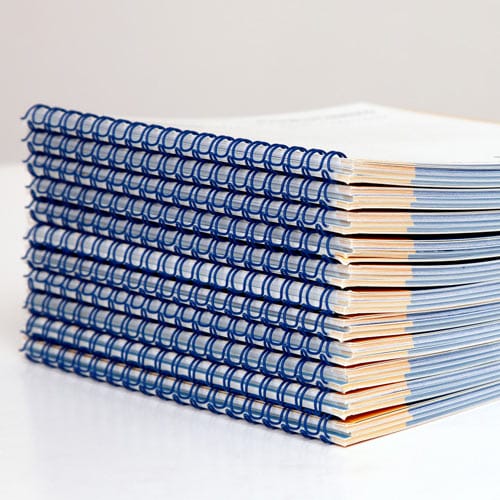
Wire-O binding — the practice-room standard. Wire-O opens to a full 180 degrees and holds flat under a stand's clip without curling, which is the single biggest complaint teachers have about perfect-bound method books. It handles page counts from 20 to well over 150 pages and takes daily handling better than staples. Wire-O printing for training course materials covers the same lay-flat mechanics that make it work for method books. Buy for any method book a student will use weekly for a full term.
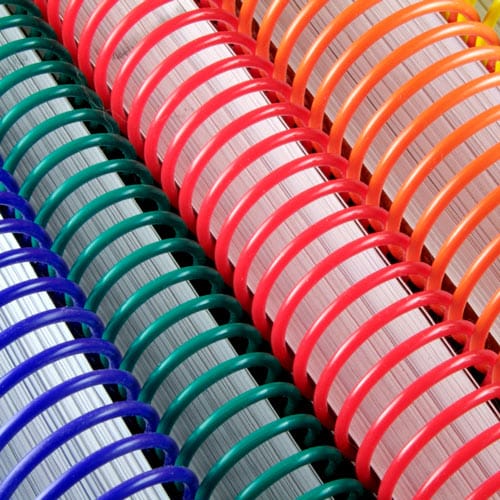
Plastic coil binding — the budget lay-flat option. Coil delivers the same 360-degree flip as Wire-O at a lower per-unit cost, and it's forgiving on page counts under 100. Plastic coil binding for training manuals breaks down the cost and durability tradeoffs versus Wire-O in more detail. Buy for a first method book run where budget matters more than a decade of shelf life.
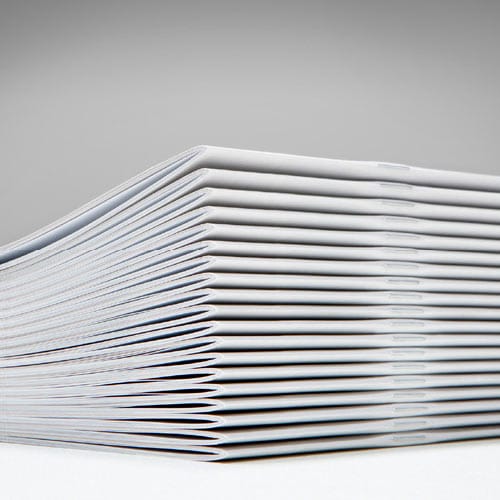
Saddle stitch — the recital handout. Two or three staples through the fold make this the cheapest option per copy, and it works fine for a 16 to 48 page etude packet handed out once a semester. It doesn't hold up to weekly practice-room abuse and the spine won't lie flat past about 40 pages. Consider it for one-off handouts, Skip it for a book students will use all year.
Perfect binding — the polished full method. A squared spine and a printed title on the cover give a 100+ page comprehensive method book a retail look, useful if you're selling the book beyond your own studio. It needs page count to form a real spine and it won't lie flat the way coil or Wire-O does. Buy for a method book you intend to sell or distribute widely; Skip it for a slim practice packet.
| Binding | Lays flat? | Best page count | Durability | 2026 verdict |
|---|---|---|---|---|
| Wire-O | Yes, 180 degrees | 20-150+ pages | High | Buy |
| Plastic coil | Yes, 360 degrees | Up to 100 pages | High | Buy on budget |
| Saddle stitch | No | 16-48 pages | Low | Consider for handouts |
| Perfect bound | No | 60+ pages | Medium | Buy for full retail books |
A useful rule for choosing: coil vs Wire-O binding comes down to how many times a student flips the book open and closed per week — coil edges out on cost, Wire-O edges out on long-term wear.
What’s the best binding for a music method book?
Wire-O binding is the best binding for a music method book in 2026 because it lies flat at 180 degrees on a stand and holds up to weekly practice-room handling. Plastic coil is the budget alternative with similar lay-flat performance.
Is coil binding better than perfect binding for practice books?
Yes, coil binding is better than perfect binding for practice books because it opens flat and doesn’t spring shut mid-lesson. Perfect binding suits longer method books meant to look like a finished retail product instead.
How much does it cost to print a method book for a music studio?
Cost depends on page count, binding, and quantity, but short-run digital printing for 20 to 200 copies stays affordable without a large minimum order in 2026. Coil and saddle stitch run cheaper per copy than Wire-O or perfect binding.
Can I print a method book in black and white to save money?
Yes, black-and-white printing works fine for standard staff notation and keeps per-copy cost down. Reserve color printing for method books with fingering charts, color-coded exercises, or illustrations that need it.
What page count works best for a saddle-stitched exercise packet?
Saddle stitch works best under 48 pages; past that the spine gets bulky and the staples strain. For a full-year method book, Wire-O or coil binding holds up better.
Do I need a large minimum order to print method books?
No, short-run printers handle orders as small as 10 to 20 copies without a large minimum, which fits most private studios and single-classroom orders in 2026.
How long does music book printing take before the semester starts?
Turnaround varies by printer and order size, so confirm the current production and shipping timeline before your semester deadline rather than assuming a standard week count.
Is Wire-O or spiral binding better for a piano method book?
Both lie flat the same way; Wire-O tends to hold its shape longer under repeated flexing, which matters more for a book used every lesson for a full year.
The detail teachers skip most often is cover stock weight, not binding type. A thin cover on a Wire-O or coil book curls at the corners within a month of backpack duty, while a slightly heavier cover stock on the same binding survives a full school year — ask about cover weight before you ask about paper color.
© 2026 Publishing Xpress. All Rights Reserved.