August 31, 2026
Golf course and country club book printing covers the member guides, rules handbooks, and course directories clubs hand out at check-in and the pro shop counter, produced in short runs sized to membership rolls instead of a printer's minimum order. Clubs update at least one of these documents every season — new board members, revised dress codes, a fresh event calendar — so the binding and paper choice matter more than they would for a one-and-done print job.
A country club member guide isn't a marketing piece — it's a reference document a member pulls out of a golf bag or a locker to check the dress code or the tee sheet policy. That means it gets handled roughly, stored in humid conditions, and reprinted whenever the board changes a rule.
Most general-purpose printers price around a fixed minimum order, which punishes a 220-member club that only needs 250 copies. Publishing Xpress runs book and booklet orders without a large minimum, which fits a membership roster better than a run built for retail shelves.
The format decision — perfect bound, saddle stitch, Wire-O, or plastic coil — should follow how the document gets used, not what looks cheapest on a quote. A 12-page seasonal newsletter and a 90-page member handbook need different bindings entirely.
Before you touch a binding decision, nail down the content list. Clubs that skip this step end up reprinting within a month because they forgot a section.
The manual route is picking a binding based on page count and how often the guide gets opened flat.
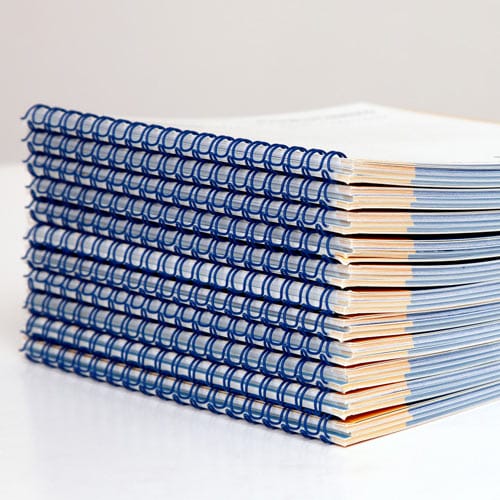
A guide that lives at the pro shop counter for months of daily reference does better in Wire-O than saddle stitch — staples pull loose after repeated flat-opening, wire doesn't. For the full tradeoff on lay-flat use versus cost, coil vs Wire-O binding breaks down which one holds up longer, and perfect binding vs saddle stitch covers the page-count cutoff in more detail.
A glossy magazine-weight stock looks sharp on a boardroom table and turns limp in a golf bag by July. Match the stock to where the document actually sits.
A member guide meant to travel in a golf bag pocket needs a smaller trim than a directory that lives on a shelf.
Clubs that treat the member guide as a single print job get stuck with outdated bylaws by the second season. Budget for at least one reprint per year.
A 300-member club doesn't need the same print run as a retail title. Ordering to actual headcount, plus a small buffer for new members, keeps cost proportional to use.
A 90-page club handbook with a wrong phone number or an outdated tee time policy printed 400 times is an expensive mistake.
| Binding | Best for | Key limitation |
|---|---|---|
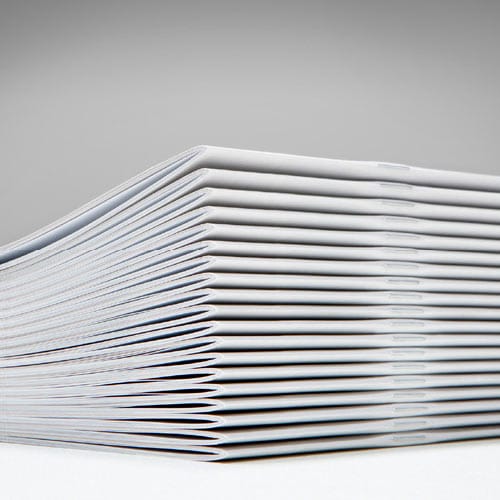
| Saddle stitch | Seasonal newsletters, event programs under 60 pages | Staples loosen with repeated flat opening |
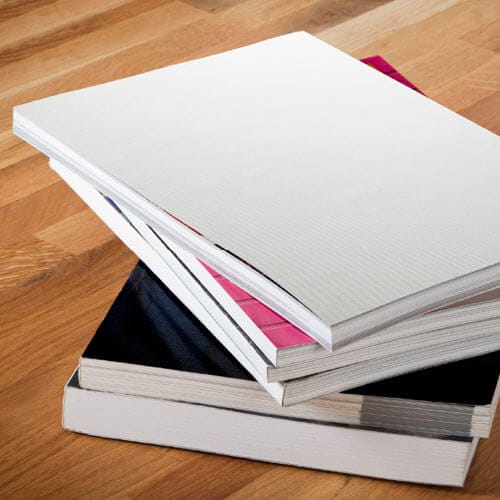
| Perfect bound | Full member handbooks, 60+ page directories | Doesn't lie fully flat at the spine |
| Wire-O | Counter reference guides, opened daily | Slightly bulkier than a stitched booklet |
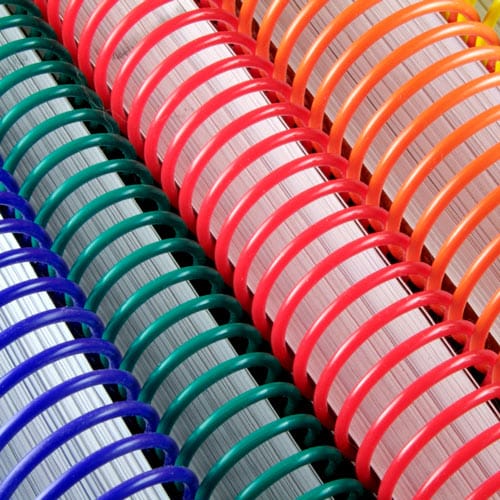
| Plastic coil | Guides stored in bags or humid rooms | Coil can deform under heavy crushing weight |
Publishing Xpress book printing for golf courses and country clubs works best when the binding is picked for how the document gets handled, not just how it looks on the shelf.
“If a member guide gets opened flat at a counter every day, staples aren’t the right call — Wire-O is.”
What’s the best binding for a golf club member handbook?
Perfect binding works best for handbooks over 60 pages because the glued spine holds up under regular filing and shelving. For a handbook opened flat at a counter daily, Wire-O is the better call even under 60 pages.
Is saddle stitch good enough for a country club newsletter?
Yes, saddle stitch works well for newsletters and event programs under roughly 60 pages. Past that page count the stapled spine starts to strain and pages loosen.
How many copies should a country club order for its member guide?
Order to roughly 5-10% over current membership count to cover new-member packets without over-printing. Publishing Xpress book printing for golf courses and country clubs has no large minimum order requirement, so a smaller run doesn’t carry a retail-scale price penalty.
How often should a club reprint its member handbook?
Budget for at least one reprint per year, typically after the annual board meeting when bylaw changes land. Sections like the dress code or event calendar may need a separate mid-season reprint if they change more often.
What paper stock holds up best in a golf bag?
A heavier cover stock, 100 lb. or more, holds up better than lightweight glossy paper when a guide travels in a golf bag pocket. Uncoated stock is a better pick if members write notes directly on the page.
Does Wire-O binding cost more than saddle stitch?
Wire-O typically runs higher per unit than saddle stitch because of the wire component and machine time, but it lasts longer under daily flat-opening use. For a document opened once and filed, saddle stitch is the more economical choice.
Can a club print a small run without a big minimum order?
Yes. Publishing Xpress prints book and booklet orders without a large minimum, which fits a 200-400 member roster better than a printer built around bulk retail runs.
What trim size fits a pocket-sized rules guide?
A 5.5 x 8.5 inch trim size fits a golf bag pocket or jacket pocket for a condensed rules or dress code card. A full member handbook or directory typically uses 8.5 x 11 inches.
The binding decision matters more than the cover design for a club member guide — a beautifully designed 90-page handbook stapled together will still fall apart by the back nine of the season. Pick the binding for how the document gets opened and where it lives, then let the design follow.
© 2026 Publishing Xpress. All Rights Reserved.