July 26, 2026
Turning a 200-page Word document into a bound dissertation your committee will actually accept takes more than hitting print at the campus library. This guide covers what to look for in thesis printing and binding, which binding types fit which programs, and which options to skip.
Most graduate programs will not accept a stapled office copy as your final deposit. Format review committees check margins, spine construction, and paper weight before they sign off, and a rejected binding job means reprinting under deadline pressure. Thesis printing and binding done right the first time saves you a trip back to the print shop the week of your defense.
The stakes are different from a novel or a marketing booklet. A dissertation has to survive a library shelf for decades, satisfy a specific binding spec from your graduate school, and often needs multiple formats — a soft flat-lay copy for committee markup and a hardcover copy for archival deposit. One binding type rarely covers both jobs.
This guide is for doctoral candidates, master's thesis writers, and graduate coordinators ordering choosing a book binding type for a defense packet, committee copies, or a final library deposit. If you're printing a single copy for your own shelf or five copies for a committee, you're in the right place — this is not about print runs of hundreds.
Check your graduate school's formatting guide before you order anything — some programs specify Wire-O or spiral for the working draft and perfect binding for the archival copy, others leave it open. Ordering the wrong binding means resubmitting after your defense, which nobody wants to do in the final weeks of a 2026 semester.
A dissertation that sits in a university archive for 30-plus years needs heavier, acid-free stock than a everyday office print job. Thin 20 lb. copier paper yellows and gets brittle; a 24 lb. or heavier text stock holds up far better under long-term storage.
Any bound edge eats into your margin — perfect binding and Wire-O both need extra clearance on the gutter side or your text gets swallowed near the spine. Most graduate formatting guides require a 1.25-inch binding-side margin specifically because of this.
You likely need one archive copy, maybe three to five committee copies — not 50. Printers built around retail print runs often carry minimums that don't make sense for a single dissertation, so confirm you can order in small increments before you commit.
Work backward from your defense date and submission deadline, and build in buffer time for a reprint if a page comes back misaligned. Ordering the week of your defense leaves zero room for error.
Soft cover perfect binding works for personal copies, but many university libraries expect a hardcover or heavy laminated cover for the deposited copy. Check your program's specific requirement before you finalize the cover stock.
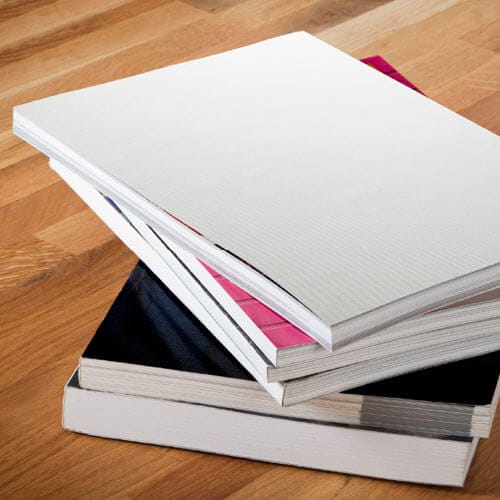
Perfect Bound Printing — the library-shelf pick. This is the standard format graduate libraries expect for a bound dissertation: a flat spine, glued signature, and a cover that reads like a real book on a shelf. It handles dissertations well past 150 pages and gives you a clean spine for a printed title. If your program requires an archival deposit copy, this is the hardcover thesis edition format to lock in. Buy for the final archive copy.
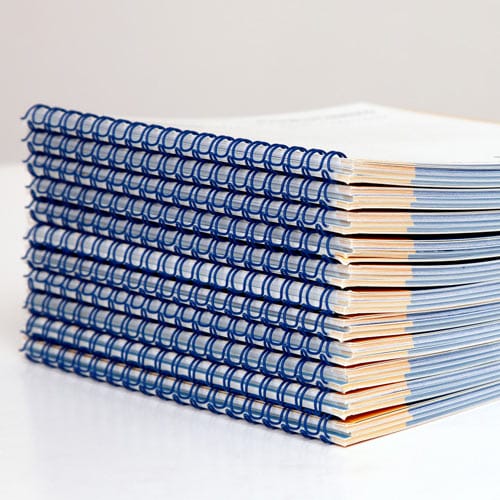
Wire-O Printing — the flat-lay favorite. Committee members marking up a draft need pages that lie fully flat and turn without cracking the spine — Wire-O does exactly that. It's the closest thing to a working notebook for a document your advisors will annotate line by line. Choose this over coil vs Wire-O binding when durability matters more than cost. Buy for committee review copies.
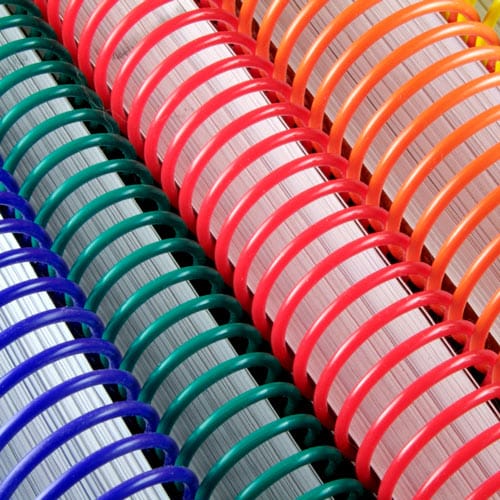
Plastic Coil Printing — the budget workhorse. Coil binding costs less than Wire-O and still lies flat, but the plastic spine is less durable over years of shelf storage and some formatting guides flag it as non-archival. It's a solid choice for your own personal working copy or a backup draft. Consider for personal copies, Skip for the official deposit unless your program explicitly allows it.
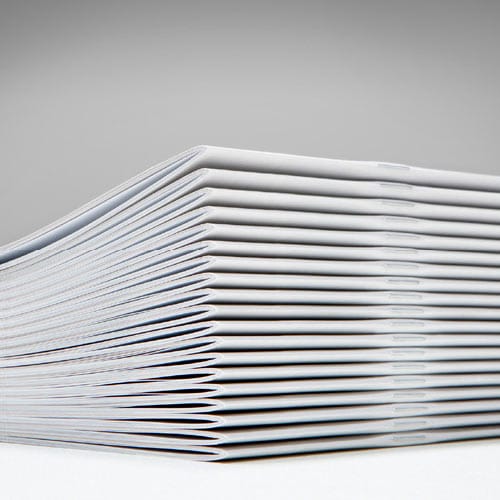
Saddle Stitch Printing — the one to skip for most dissertations. Saddle stitching folds and staples through the spine, which caps practical page count at roughly 60 pages before the spine gets too thick to fold flat. A 40-page master's thesis condensed to a slim booklet could work, but a 200-page doctoral dissertation cannot. Skip for anything past a short-form thesis.
"A perfect-bound archive copy and a Wire-O committee draft are two different jobs — don't try to make one binding do both."
| Binding | Lies flat? | Practical page range | Best for | Verdict |
|---|---|---|---|---|
| Perfect Bound Printing | No | 60 to 800+ pages | Library/archive deposit | Buy |
| Wire-O Printing | Yes | Up to roughly 400 pages | Committee markup copies | Buy |
| Plastic Coil Printing | Yes | Up to roughly 300 pages | Personal working drafts | Consider |
| Saddle Stitch Printing | No | Up to ~60 pages | Short-form theses only | Skip (for full dissertations) |
What is the best binding for a dissertation in 2026?
Perfect Bound Printing is the standard choice for the final archival deposit copy in 2026, while Wire-O binding is better for committee draft copies that need to lie flat for markup.
Does my university require a specific thesis binding type?
Most graduate schools publish a formatting guide specifying binding, margin, and paper requirements — check that document before ordering, since requirements vary by program.
Can I print just one bound copy of my dissertation?
Yes. Printers without large minimum order requirements let you print a single archive copy or a small batch of three to five committee copies without paying for an unwanted print run.
Is saddle stitch binding okay for a thesis?
Saddle stitch only works well under roughly 60 pages, so it fits a short master’s thesis but not a full doctoral dissertation running past 150 pages.
What paper weight should I use for a dissertation?
A 24 lb. or heavier text-weight stock holds up better over decades of archive storage than standard 20 lb. copier paper, which yellows and gets brittle faster.
How much margin does a bound dissertation need on the spine side?
Most graduate formatting guides require roughly a 1.25-inch binding-side margin to keep text from disappearing into the gutter once the pages are bound.
Should my thesis be hardcover or soft cover?
Personal and committee copies can stay soft cover, but check whether your library expects a hardcover or heavy laminated cover for the official deposit copy before you finalize your order.
How far in advance of my defense should I order printing?
Order with enough buffer to catch and reprint a misaligned page before your defense date — ordering during defense week leaves no room to fix an error.
The binding requirement that trips up the most graduate students isn't the cover — it's the gutter margin. A dissertation formatted with standard 1-inch margins on all sides looks fine on screen and then loses a half-inch of text into the spine the moment it's perfect bound. Check your binding-side margin against your program's guide before you export your final PDF, not after the first copy comes back from the printer.
© 2026 Publishing Xpress. All Rights Reserved.