July 22, 2026
A book launch checklist for 2026 needs a real timeline, not a vague to-do list — this guide gives you the exact order of operations from final files to launch day, plus where printing and binding decisions fit in.
Most self-published authors treat the launch as a marketing problem. It's a logistics problem first. If your files aren't print-ready 12 weeks out, nothing downstream — reviews, press, an actual launch date — has a fixed point to build from.
A book launch checklist for 2026 has to account for print lead times, not just social media posts. Miss the review-copy window by two weeks and you lose the pre-launch reviews that drive first-week sales. Publishing Xpress sees this pattern constantly: authors nail the writing and the cover, then blow the timeline because printing got treated as an afterthought.
This is the step that sets every other deadline. If your interior file has the wrong margins or your cover doesn't account for bleed, the printer sends it back and you lose a week you don't have. Export a final PDF with embedded fonts, correct trim size, and full bleed on the cover.
Common mistake: sending a Word document instead of a flattened, print-ready PDF. Printers can convert it, but you lose control over pagination and font substitution — fix it before you submit, not after a proof comes back wrong.
A physical proof catches problems a screen never will — spine text that's off-center, paper stock that's too thin for your cover weight, color that shifts from what you expected. Order the proof first, approve it, then place your review-copy run.
Send those copies out with a follow-up email 2 weeks after they arrive. If book reviews before your launch haven't started landing by week 6, you're behind — chase them, don't wait.
Common mistake: ordering 5 review copies when you have 20 reviewers lined up. Order 10-15% more than your list size — some will get lost or arrive damaged.
Your ISBN has to be on the file before the final print run, not added after. If you're self-publishing under your own name or a pen name, this is also when you finalize how that name appears on the cover and copyright page.
Common mistake: registering the ISBN after the cover file is finalized, which means resizing the barcode area and resubmitting files — a fixable but avoidable delay.
Media outlets and larger book bloggers often need 6-8 weeks lead time to read and publish a review before your on-sale date. Smaller reviewers can work faster, but don't count on it.
Pair the physical copy with a one-page media kit: your bio, a short synopsis, and high-res cover art. Reviewers who ask for a digital copy first should get one within 24 hours — momentum matters more than perfection here.
A reviewer or journalist who searches your name and finds nothing will move on. You don't need a full site, just a landing page with your book cover, a buy link, and a way to contact you.
If you haven't started this, build an author platform before you send a single review copy — it's the difference between a reviewer following up and a reviewer forgetting your name by Friday.
Common mistake: launching a website the same week as the book. Give search engines and social platforms at least a month to index it.
By now the proof is approved and pre-orders or reviewer feedback have told you roughly how many copies you need for launch. This is when you commit to your full print run and final binding choice.
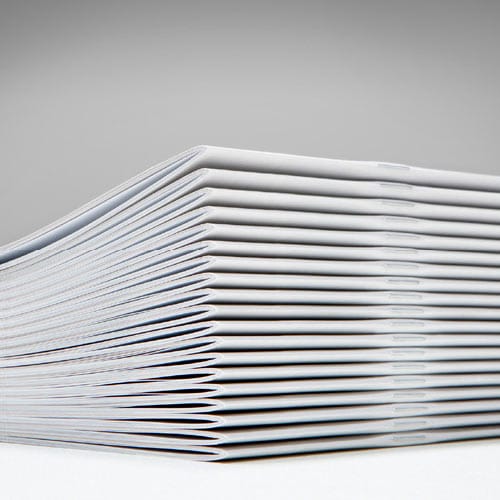
Perfect binding suits novels and nonfiction over 90-100 pages and gives you a printed spine for retail display. Saddle stitch works for shorter booklets under 60 pages but won't hold a spine title. Buy perfect binding for anything you plan to sell in stores; skip it for anything under 80 pages — the spine will look too thin to print legibly.
Common mistake: ordering the exact number of pre-orders with zero buffer. Print 10% over your committed count for signings, giveaways, and damaged-copy replacements.
Your press release goes out once the on-sale date, price, and format are locked — not before. Local papers, genre-specific outlets, and niche podcasts are more realistic targets than national media for a first-time self-published title.
Common mistake: leading with your life story instead of the book's hook. Editors skim the first line — put the reason someone should care about the book there, not your bio.
Confirm your online listing is live, your local bookstore consignment (if any) has copies in hand, and your launch event — virtual or in person — has a working link or address posted everywhere you've promoted it.
Common mistake: assuming the retailer listing went live automatically. Check it yourself 5-7 days out; broken buy links kill launch-week momentum fast.
Once your file and binding are decided, the last variable is who prints it and how fast. If your run is under a few hundred copies, compare options built for low volume book orders before committing to a print quantity — minimums and turnaround vary more than most first-time authors expect.
What’s the best book launch checklist timeline for 2026?
Start 12 weeks out by locking your print-ready files, order review copies at 8-10 weeks, send your press release at 3 weeks, and confirm distribution 1 week before launch. Compressing this timeline is the most common cause of delayed launch dates in 2026.
How many review copies should I order before launch?
Order 10-15% more copies than your reviewer list size to cover lost or damaged shipments. If you have 20 reviewers, order 22-23 copies rather than exactly 20.
Is perfect binding better than saddle stitch for a launch print run?
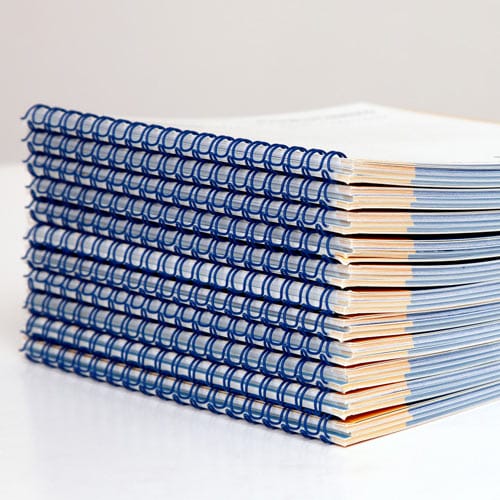
Perfect binding is better for anything over 90-100 pages because it gives you a printed spine for retail display. Under 80 pages, saddle stitch or wire-o binding looks cleaner since a perfect-bound spine that thin is hard to read.
How much does it cost to print a short run of books for a launch?
Cost depends on page count, binding, and paper stock, so get a direct quote for your specific trim size and page count. Short-run digital printing avoids the large minimums that offset printing requires, which matters most for a first launch run.
When should I send my press release before a book launch?
Send it about 3 weeks before your on-sale date, after the date, price, and format are finalized. Sending it earlier means editors get pitched with details that might still change.
Do I need an ISBN before I print my book?
Yes, register your ISBN and generate the barcode before your final print files go to the printer. Adding it after the cover file is finalized means resizing the barcode area and resubmitting.
How long does short-run book printing take before a launch?
Turnaround varies by printer and binding type, so confirm current production time when you request a quote. Building an 8-10 week buffer for review copies covers most standard short-run turnaround windows in 2026.
The launch step authors skip most often isn't marketing — it's the second proof round. A first proof catches obvious errors; a second proof, ordered after you've fixed the first round of mistakes, catches the ones you missed because you were staring at the same page for weeks. Build that second proof into your 12-week timeline from day one, and your launch date stops depending on hope.
© 2026 Publishing Xpress. All Rights Reserved.