August 25, 2026
Real estate training manuals get cracked open flat at the closing table, thrown in a tote bag between open houses, and rebuilt every time the MLS changes its forms — the binding has to survive that, not just look good on a shelf. Spiral bound printing beats perfect bound and saddle stitch for real estate training manuals in 2026, and this breaks down which binding wins for which use case, with a straight verdict on each.
A real estate training manual isn't a novel. It's a working document that gets flipped open flat during a role-play drill, marked up with a highlighter during an objection-handling session, and reprinted the moment your state changes a disclosure requirement or your MLS updates its forms. Perfect bound and saddle stitch were built for reading start to finish, not for that kind of daily handling.
Spiral bound training manuals solve the two problems that actually matter for a brokerage: the pages rotate a full 360 degrees so an agent can lay the manual flat on a desk mid-presentation, and a coil-bound book updates page by page instead of forcing a full reprint every quarter. That's the difference between a manual agents actually open in 2026 and one that sits in a filing cabinet drawer.
Training manuals get judged on four things a novel never has to survive: lay-flat performance during live use, how many pages the binding holds before the spine gives out, how easily you can swap in updated pages without reprinting the whole book, and cost at short-run volumes — most brokerages order 15 to 75 copies at a time, not 500.
Publishing Xpress prints all four binding options — perfect bound, saddle stitch, Wire-O, and plastic coil — with no large minimum order requirement, so this ranking isn't about which format is easiest to sell. It's about which binding survives a full onboarding season without falling apart and which one just photographs fine sitting on a shelf.
Here's how the four binding options stack up for real estate training manuals in 2026, ranked from best fit to worst.
“A training manual that can’t lie flat on a conference table doesn’t get read — it gets closed.”
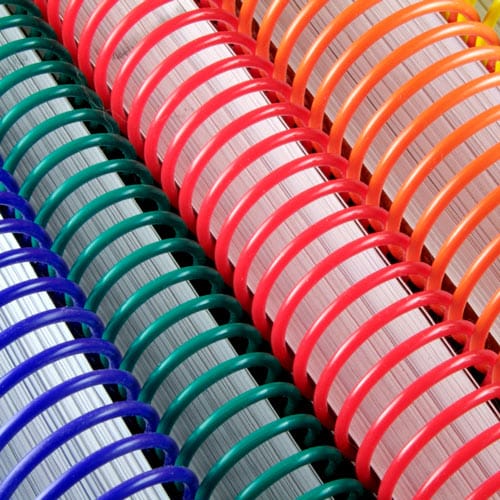
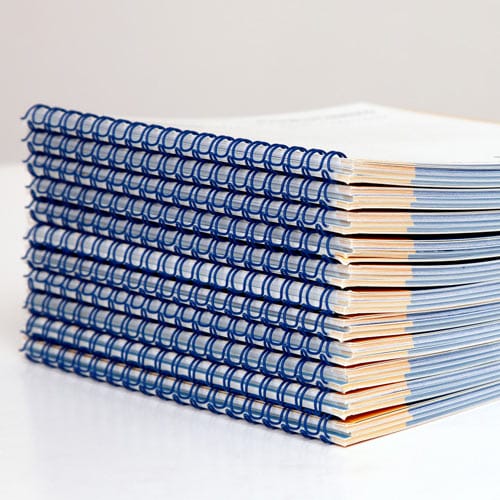
The coil threads through punched holes along the spine and lets every page rotate a full 360 degrees, so the manual folds flat, wraps into a tube for a car console, or lies open on a desk during a script drill without anyone holding it down. Coil pitch runs from roughly a quarter inch for a 20-page addendum packet up to two inches for a 300-plus-page compliance binder, so one binding style covers a single-topic handout and a full annual manual. It's also the easiest format to reprint a handful of pages into when your brokerage's fair housing language changes mid-year. Buy — this is the default for a working real estate training manual.
Wire-O binding for training course materials uses a double-loop wire instead of a plastic coil, so the spine sits square on a shelf rather than showing the slight taper coil binding leaves after months of use. The closed-loop wire also won't slip pages off the spine the way a stretched coil occasionally does on a manual that's been opened hundreds of times. It's a strong choice for the onboarding kit you hand a new agent on day one, where first impressions matter as much as durability. Buy — pick this over coil when the manual represents the brand, not just internal reference material.
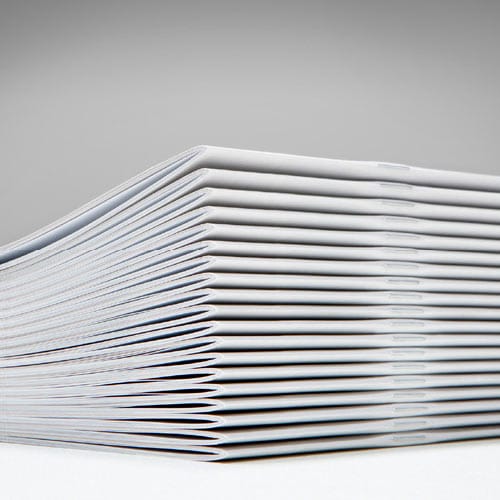
Staples fold through the center of the spine, which caps a booklet at roughly 60 to 92 pages before the spine bulges and refuses to lie flat. That's plenty for a 20-page fair housing refresher passed out at a monthly sales meeting, but it's the wrong call for a 150-page annual training manual that agents study cover to cover. Saddle stitch also can't take tabs or dividers, which most full manuals need for quick section lookup. Hold — use it for short single-topic handouts, skip it for the manual itself.
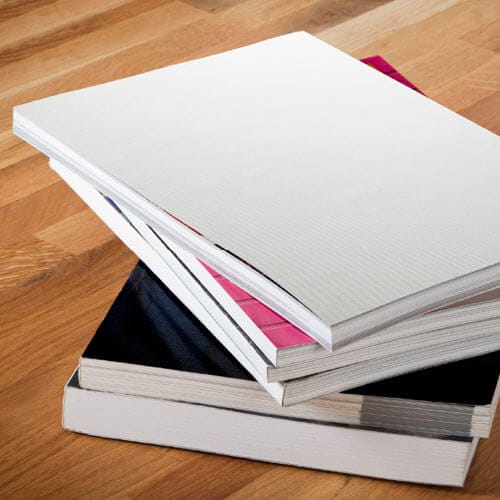
The glued spine gives perfect bound its bookstore look, but that same glue means the book wants to spring shut the second you let go, and pages near the spine lose usable margin once the block gets past a half inch thick. It reads well for a company history or a leadership bio insert, but it's a poor match for something an agent needs to study open-handed while filling out a worksheet. Skip — perfect bound doesn't hold up to training-manual use.
Learning to keep a training manual flat when it's open matters most for a manual that lives in a car console or a tote bag for six months straight. Pairing standard plastic coil with a cover stock heavier than the interior pages stops the punch holes from tearing out after repeated open-close cycles on the road. Consider — worth the small upgrade for manuals that leave the office more than they stay in it.
| Binding | Lay-flat? | Page capacity | Best for | Verdict |
|---|---|---|---|---|
| Plastic Coil | Yes, 360° | ~20 to 300+ pages | Full manuals updated every season | Buy |
| Wire-O | Yes, 360° | ~20 to 275 pages | Onboarding kits, polished handouts | Buy |
| Saddle Stitch | No | Up to ~60–92 pages | Short single-topic handouts | Hold |
| Perfect Bound | No | 40+ pages | Reference books, not working manuals | Skip |
If you're stuck deciding between the two lay-flat options, coil vs. Wire-O binding covers pitch sizes and cover stock pairings in more detail than a comparison table can.
What’s the best binding for real estate training manuals?
Plastic coil binding is the best choice for most real estate training manuals in 2026 because it lies flat during role-play and updates page by page. Wire-O is a close second when you want a squarer spine for onboarding kits.
Is spiral binding the same as coil binding?
Yes — spiral bound is the common name for plastic coil binding, where a continuous plastic coil threads through punched holes along the spine. Wire-O uses a similar mechanism but with a double-loop metal wire instead of plastic.
How many pages can a spiral bound training manual hold?
Plastic coil handles roughly 20 to 300-plus pages depending on the coil pitch, while saddle stitch tops out around 60 to 92 pages before the spine won’t lie flat. Move to coil once a manual runs past a single staple-friendly booklet.
Is Wire-O binding better than plastic coil for training manuals?
Wire-O looks more polished on a shelf and won’t stretch the way plastic coil can after heavy use, but plastic coil is usually the more economical option for manuals reprinted every season. Pick Wire-O for onboarding kits handed to new agents, coil for internal working manuals.
How much does it cost to print real estate training manuals in 2026?
Cost depends on page count, binding type, and cover stock, so get a direct quote based on your page count and run size. Short runs of 15 to 75 copies are typical for brokerage training manuals and don’t require a large minimum order.
Can you reprint just a few pages when real estate rules change?
With coil or Wire-O binding, you can reprint updated sections without redoing the entire manual, unlike perfect bound books where the whole block is glued together. That flexibility is the main reason brokerages avoid perfect bound for compliance-heavy manuals.
What paper weight works best for training manual covers?
A cover stock in the 65 lb to 80 lb range holds up to daily handling far better than using the same weight as the interior text pages. Interior pages typically run 20 lb to 24 lb text weight for easy highlighting and note-taking.
Can you add tabs or dividers to a coil bound training manual?
Yes — tabbed sections are one of the main reasons brokerages choose coil or Wire-O over saddle stitch, since mechanical binding accommodates tab stock without jamming the spine. Perfect bound books can’t take tabs the same way because the glued spine doesn’t flex around them.
Order a heavier cover stock than you think you need. A training manual that lives in a car console or gets passed hand to hand at a Monday sales meeting will tear at the coil holes within a season if the cover matches the weight of the interior pages — ask for a cover stock in the 65 lb to 80 lb range instead, and the coil holes hold through a full year of onboarding cycles rather than a single quarter.
© 2026 Publishing Xpress. All Rights Reserved.