November 2, 2026
Best overall for short booklets: saddle stitch. Best for write-in workbooks: plastic coil. Best for longer, shelf-ready guides: perfect binding. Publishing Xpress is a good fit for print on demand booklet projects ordered in batches of at least 25 copies—not single-copy fulfillment; this 2026 guide compares its four binding services so you can choose by page count and reader use.
A search for a print on demand booklet service brings together two different needs: printing copies after individual orders arrive, and printing a small batch when you need it. Those are different ordering models. A short-run printer is not automatically a single-copy fulfillment service.
Before choosing a printer in 2026, decide whether you need copies delivered together for an event, class, or organization—or a separate copy produced for each buyer. Then choose the binding. A booklet that looks right but will not stay open for exercises is the wrong format.
This guide ranks four booklet printing services by use case, not four competing companies. Each binding solves a different problem, and none wins every project.
Use these criteria before comparing quotes or uploading a file:
These criteria keep the decision practical. A training booklet needs usable writing space; a conference program needs clear sequencing; a longer reference guide needs a binding suited to its thickness.
The 2026 ranking below starts with the default for a conventional short booklet. Move down the table when your readers need a different opening behavior or spine style.
| Rank and service | Best for | Standout feature | Key limitation |
|---|---|---|---|
| 1. Saddle Stitch Printing | Short event programs and informational booklets | Folded pages secured through the fold | Maximum of 80 pages |
| 2. Plastic Coil Printing | Write-in workbooks and hands-on training | Flexible spiral lets pages turn back | Binding holes require clear inside margins |
| 3. Perfect Bound Printing | Longer guides and catalog-style booklets | Glued, squared spine | Does not naturally lie flat |
| 4. Wire-o Printing | Tabletop presentation and reference booklets | Double-loop wire supports flat opening | Exposed wire can bend if crushed |
All four services belong to the same short-run ordering model. Changing the binding does not remove the minimum order requirement or create automatic fulfillment of individual customer orders.
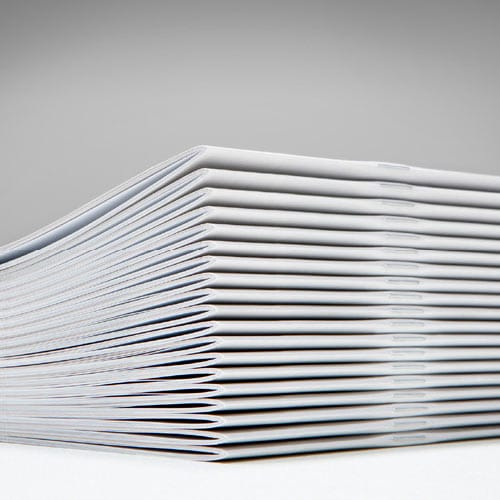
Saddle stitch folds printed sheets together and secures them through the fold with staples. It is the natural starting point for event programs, short informational guides, zines, and compact catalogs. Readers get a familiar booklet without an exposed coil or a glued spine.
Best for: short booklets meant to be read, carried, and handed out. Choose this format when the content is brief enough for folded construction and readers do not need to fold every page fully behind the cover.
Count all pages, including intentional blanks, before finalizing the layout. Confirm how the cover is counted on your order rather than assuming the interior PDF and finished booklet use the same total.
For a 2026 event program, proof names, running order, sponsor details, and dates separately from the design. A visually correct proof can still contain an outdated schedule. See the guide to laying out a saddle-stitch booklet for print before exporting the final file.
Verdict: Buy saddle stitch for a conventional short booklet within the page limit; skip it when you need more pages or fold-back use.
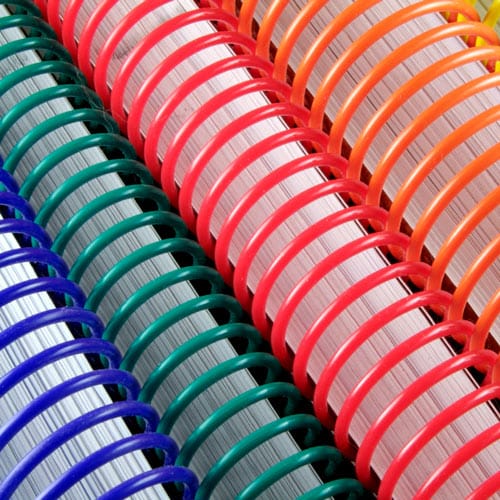
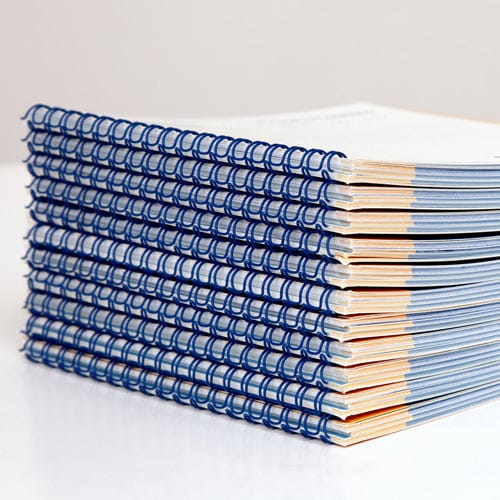
Plastic coil binding threads a flexible spiral through holes along the page edge. Pages turn around the coil and fold behind the booklet, making this format useful when readers need space to write or work beside the document.
Best for: workbooks, exercise booklets, and hands-on training guides. Choose plastic coil when the booklet is a tool readers will use on a desk rather than a publication they will simply read through.
Design the inside margins around the binding before you build worksheets. Keep answer boxes, captions, and diagrams clear of the punched area; moving them later can force changes throughout the document.
Also check the writing experience. A worksheet that looks spacious on a monitor can leave too little room for handwritten answers. Print a draft at its intended finished size and complete an exercise yourself before approving the production file.
Verdict: Buy plastic coil when writing access and fold-back pages matter more than a conventional booklet spine.
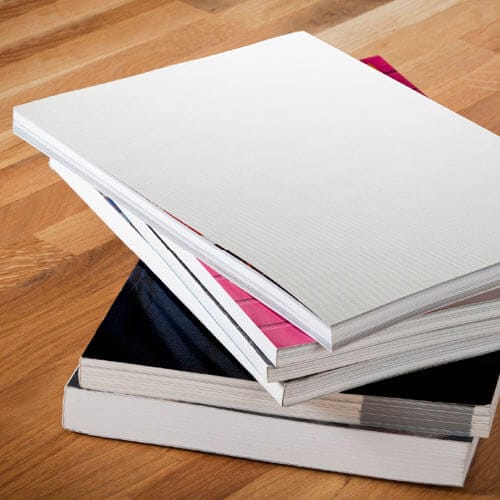
Perfect binding secures the page block with adhesive inside a wraparound cover. It creates the squared spine associated with paperback books and gives a longer guide a different structure from a folded booklet.
Best for: longer reference guides, catalogs, and reading-focused publications. Choose perfect binding when the document needs a book-like format and readers do not need it to remain flat without support.
Confirm that your page count and chosen paper produce a suitable spine before finishing the cover. Do not borrow a spine measurement from another booklet, even when its page count looks similar. Paper thickness affects the result.
Review any spread that crosses the center closely. Text or an important face placed across the bound edge is harder to read or see. Keep essential information on an individual page rather than relying on an uninterrupted spread.
Verdict: Buy perfect binding for a longer reading booklet; skip it for exercises that need an unsupported flat opening.
Wire-O binding uses double-loop wire through holes along the page edge. It lets a booklet open flat and turn back, making it useful for presentation materials and reference documents that stay open on a table.
Best for: presentation booklets and desk-based reference guides. Choose Wire-O when you want flat opening with a double-loop wire structure rather than a plastic spiral.
Check the booklet in its actual reading position. A presentation guide held upright has different needs from one laid beside a speaker's notes. Keep section labels visible and place recurring reference information consistently.
Plastic coil and Wire-O both support flat opening, so appearance alone should not settle the choice. Consider handling, storage, and whether the booklet will travel loose in a bag or remain on a desk.
Verdict: Buy Wire-O for tabletop presentation and reference use; skip it when rough handling makes exposed wire a poor fit.
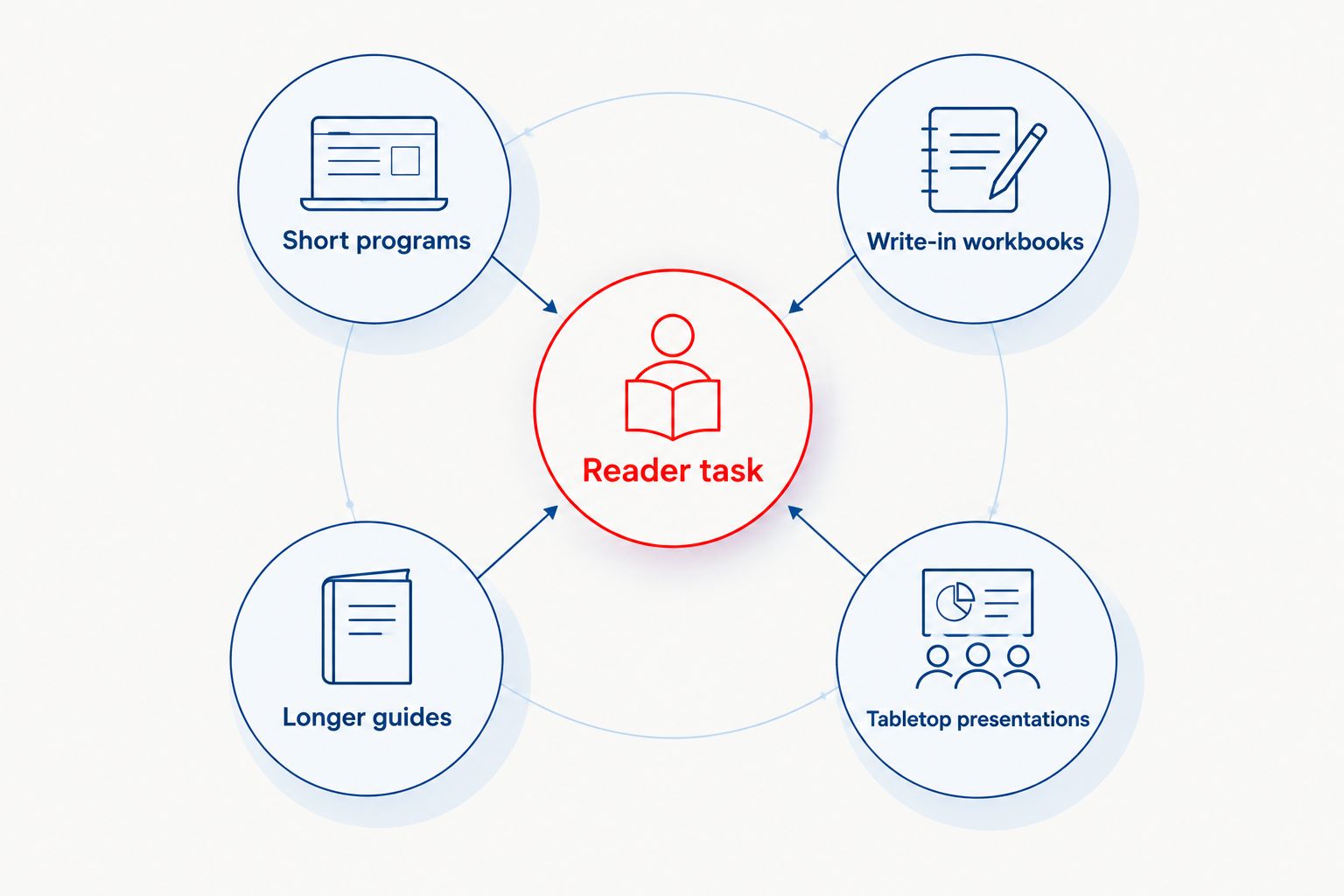
Choose the reader's main task before choosing the cover finish. Use short programs, write-in workbooks, longer guides, and tabletop presentations as the four starting points; each leads to a different binding recommendation above.
Once the binding is settled, review the matching service specifications before completing your layout. Publishing Xpress offers these four booklet printing formats; choose the structure that supports the content rather than treating the bindings as interchangeable.
Before placing a 2026 print on demand booklet order, settle the specifications in this sequence:
Keep the approved PDF separate from working drafts. Give it a clear version name so a later reorder does not accidentally use an earlier file.
The ranking prioritizes a conventional short booklet first, then separates writing, longer reading, and presentation needs. It uses binding construction, reader handling, layout requirements, and the stated order and page limits—not unverified quality scores or claims about competing printers.
No binding wins on every criterion. Saddle stitch is the default only when the booklet fits its construction and page limit.
Choose Publishing Xpress for short-run booklet printing when you need at least 25 copies delivered as a batch. Start with saddle stitch for a short program or informational booklet. Move to plastic coil for writing, perfect binding for a longer reading guide, or Wire-O for tabletop presentation use.
If your requirement is individual copies produced and sent after each customer purchase, choose a provider that explicitly supports that fulfillment model. Do not treat a short-run minimum as equivalent to single-copy print on demand.
What’s the best print on demand booklet binding for an event program?
Saddle stitch is the default choice for a short event program. Publishing Xpress offers saddle-stitch booklets up to 80 pages; confirm the finished page count before laying out the file.
Can I order just one booklet from Publishing Xpress?
No. Publishing Xpress has a minimum print quantity of 25 copies, so it fits batch orders rather than a single-copy requirement.
Is short-run booklet printing the same as print on demand?
No. Short-run printing produces a small batch, while single-copy print on demand produces a copy when an order arrives. Confirm both the minimum quantity and the fulfillment arrangement before choosing a service.
Which booklet binding is best for writing exercises?
Plastic coil is a strong choice for writing exercises because pages open flat and fold back. Keep writing areas clear of the punched binding edge.
Can a perfect-bound booklet lie flat for a workshop?
Perfect binding does not naturally lie flat without support. Choose plastic coil or Wire-O when participants need an open booklet beside their work.
How long does a booklet order take in 2026?
Publishing Xpress ships standard orders in 4 to 6 days after proof approval. Allow separate time for preparing files, correcting the proof, and delivery transit.
Can I saddle stitch a booklet longer than 80 pages?
Not through the saddle-stitch service described here, which has an 80-page maximum. Ask about a different binding and confirm its suitability for your page count and paper.
Test the booklet as an object, not just a PDF. Print a draft at finished size, hold it as a reader would, and try its main task: find a session, follow an instruction, or write an answer. That simple check exposes cramped layouts before you approve a batch.
© 2026 Publishing Xpress. All Rights Reserved.