August 24, 2026
Every co-working space and incubator eventually needs a printed member directory — a leave-behind at the front desk, a handout at demo day, a reference binder for the community manager. The binding you pick decides whether that directory survives a quarterly member turnover or falls apart after one printing cycle.
A co-working space directory isn't a novel you print once and shelve. Startups move in, cohorts graduate, contact info changes — and the print format either absorbs that churn or forces a full reprint every time a member list shifts. Get the binding wrong and you're either paying for a rebind you didn't need or handing new members a directory that's already out of date.
A chamber of commerce and business association directory faces the same turnover problem, and the binding logic carries over directly: how often does the roster change, how many pages, and does it need to lay flat at a front desk.
The ranking below weighs four factors that matter specifically for co-working spaces and incubators in 2026: how often the member roster turns over, how many pages the directory runs, whether it needs to lay flat on a desk or kiosk, and cost per copy on a short print run. Publishing Xpress prints directories without a large minimum order requirement, so every format on this list is realistic for a run of 25 to 250 copies — not just the print-run volumes that make sense for a 500-member trade association.
Each entry below carries a plain verdict: Buy, Consider, or Skip, based on how well it fits a directory that gets reprinted one to four times a year rather than once a decade.
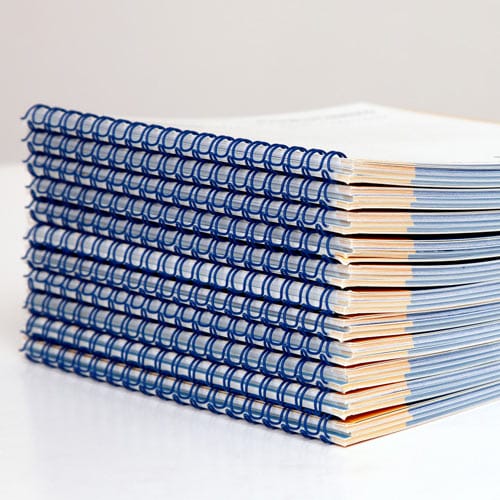
Wire-O binding for professional reports opens flat a full 360 degrees, which matters when a directory sits open on a front-desk stand or gets passed around a cohort meeting. The twin-loop wire spine also tolerates repeated handling better than a glued spine does, so a directory that gets flipped through daily doesn't start shedding pages by month three.
For a co-working space onboarding new members every quarter in 2026, that durability plus the lay-flat behavior beats a bound spine that locks the roster in place until the next full print run. Verdict: Buy for any directory reprinted more than twice a year.
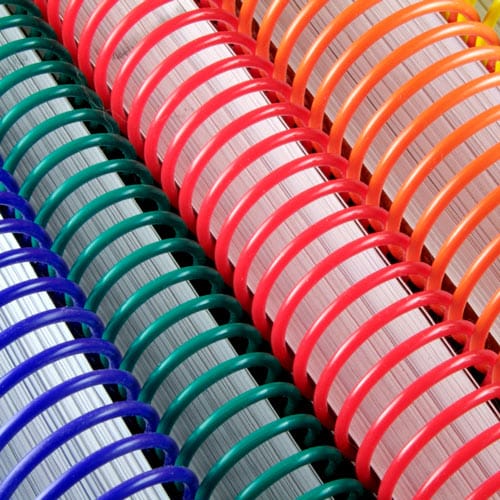
Plastic coil binding gives you the same lay-flat behavior as Wire-O at a lower price point per copy, which matters when an incubator is printing directories out of a program budget rather than a marketing line item. The tradeoff is a less polished look — coil reads more "workbook" than "professional directory," which is fine for an internal reference binder and less fine for something handed to investors at demo day.
Verdict: Consider for internal-use directories where budget outranks presentation; Skip it for anything that goes to outside guests.
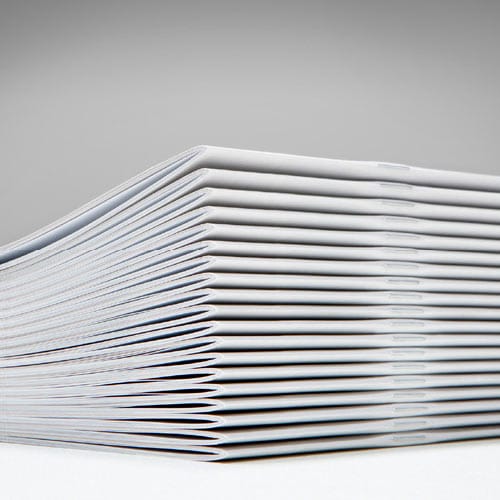
Saddle stitch vs perfect binding is the right comparison to run before committing to this format, because saddle stitch has a practical ceiling. It works cleanly up to roughly 64 pages before the spine starts to bulge and center pages creep outward — past that point the booklet stops closing flush.
For a co-working space or incubator cohort under about 60 members, a single-signature saddle-stitched directory keeps cost per copy the lowest of any option on this list. Verdict: Buy for compact rosters; Skip once your member count pushes the page count past that ceiling.
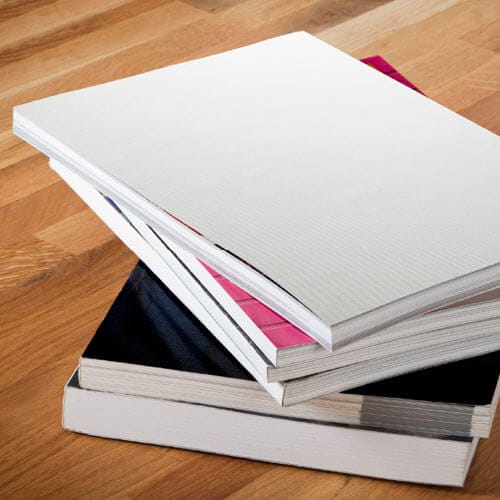
Perfect binding gives a directory a flat spine and a cover stock that reads like a paperback rather than a stapled booklet — the format most incubators reach for when the directory doubles as an alumni keepsake rather than a working reference. It suits directories that clear roughly 64 pages and get printed once a year, not documents that need mid-year page swaps, since the glued spine means no partial updates.
Verdict: Consider for an annual alumni or cohort edition; Skip it if you're reprinting more than once a year, since every update means a fresh full run.
This one isn't a binding choice — it's a paper-and-ink decision that stacks on top of whichever binding you pick. Co-working directories increasingly carry member headshots and startup logos rather than plain contact rows, and color interior pages keep those logos accurate instead of rendering them in flat gray.
Color costs more per page than black-and-white, so it's worth reserving for the pages that actually carry photos or branded logos. Verdict: Consider if members submit headshots or logos; Skip to black-and-white if the directory is contact info only.
| Format | Best page range | Lays flat | Cost per copy | Reprint frequency it fits | Verdict |
|---|---|---|---|---|---|
| Wire-O | Any | Yes, 360 degrees | Mid | Quarterly or more | Buy |
| Plastic coil | Any | Yes | Low | Quarterly | Consider |
| Saddle stitch | Under ~64 pages | No | Lowest | 1-2x per year | Buy for small rosters |
| Perfect bound | 64+ pages | No | Mid-high | Once a year | Consider |
What’s the best directory printing for co-working spaces in 2026?
Wire-O binding is the best directory printing for co-working spaces in 2026 when the member roster changes every quarter, because it lays flat and holds up to repeated handling. Saddle stitch is the better call for a small cohort under roughly 60 members on a tight budget.
Is saddle stitch or perfect binding better for an incubator directory?
Saddle stitch is better under roughly 64 pages and for directories reprinted more than once a year, since it costs less per copy. Perfect binding is better for a once-a-year alumni edition that clears that page count and reads as a polished keepsake.
How often should a co-working directory be reprinted?
Most co-working spaces reprint quarterly to match member turnover, which is why lay-flat formats like Wire-O and plastic coil outperform glued bindings for this use case. An incubator alumni directory, by contrast, usually only needs one print run a year.
Does a member directory need color printing?
Only if it carries member headshots, startup logos, or branded pages — plain contact listings print fine in black-and-white at a lower cost per page. Reserve color for the pages that actually need it rather than the whole directory.
What page count works best for saddle stitch binding?
Saddle stitch works cleanly up to roughly 64 pages before the spine bulges and center pages start creeping outward. Past that range, perfect binding or Wire-O holds up better.
Can a directory be updated after it’s printed?
Wire-O and plastic coil allow individual pages to be swapped without rebinding the whole book, which saddle stitch and perfect binding don’t support. That’s the main reason Wire-O tops this list for directories with frequent member changes.
Is there a minimum order for directory printing?
Publishing Xpress prints directory runs without a large minimum order requirement, so a small cohort directory and a large co-working network directory both get quoted on their actual page count and quantity rather than a forced minimum.
Most co-working spaces don't need to pick just one format. A common setup for 2026: a Wire-O master directory kept at the front desk that gets a fresh insert every quarter, paired with a slim saddle-stitched pocket directory handed to new members at move-in. The pocket version costs almost nothing per copy and doesn't need to survive a full year — it just needs to get someone through their first week before they're looking things up on the community app anyway.
© 2026 Publishing Xpress. All Rights Reserved.