August 18, 2026
A membership handbook doubles as a rulebook, a benefits guide, and a first impression for new members — and it needs to survive a full year of thumbing through before the next revision. This guide breaks down membership handbook printing for associations by binding type, page count, and update cycle so you order the right format the first time.
Associations reprint membership handbooks every renewal cycle — annually, sometimes twice a year when bylaws or dues structures change. Pick the wrong binding and you're either paying for a rebind mid-year or handing new members a booklet that falls apart in a tote bag by March 2026. The binding decision also drives cost per copy, because saddle stitch, coil, Wire-O, and perfect binding all price differently at the same page count.
This guide is built for executive directors, membership coordinators, and chapter administrators at professional associations, trade groups, and chambers who print a handbook, directory, or combined member guide once a year. If your association runs 40 pages of bylaws or 200 pages of bylaws plus a member directory, the calculus is different — and covered below. Publishing Xpress prints both scales without a large minimum order, so a 60-member local chapter and a 4,000-member national board order through the same short-run process.
A handbook gets referenced, not read cover to cover, which means it gets flipped open flat, dog-eared, and stuffed in a binder repeatedly over 12 months. Saddle stitch handles light use under 64 pages; anything heavier needs Wire-O or perfect binding to keep the spine intact through the next printing.
Bylaws change. Dues change. Board rosters change every election cycle. If your handbook grows or shrinks by even 8 pages year to year, a mechanical binding like Wire-O or plastic coil lets you resize without redesigning the whole cover — perfect binding needs a new spine-width calculation every time page count shifts.
Members open a handbook to check a bylaw or a fee schedule while on a call or at a meeting table. Wire-O and coil open completely flat and fold back 360 degrees; saddle stitch and perfect binding do not, which matters more than most associations budget for until members complain.
Handbooks with a member directory section, board photos, or a sponsor logo page need a heavier, brighter stock than plain bylaws text. 80 lb. gloss or matte text holds color and photo detail; standard 60 lb. uncoated stock is fine for text-only bylaws sections.
Most chapters need 75 to 500 copies, not the 2,500-unit runs that offset printers price for. Digital short-run printing means a 100-copy order and a 1,000-copy order both price per-unit fairly, and reorders for new members mid-year don't require hitting a new minimum.
Membership cycles are seasonal — most associations onboard new members at a fiscal year start or after an annual conference. Confirm turnaround before your renewal push, not during it, since handbook reprints tend to get requested in a batch right when everyone else's order does too.
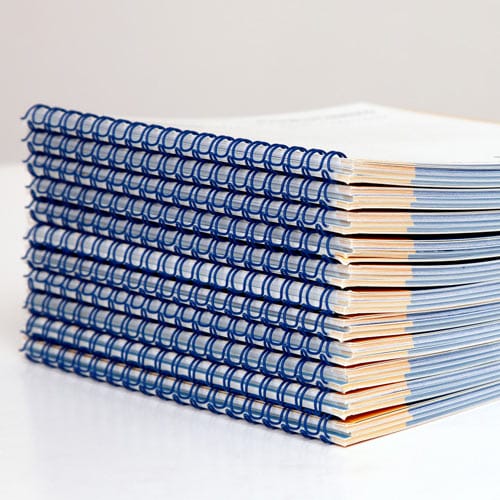
Wire-O binding — the pick for handbooks that change every year. One spec that matters: the wire coil folds back a full 360 degrees, so a member can flatten the page against the front cover during a meeting instead of fighting the spine. Wire-O also accepts tabbed dividers if your handbook splits bylaws, benefits, and a directory into sections. Read the full breakdown in Wire-O binding for professional presentations. Verdict: Buy for handbooks between 40 and 200 pages that get revised annually.
Perfect binding — the pick for a handbook with a bound-in member directory. One spec that matters: perfect binding needs a minimum spine width to print readable text, which typically means 80+ pages before the title shows on the spine. It gives a bookstore-quality look for a national association's flagship handbook. Compare it directly against saddle stitch in perfect binding vs. saddle stitch: which should you use. Verdict: Buy for combined handbook-and-directory editions over 80 pages.
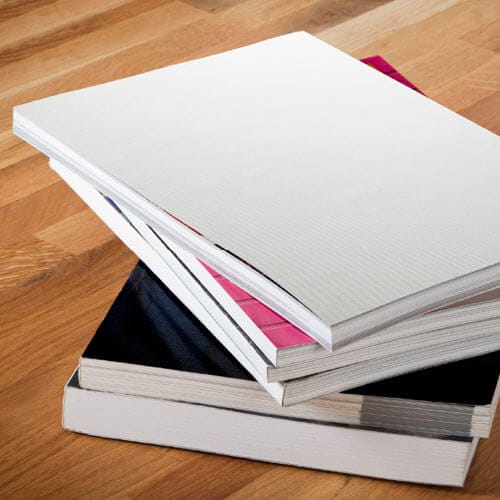
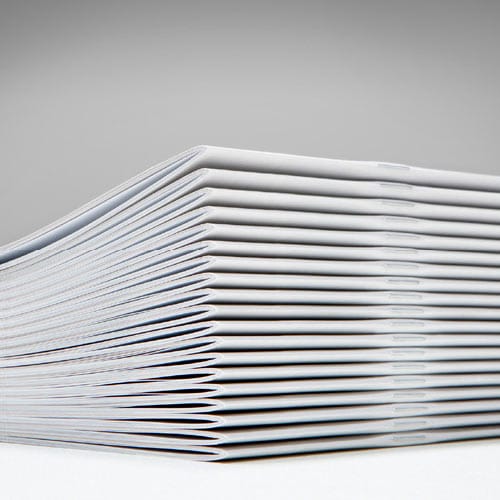
Saddle stitch — the budget pick for short bylaws-only handbooks. One spec that matters: saddle stitch stays functional up to roughly 64 pages before the spine starts to gap and pages slip. It's the cheapest option per copy at low page counts, which suits a small chapter's 20-page bylaws update. Verdict: Consider for handbooks under 48 pages, Skip past 64 pages.
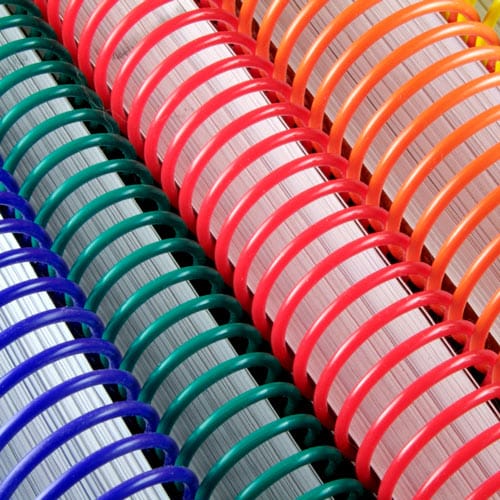
Plastic coil — the wildcard for single-season editions. One spec that matters: coil binding lies flat like Wire-O but the coil can deform under repeated stacking in a filing box, so it favors handbooks reprinted every single year rather than kept for reference over multiple cycles. It's a lower-cost stand-in when the budget doesn't stretch to Wire-O. Verdict: Consider for one-year handbooks, Skip if the handbook needs to survive multiple renewal cycles on a shelf.
Combined directory-and-handbook printing — the pick for chambers and trade groups. Associations that fold a member directory into the same volume as bylaws and benefits should treat it as a two-section document with its own paper stock rules. See how chambers structure this in directory printing for chambers of commerce and business associations. Verdict: Buy if your handbook and directory are updated on the same cycle; Skip combining them if the directory changes quarterly and the handbook doesn't.
If your handbook doubles as an HR-style policy document for staff as well as members, the layout rules overlap closely with booklet printing for employee handbooks and HR policies — worth a look if your association also issues staff policy manuals.
| Binding | Best page range | Lies flat | Update-friendly | Verdict |
|---|---|---|---|---|
| Saddle stitch | Under 64 pages | No | Low | Consider (under 48 pages) |
| Wire-O | 40–200 pages | Yes, 360 degrees | High | Buy |
| Plastic coil | 40–150 pages | Yes | Medium | Consider (single-season) |
| Perfect binding | 80+ pages | No | Low | Buy (directory editions) |
What’s the best binding for a membership handbook?
Wire-O binding is the best fit for most association membership handbooks between 40 and 200 pages because it lies flat for reference use and takes annual page updates without a full redesign. Perfect binding is the better call once a bound-in member directory pushes the page count past 80.
Is saddle stitch good enough for an association handbook?
Saddle stitch works for handbooks under roughly 64 pages, mainly bylaws-only editions with no bound-in directory. Past that page count the spine starts to gap and pages slip loose within a few months of handling.
How many pages can a saddle-stitched handbook have?
Saddle stitch stays structurally sound up to about 64 pages. Beyond that threshold, switch to Wire-O, coil, or perfect binding depending on whether the handbook needs to lie flat.
What paper stock works best for member handbooks with photos?
An 80 lb. gloss or matte text stock holds photo detail and sponsor logos far better than standard 60 lb. uncoated stock, which is fine for bylaws-only text sections. Mixed handbooks with a photo directory section benefit from the heavier stock throughout.
Is Wire-O better than coil binding for annual updates?
Wire-O holds up better than plastic coil across multiple renewal cycles because the coil can deform under repeated stacking in storage. Coil is a reasonable lower-cost option only when the handbook gets fully reprinted every single year rather than kept on a shelf.
How much does it cost to print a membership handbook?
Cost depends on page count, binding type, paper stock, and quantity, so it varies by association. Short-run digital printing avoids the bulk-order penalty that offset printers charge below 2,500 copies, which matters most for smaller chapters.
Can associations order small print runs without hitting minimums?
Yes — digital short-run printing lets a 75-copy chapter order and a 1,000-copy national order both price fairly per unit without a large minimum order requirement. Reorders for new members mid-cycle don’t require hitting a new minimum threshold either.
How fast can a membership handbook be reprinted for a new class of members?
Turnaround varies by binding type and order volume, so confirm timing before your renewal push rather than during it. Handbook reprint requests tend to spike right at fiscal year start or right after an annual conference, when every other association is ordering too.
The binding mistake that costs associations the most isn't the wrong choice at print time — it's reordering the same binding two or three cycles in a row after the handbook has quietly grown past its threshold. A board that added a 20-page policy appendix in 2024 and another 15 pages in 2025 might still be saddle-stitching a document that needs Wire-O by 2026. Check the current page count against the thresholds above before you approve the next print run, not after members start complaining the cover fell off.
© 2026 Publishing Xpress. All Rights Reserved.