August 16, 2026
Tax season client guides, engagement letters, and service overviews need to look sharp without costing a small firm a fortune — here's how to pick booklet printing for accountants and CPAs in 2026.
A CPA firm's client guide is the thing a new client reads before they trust you with their books. It has to look as buttoned-up as the balance sheet you're about to produce for them.
Most firms default to whatever the office copier spits out, or they overspend on hardcover binding meant for coffee-table books, not a 24-page engagement guide. Neither serves the actual goal: a document that reads clean, updates easily, and doesn't fall apart in a client's tote bag by March.
Booklet printing for accountants and CPAs in 2026 has to solve for three things at once — cost per copy on a short run, durability through busy season, and a binding that won't need a full reprint every time a tax bracket shifts. Get those three right and the rest is paper choice.
This guide is for sole practitioners, small-to-midsize CPA firms, and bookkeeping practices producing client onboarding guides, tax organizer booklets, service menus, or annual planning workbooks — typically 12 to 100 pages, ordered in batches of 25 to 500 at a time, refreshed once or twice a year as regulations and services change.
A 16-page tax organizer and an 80-page annual client handbook are not the same printing job. Saddle stitch tops out in practical terms around 64 pages before the spine starts to gap; anything longer needs perfect binding or Wire-O to lie flat and hold together through a full filing season.
Financial documents get handled, highlighted, and stacked. A 70 lb. or 80 lb. uncoated or matte text stock resists smudging from pen ink and doesn't glare under fluorescent office lighting the way gloss does — a real problem when a client is scanning a column of numbers.
Busy season doesn't wait. A firm ordering client guides in late January needs a printer that can turn a short run in days, not weeks, and won't force a 1,000-copy minimum onto a firm that needs 150.
Most CPA firms don't need bulk print runs — they need 50 to 300 copies at a time, sometimes fewer for a boutique practice. A no-minimum or low-minimum short-run model matters more here than a bulk discount you'll never use.
Standard deductions, brackets, and filing rules shift year to year. A binding you can reprint in small batches — without re-ordering a warehouse's worth of stock — saves real money when the guide needs a mid-year fix.
If your firm already uses Publishing Xpress for stationery or client mailings, matching the booklet's cover stock and color to your letterhead keeps every client touchpoint looking like the same firm, not three different vendors.
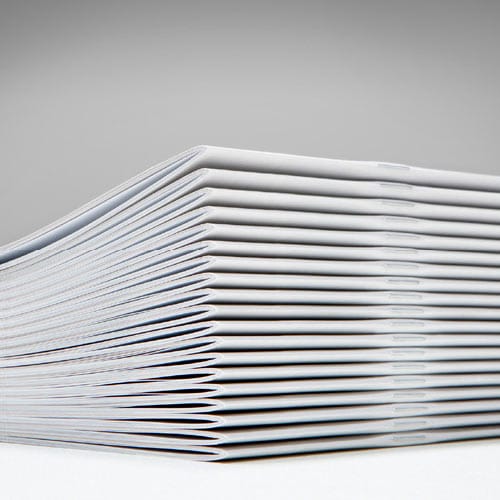
Saddle Stitch Printing — the safe pick. Works cleanly up to roughly 64 pages, costs the least per copy on short runs, and is the standard choice for a 16- to 40-page onboarding packet or service menu. Buy for any guide under 60 pages.
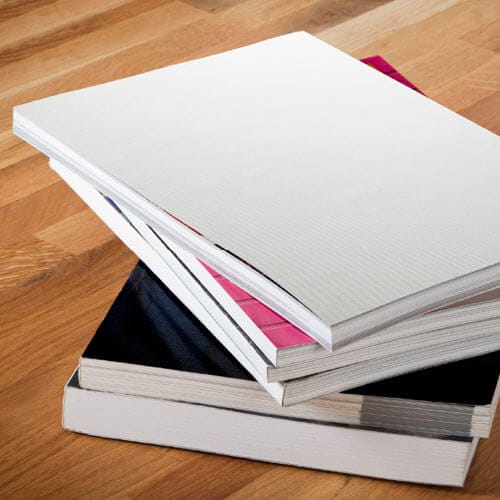
Perfect Bound Printing — the polished pick. Gives an 80-page-plus annual client handbook a flat spine that reads like a real reference book on a desk, not a stapled handout. Buy for annual planning guides or full-service brochures with real page count.
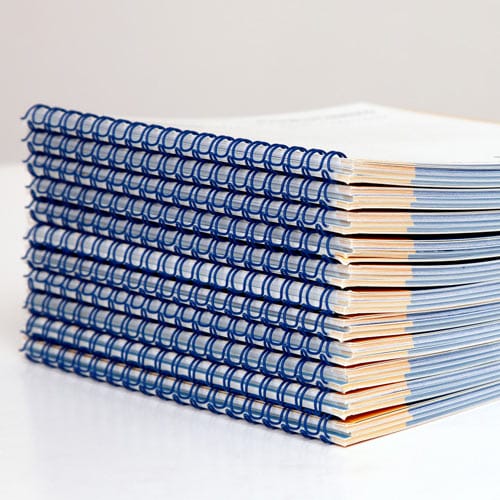
Wire-O Printing — the wildcard. Opens completely flat and 360 degrees, which matters if clients are meant to write directly on worksheet pages during a planning session. It's also the pick if you want a lay-flat tax organizer that survives being flipped open on a desk for weeks. Consider for interactive workbooks; Skip it for a simple leave-behind brochure — the wire adds cost you don't need there.
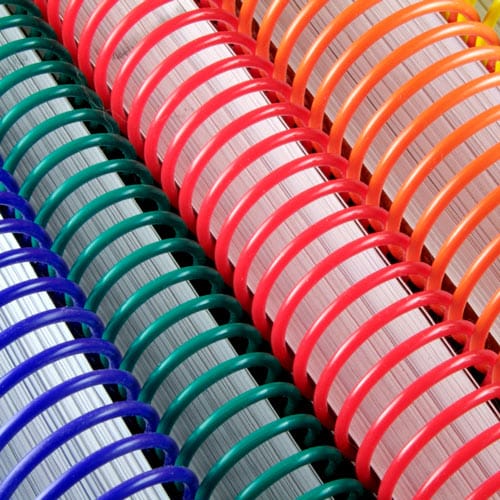
Plastic Coil Printing — the budget-flex pick. Coil allows a firm to physically swap in an updated page without reprinting the whole booklet, which is useful for a training manual that changes with tax law. Consider for internal reference sets; it looks less formal for a client-facing piece, so Skip it for the guide that goes in a new client's welcome folder.
Before locking in a format, run the perfect binding vs saddle stitch comparison against your actual page count — page count decides this more than preference does.
| Binding | Best page range | Lies flat? | Update cost when law changes | 2026 verdict |
|---|---|---|---|---|
| Saddle Stitch | Up to ~64 pages | No | Full reprint, low cost | Buy for onboarding guides |
| Perfect Bound | 80+ pages | No | Full reprint, moderate cost | Buy for annual handbooks |
| Wire-O | Any length | Yes, 360 degrees | Full reprint | Consider for workbooks |
| Plastic Coil | Any length | Yes, opens flat | Swap single pages | Consider for internal manuals |
Firms building a client guide with a matching insurance or wealth-management style should look at how insurance agency client guides and financial advisor wealth guides get bound — the same logic applies across regulated financial services in 2026.
What’s the best booklet printing for accountants and CPAs in 2026?
Saddle stitch is the best pick for most CPA client guides under 64 pages in 2026 because it’s the lowest cost per copy on short runs. Firms with 80-plus page annual handbooks should move to perfect binding for a spine that holds up.
Is saddle stitch or perfect binding better for a CPA client guide?
Saddle stitch is better for guides under 60 pages; perfect binding is better above that. Page count decides this more than firm preference does.
How much does booklet printing cost for a small accounting firm?
Cost depends on page count, paper stock, and quantity, with short runs of 50 to 300 copies typically pricing lowest with saddle stitch binding. A no-minimum order model keeps a 150-copy tax season run affordable without bulk-buying stock you won’t use.
What paper stock works best for financial documents?
A 70 lb. or 80 lb. uncoated or matte text stock works best for financial documents because it resists glare and pen smudging. Gloss stock looks premium but reflects office lighting, which makes number tables harder to read.
Can I reorder booklets after tax law changes mid-year?
Yes, and coil or Wire-O binding make single-page swaps possible without a full reprint. Saddle stitch and perfect binding require reprinting the whole booklet when content changes.
How many copies should a CPA firm order for a client guide?
Most firms order 50 to 300 copies per run depending on client volume, refreshed once or twice a year. Ordering roughly 10% over your expected client count covers walk-ins and referrals without a second rush order.
Does Wire-O binding work for tax season workbooks?
Yes, Wire-O is a strong fit for tax season workbooks because it opens flat and holds up to repeated handling during client meetings. It costs more per copy than saddle stitch, so it’s best reserved for interactive worksheets, not simple leave-behind guides.
What’s the minimum order for booklet printing?
Short-run booklet printing can go as low as 100 copies with no large minimum order requirement, ordered in increments of one copy above that. This matters for a small CPA practice that doesn’t need warehouse-scale quantities.
Order roughly 10% over your active client count on any guide you print in 2026 — new referrals and walk-ins during tax season eat through a tight print run faster than firms expect, and a mid-February reorder costs more in rush fees than the extra copies would have.
© 2026 Publishing Xpress. All Rights Reserved.