August 9, 2026
Presentation folder printing for business proposals is the difference between a client flipping through loose pages and a client holding something that reads like a finished report. Get the format wrong and the proposal looks like a draft; get it right and it reads like a decision already made.
A proposal gets judged before anyone reads the first paragraph. Loose sheets in a plastic folder signal that the deck got thrown together the night before. A bound booklet with a labeled spine signals the opposite — and in a stack of five competing bids on a desk, that spine is the only thing visible until someone actually picks it up.
Business proposals and RFP responses sit in the same category as booklet printing for marketing and sales teams — documents that need to survive handling, look finished, and not fall apart in a bag between the parking lot and the boardroom. In 2026, buyers still expect a printed leave-behind at final-round pitches even when the deck already went out as a PDF.
This guide is for consultants, agencies, and B2B sales teams who print proposals per client instead of running a warehouse of preprinted folders. It's for nonprofits assembling grant packets, contractors responding to RFPs with strict page-count rules, and anyone whose next contract depends on the physical document looking as sharp as the pitch itself.
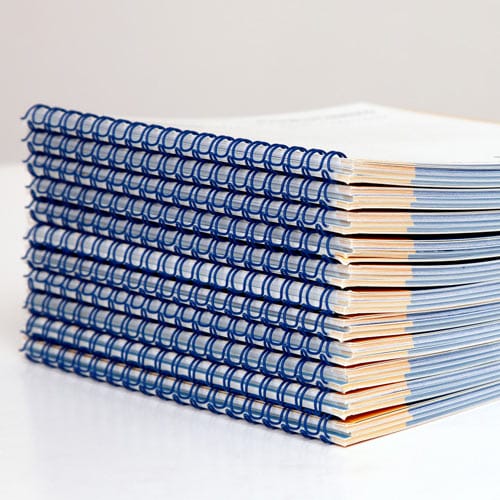
A proposal gets passed between a decision-maker, a finance lead, and sometimes a board before anyone signs. Loose pages in a folder get reordered or left behind at the first handoff. Wire-O and plastic coil binding keep every page attached and let the booklet lie flat on a conference table — a folder can't do either.
A flimsy cover reads as a flimsy company. A 100 lb. or heavier gloss or matte cover stock holds up to being carried in a bag between meetings. Thin 60 lb. text-weight covers curl at the corners within a week of handling.
Most proposals go to one client, not a mailing list. A format that demands a 500-copy minimum forces you into a generic template that doesn't fit the deal. Publishing Xpress prints proposal booklets without large minimum order requirements, so a 3-copy board packet gets the same per-unit attention as a 50-copy conference leave-behind.
RFP deadlines don't move. Coil and Wire-O binding typically move through production faster than heavily laminated or case-bound formats because there's no glue-curing step involved. Check current turnaround at order time since it shifts with binding method and quantity.
Longer proposals split into sections — scope, timeline, pricing, references. Coil and Wire-O binding punch clean holes that hold tabbed dividers without tearing, and both formats accept a business card slipped behind the front cover without redesigning the whole document.
Every pick below draws on the same binding options Publishing Xpress runs across its full booklet catalog, so switching between them doesn't mean switching vendors mid-project.
For proposals over 8 pages, Wire-O binding for professional presentations is the safe pick. The twin-loop wire lets every page fold back flat against the cover, so a client can lay the booklet open on a desk without a hand holding it down. It also survives being tossed in a bag — the wire doesn't crack the way a stapled corner does. Verdict: Buy.
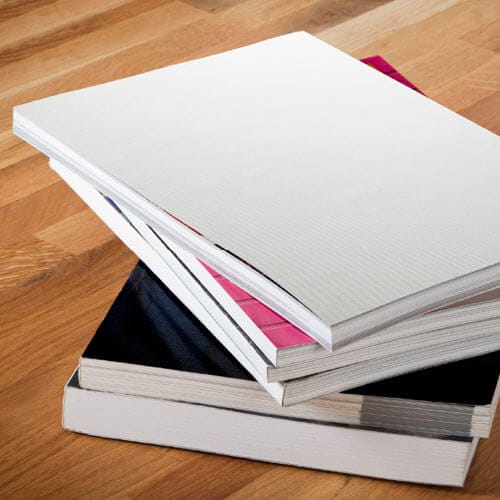
Once a proposal runs past roughly 40 pages, perfect binding gives it a glued spine that reads like a published report, not a stapled packet. It's the format most likely to end up kept on a shelf instead of recycled after the meeting. Thinner proposals won't hold a spine this way — the glue needs page bulk to grip properly. Verdict: Buy for proposals north of 40 pages, Skip below that.
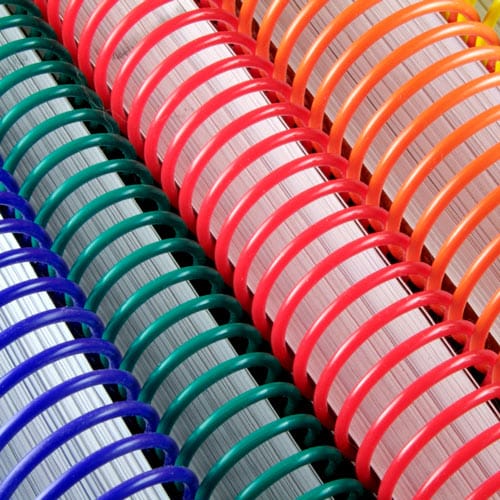
Plastic coil does everything Wire-O does — full rotation, flat lay — plus it comes in enough color options to match a proposal's brand palette. It's the workhorse pick for proposals that get marked up live in a meeting, since pages spin a full 360 degrees without stressing the binding. Read the full coil vs. Wire-O binding comparison before committing to either. Verdict: Consider.
Not every pitch needs a bound booklet. A single folded brochure works as a one-page leave-behind for short proposals, discovery calls, or a summary to accompany a longer digital deck. It's the wildcard pick: cheap, fast, and wrong for anything longer than a few panels. Verdict: Consider for short pitches, Skip for full RFP responses.
| Format | Best Page Count | Feel | Verdict |
|---|---|---|---|
| Wire-O bound | 8+ pages | Lies flat, professional | Buy |
| Perfect bound | 40+ pages | Published report | Buy (40+ pages) |
| Plastic coil | 8+ pages | Flexible, brand colors | Consider |
| Brochure leave-behind | 1-4 panels | Quick, casual | Consider / Skip |
| Plastic report folder | Any | Cheap, unreliable | Skip |
What’s the best binding for a business proposal?
Wire-O binding is the best all-around choice for business proposals in 2026 because pages lie flat and stay attached through multiple handoffs. Perfect binding works better once the proposal runs past 40 pages.
Is Wire-O or perfect binding better for proposals?
Wire-O works better for shorter proposals under 40 pages since it doesn’t need spine bulk to hold together. Perfect binding wins on longer proposals because the glued spine looks like a finished report.
How many pages does perfect binding need to work?
Perfect binding generally needs around 40 pages or more for the spine to hold reliably. Below that, the glue has too little page bulk to grip and the cover can separate.
Can proposal booklets print in full color?
Yes, proposal booklets print in full color for charts, brand palettes, and photography. Full color is standard for cover printing and available for interior pages as well.
How fast can proposal printing turn around?
Turnaround depends on binding method and quantity — coil and Wire-O typically move faster through production than perfect binding since there’s no glue-curing step. Check current turnaround at order time for your specific page count.
Is there a minimum order for proposal booklets?
No. Publishing Xpress prints proposal booklets without large minimum order requirements, so a 5-copy client packet gets the same per-unit care as a larger run.
Should I use a plastic folder or a bound booklet for an RFP?
A bound booklet beats a plastic folder for RFP submissions because pages can’t slide out or get reordered. Reviewers handling multiple bids are more likely to keep a bound document intact.
What paper stock works best for a proposal cover?
A 100 lb. or heavier gloss or matte cover stock holds up best for proposal covers carried between meetings. Thinner 60 lb. text-weight stock curls at the corners within days.
The detail nobody thinks about: a proposal's spine is the only part visible when it sits in a stack on someone's desk. A folder has no spine — it lies flat and forgettable next to three competitors' folders in the same pile. A Wire-O or perfect bound booklet with a labeled spine is the one a decision-maker actually reaches for first.
© 2026 Publishing Xpress. All Rights Reserved.