August 31, 2026
Book printing for summer camps and youth program guides means producing camper handbooks, counselor manuals, and season overviews as short-run booklets that hold up to backpacks, sunscreen, and rain before the next print run. Camp directors work on a compressed calendar between staff hiring and opening day, and the finished guide has to survive a full season outdoors, not sit on a shelf like a typical publication.
A camp guide does more work than a typical event program. It has to speak to campers, parents, and counselors at once, inside one document, often before anyone has met in person. Digital PDFs get buried in email; a printed guide rides in the same duffel bag as the packing list.
Publishing Xpress works with camps and youth organizations that need a handful of short-run print jobs a year, not a warehouse of extra copies. That matters for book printing for summer camps specifically, because most programs run one or two sessions and can't justify a 5,000-copy minimum from a big-box printer.
The format also has to survive conditions a corporate handbook never sees: wet hands, dropped binders, a week in a cabin. Binding choice and paper stock decide whether the guide lasts the season or falls apart by week two.
Most camp guides try to do five jobs in one document: orient parents, brief counselors, list schedules, collect signatures, and communicate rules. Deciding which of those jobs belongs in print — and which belongs in a separate handout — comes before any printing decision.
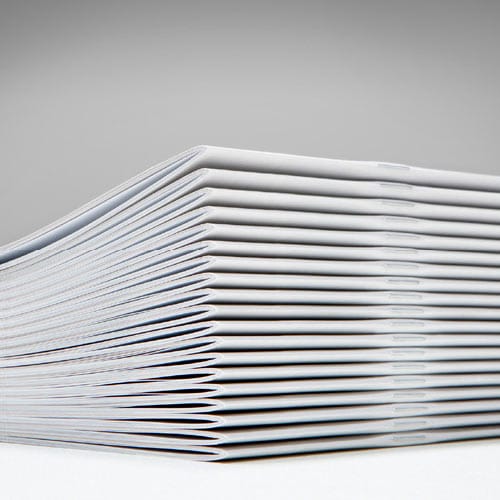
Binding is the single biggest decision in book printing for summer camps, and it's driven by how the document gets handled, not how it looks on a table. Saddle stitch is the right call for most camp guides under 64 pages — it's inexpensive, fast to produce, and fine for a document a parent reads once and a counselor references a few times a week.
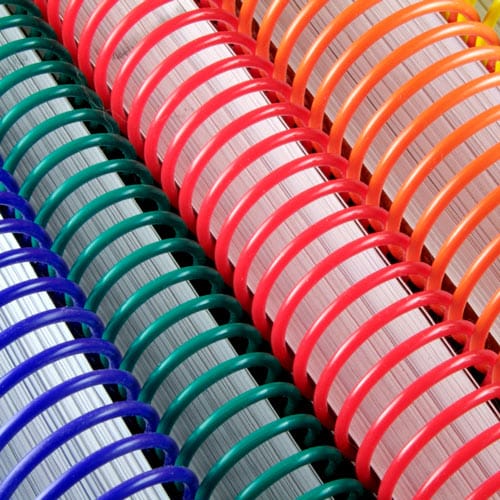
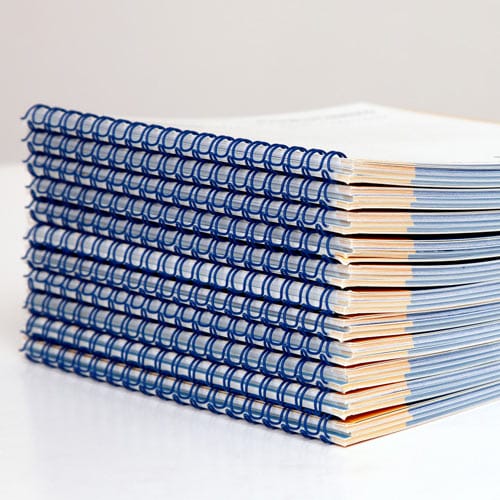
Once a guide needs to stay open on a table during morning briefings, saddle stitch starts to fight you. That's where coil and wire-o take over.
See the full breakdown in perfect binding vs. saddle stitch if your guide sits near that page-count line.
Camp guides get carried, not shelved, so a compact trim size beats a full letter-size book most of the time.
The interior paper and cover stock matter more than most camp directors expect. A guide that gets read on a bus, at a picnic table, or during a rainy check-in day needs stock that resists moisture and handling, not just good color.
A static guide misses half the point if campers and parents are supposed to write in it.
A typo in a camp guide is worse than a typo in a novel — it's a phone number, a pickup time, or a form deadline that a parent will actually rely on.
Turnaround planning for book printing for summer camps works backward from the first day of the session, not forward from when the file gets finished.
The same logic applies to any short-run event document a program hands out once a season — see how it plays out in printing a sports program booklet.
| Option | Best for | Key limitation |
|---|---|---|
| Saddle stitch | Guides at or under ~64 pages, single welcome packet | Pages can pull loose under heavy daily handling |
| Plastic coil | Daily schedules and activity logs referenced constantly | Bulkier to ship in volume, coil can bend with rough use |
| Wire-o | Guides flipped open and closed repeatedly at a check-in desk | Costs more per unit than saddle stitch |
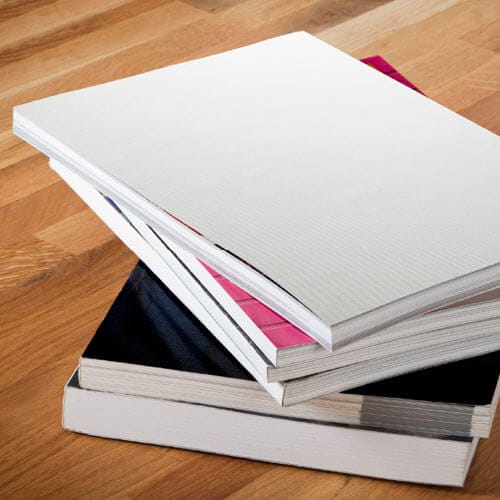
| Perfect bound | Combined camper-plus-staff manual over ~64 pages | Won't lie fully flat, spine can crack if page count runs low |
Saddle stitch is the buy for most camp welcome packets in 2026; coil or wire-o is the buy once the guide needs to stay open on a table.
What’s the best binding for a summer camp handbook?
Saddle stitch is the best binding for a camp handbook at or under roughly 64 pages in 2026 — it’s the cheapest and fastest option. Past that page count, perfect binding or wire-o holds up better under regular handling.
How many copies should a camp order for a season?
Order past your registered headcount to cover walk-in sign-ups, siblings, and staff replacements. Camps that print to the exact roster count consistently run short before the session ends.
Is coil or wire-o better for a daily camp schedule?
Both lie flat, but wire-o handles repeated opening and closing better than coil over a full season. Coil is fine for a schedule that mostly sits open on a table rather than getting flipped at a desk.
How much lead time does camp guide printing need before opening day?
Build in standard production time plus a rush option as backup if content changes late in spring. Coordinating delivery with staff orientation, which typically happens before campers arrive, gives a built-in buffer.
Can Publishing Xpress print a small batch for a single camp session?
Yes — Publishing Xpress prints short runs without a large minimum order, which fits most single-session camps and youth programs. That’s different from big-box printers built around bulk minimums.
What paper stock holds up best for outdoor camp guides?
80 lb. gloss or matte cover stock with a coated interior holds up best against sunscreen, sweat, and moisture. Plain uncoated paper covers tear and soften within days of regular outdoor handling.
Should camper information and staff information go in one guide?
Splitting them into two documents usually works better — parents and campers need orientation content, while staff need operational and policy detail. Combining both bloats the camper-facing version with pages they’ll never read.
The binding decision that trips up the most camps isn't saddle stitch versus perfect bound — it's coil versus wire-o for anything that lives at a check-in desk. Coil looks identical to wire-o on a sample sheet, but wire-o's closed-loop wire holds up to constant flipping at registration far longer than coil's open spiral, which can bend out of shape after a few weeks of heavy use. If the guide's whole job is sitting open at a desk in 2026, spec wire-o even though coil costs less upfront.
© 2026 Publishing Xpress. All Rights Reserved.