August 17, 2026
Companion book printing for online course creators turns a video curriculum into something a student can hold open next to a laptop, write in, and actually finish. If your course sells for $200 or more, a printed companion book is the difference between a student who watches module one and disappears, and one who works through all twelve.
A companion book is not a novel and it is not a corporate manual. It gets opened flat on a desk, written in with a pen, flipped through mid-lesson to find a worksheet, and updated every time you revise a module. Binding choice decides whether that experience works or fights the student. Get it wrong and you'll reprint a whole batch six months from now when cohort three needs updated content.
This guide is for course creators selling a video or cohort-based program who want a physical workbook, study guide, or reference manual to go with it — not authors printing a standalone book for retail sale. If your course runs $300+, has worksheets, templates, or exercises, and you update the curriculum every year or two, keep reading.
If the book includes worksheets, reflection prompts, or fill-in exercises, it needs to open flat and stay flat on a table. That rules out any binding that fights the page — a book that keeps trying to close on a student's hand gets abandoned by lesson three. This is the single biggest factor and it's the one most creators skip past.
A 40-page module guide and a 200-page full curriculum manual do not belong in the same binding. Coil and spiral bound workbook printing built for coaches and course creators comfortably handles workbooks up to roughly 275 sheets before the coil diameter gets unwieldy. Past that, perfect binding or a thicker Wire-O loop takes over.
Students work through companion books while a video plays on a second screen. A book that needs two hands to hold open loses. Wire-O printing built for training course materials folds back on itself 360 degrees, which matters more for course workbooks than for almost any other document type Publishing Xpress prints.
If your course includes software screenshots, charts, or annotated diagrams, black-and-white printing turns them into mush. Color adds cost per page, so decide early whether the visual content earns it or whether a black-and-white interior with a color cover front matter section is enough.
Course content changes. A curriculum you sell in 2026 will likely get revised before 2027, which means large offset print runs are a liability, not a savings. Short-run digital printing without steep minimums lets you reprint 25 copies for a new cohort instead of sitting on 500 outdated books.
1. Plastic coil bound course workbook — the workhorse pick.
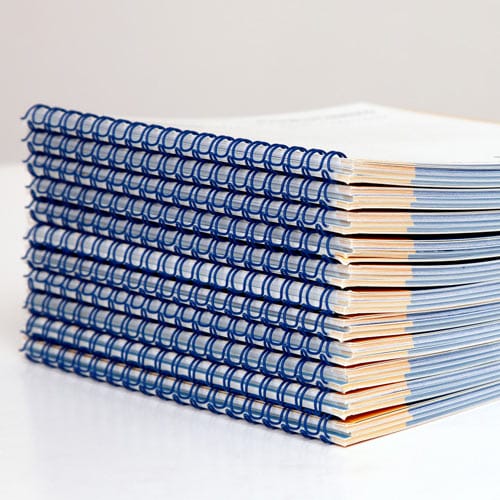
Coil binding opens completely flat and rotates 360 degrees, which is exactly what a workbook full of fill-in exercises needs. It handles page counts from a slim 20-page module guide up to a chunky 250-plus page full-course manual without the spine cracking. Buy this for any companion book where students write directly on the page.
2. Wire-O bound companion guide — the desk pick.
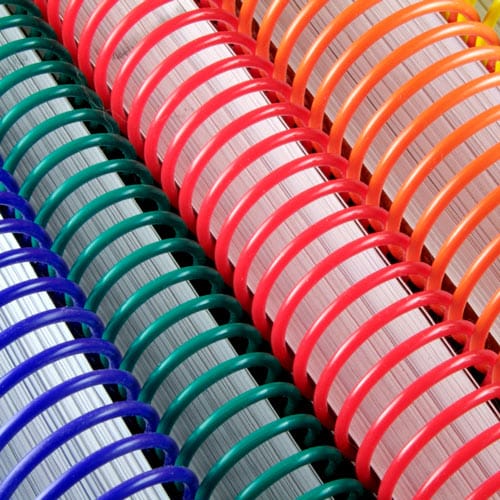
Wire-O gives a more polished, professional look than plastic coil while keeping the same flat-open, fold-back behavior — the Wire-O printing built for training course materials format is built for exactly this use case. It reads as more premium on camera if you show the workbook in a course preview video. Buy it if you're charging a premium price and want the physical product to look the part.
3. Perfect bound companion book — the retail-look pick.
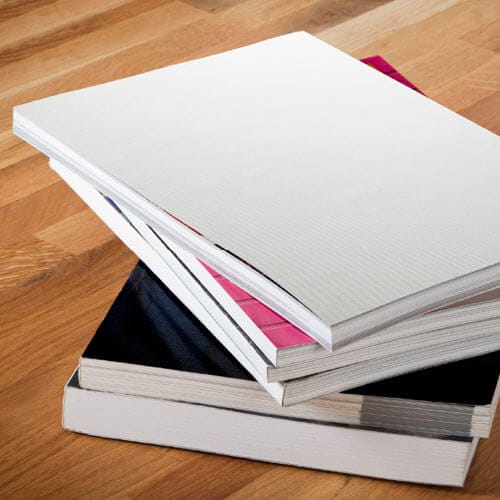
Once your companion content passes roughly 80 pages, a perfect bound course workbook with a glued spine reads like a real book instead of a binder insert. It's a stronger choice for reference-style companion material students consult rather than write in. Consider it for full-curriculum manuals; skip it if students need to write on facing pages, since perfect binding doesn't lay fully flat.
4. Saddle stitch quick-reference booklet — the budget pick.
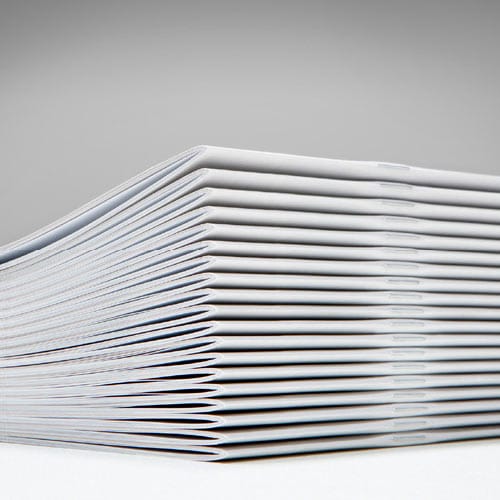
For a short cheat-sheet or single-module companion under 60 pages, saddle stitch is the cheapest binding per unit and prints fast. It won't survive heavy daily handling the way coil or Wire-O will. Consider it for a bonus mini-guide bundled with your main workbook, not as the primary companion book.
| Binding | Lays flat for writing | Best page range | Verdict |
|---|---|---|---|
| Plastic coil | Yes, 360 degrees | Up to ~275 sheets | Buy for write-in workbooks |
| Wire-O | Yes, 360 degrees | Up to ~275 sheets | Buy for premium desk companions |
| Perfect bound | No | 80+ pages | Consider for reference manuals |
| Saddle stitch | Partial | Under 60 pages | Consider for short quick-guides |
| Hardcover/case bound | No | Any | Skip for annually updated content |
What’s the best binding for a course companion workbook in 2026?
Plastic coil or Wire-O is the best binding for a course companion workbook in 2026 because both open completely flat for writing. Perfect binding works better once the book passes 80 pages and functions more as a reference than a fill-in workbook.
Is Wire-O better than plastic coil for companion books?
Wire-O looks more polished and holds up slightly better under repeated flexing, while plastic coil costs less per unit. Both open flat, so the choice usually comes down to budget and how premium the companion book needs to look.
How many pages should a course companion book be?
Most course companion books run 20 to 100 pages depending on whether they cover one module or an entire curriculum. Page count over 80 pages pushes you toward perfect binding instead of coil or saddle stitch.
Can I reprint a companion book after updating my course content?
Yes, short-run digital printing lets you reprint updated companion books in small batches without the large minimums offset printing requires. This matters for course creators who revise curriculum every cohort or year.
Should a companion book be color or black-and-white?
Black-and-white keeps cost per page down and works fine for text-heavy workbooks. Color is worth the added cost only when the companion book includes screenshots, charts, or diagrams that lose meaning in grayscale.
What size should a course companion workbook be?
8.5 x 11 inches is the standard size for course companion workbooks because it matches printable worksheet templates and gives enough room for writing. Smaller trim sizes like 6 x 9 work for reference-only guides students don’t write in.
Does saddle stitch work for a full course workbook?
Saddle stitch works well under 60 pages but struggles past that point because the staples strain and the book won’t lay flat. For a full curriculum companion, coil, Wire-O, or perfect binding is the better call.
The detail most course creators miss: a companion book that students write in gets damaged fastest at the corners and the binding edge, not the cover. If your workbook ships to students who'll toss it in a bag between sessions, coil and Wire-O both hold up better under that kind of daily handling than a glued spine ever will — a small spec that matters more than the cover design most creators obsess over.
© 2026 Publishing Xpress. All Rights Reserved.